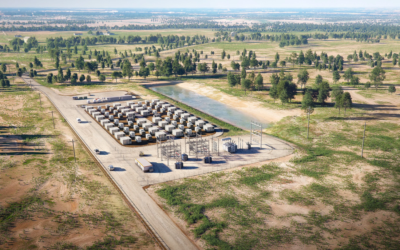
Hydrostor “remains fully committed” to its 4GWh advanced compressed air energy storage (A-CAES) project in California, its president told Energy-Storage.news as it considers alternative locations and delivery dates.
The eight-hour duration Willow Rock Energy Storage Center has been slated to come online in Kern County in 2028 and recently secured an offtake agreement from a co-operative utility for 40% of its energy (200MW/1,600MWh), reported by Energy-Storage.news.
However, a California Energy Commission (CEC) status report on 23 June said that Hydrostor “….is considering “alternative surface facility configurations,” “cavern engineering options,” and “alternate sites”. The applicant did not provide a definite timeline for selecting a best path forward to ensure a viable project.”
It recommended that CEC staff pause active work on the long duration energy storage (LDES) project until Hydrostor submitted a new project proposal backed up by new reports confirming site viability, and then a week later representatives for the Hydrostor told the CEC:
Try Premium for just $1
- Full premium access for the first month at only $1
- Converts to an annual rate after 30 days unless cancelled
- Cancel anytime during the trial period
Premium Benefits
- Expert industry analysis and interviews
- Digital access to PV Tech Power journal
- Exclusive event discounts
Or get the full Premium subscription right away
Or continue reading this article for free
“In particular, recent geological investigations at a location outside the Application For Certification project site are demonstrating superior geological conditions for the compressed air cavern. Once we have finished evaluating the results, we will be in a position to complete Project Optimization and
docket these results.”
Hydrostor president Jon Norman told Energy-Storage.news that the company expects the CEC permitting process to resume “in the near term as these optimisations are finalised” and that it remains “fully committed to Willow Rock”, in a statement reproduced in full further down this article.
He added that while it continues to target a commercial operation date (COD) in 2028 for the compressed air project, that could change to 2030.
The firm is also developing another project in California, the 400MW/3,200MWh Pechos Energy Storage Center in San Luis Obispo County, as well as the 200MW/1,500MWh Silver City Energy Storage Center in Broken Hill, New South Wales, Australia.
A-CAES has a better round-trip efficiency (RTE) than conventional compressed air energy storage (CAES), with Hydrostor’s CEO Curtis VanWalleghem discussing the tech in an interview on this site at the start of 2022.
The company counts the Canada Pension Plan Investment Board and Goldman Sachs Asset Management amongst its investors.
See the full statement from Hydrostor president Jon Norman provided to Energy-Storage.news below, and its latest response to the CEC in full further down.
Norman: We understand and support the CEC’s decision to pause on their analysis while we continue to perform optimisation activities for the Willow Rock project. This is reasonable and does not impact our commitment to the project or the Kern County community. We expect the CEC permitting to resume in the near term as these optimizations are finalised.
The project is still proceeding. Hydrostor remains fully committed to Willow Rock, and continues to advance key project milestones including the recent signing of the $1B offtake contract with Central Coast Community Energy as well as near-term execution of the project’s interconnection agreement with the California ISO.
Hydrostor has been actively working on project optimisation activities in 2023, which is a normal part of development for this infrastructure.
This includes geological optimisation which has highlighted significant benefits of additional sites for delivery into the Whirlwind Substation in Kern County.
We are exploring a number of locations in Kern County and exploring multiple opportunities and locations in parallel. Hydrostor believes Kern County offers a bright future for energy storage investment.
The benefits of additional sites that Hydrostor already controls further to the east of the current Willow Rock location includes opportunities to potentially reducing the environmental impacts as well as ideal geologic conditions, which will result in improved certainty and potential savings to overall schedule and cost of the project.
Hydrostor continues to target a 2028 COD date, with potential flexibility out to 2030 based on offtaker needs and evolving regulatory requirements.
We have appended our official response to the CEC here for convenience as well.
Read all of the dockets relating to the project on the CEC’s website here.