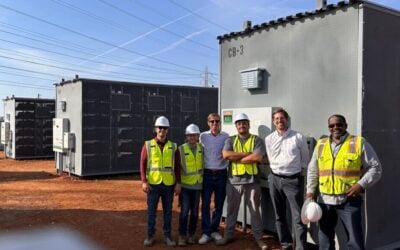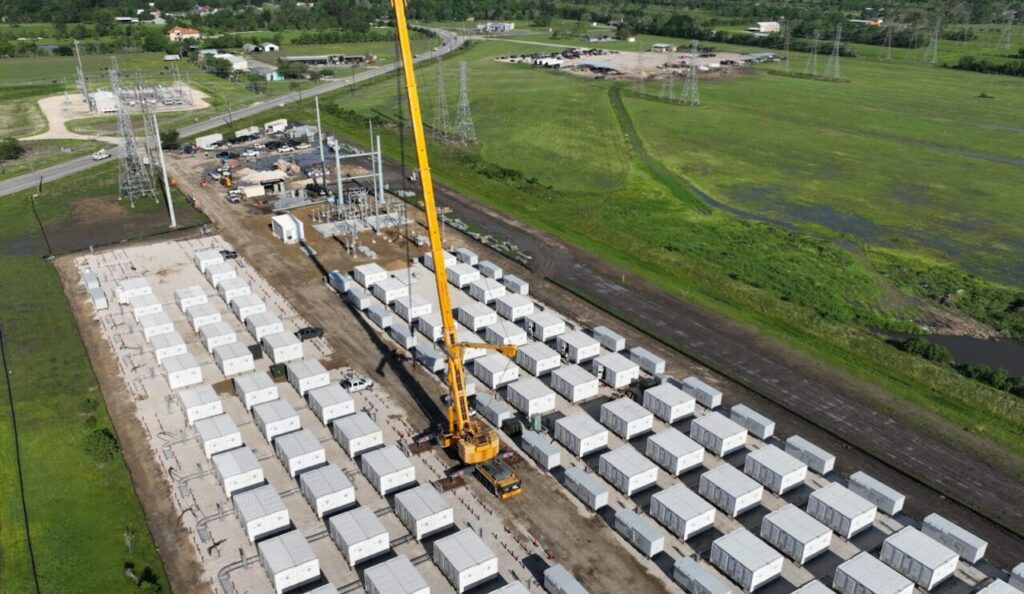
Energy storage optimisation specialist Habitat Energy has signed an agreement with Octopus Energy US to optimise a 50MW/100MWh tolled battery energy storge system (BESS) in the Electric Reliability Council of Texas (ERCOT) market.
Octopus has tolled the BESS from the owner, giving the company the right to use the asset’s flexible capacity to manage its retail load exposure. Habitat will optimise the BESS, leveraging the flexibility of the asset as a hedge against Octopus’ retail exposure while seeking profitable opportunities in the wholesale markets and delivering ancillary services to ERCOT.
Energy-Storage.news asked Octopus Energy for comment regarding the owner of the BESS but has not received word at the time of publication.
The company says it will use its AI-powered forecasting and trading algorithm for the process. Beginning optimisation of the battery in January, Habitat says it now provides optimisation services for over 1GW of operational battery storage and renewable energy assets in ERCOT.
Try Premium for just $1
- Full premium access for the first month at only $1
- Converts to an annual rate after 30 days unless cancelled
- Cancel anytime during the trial period
Premium Benefits
- Expert industry analysis and interviews
- Digital access to PV Tech Power journal
- Exclusive event discounts
Or get the full Premium subscription right away
Or continue reading this article for free
Headquartered in the UK, Habitat Energy was founded in 2017, and has since expanded to Australia and the US with contracted assets globally. The company is part of Quinbrook Infrastructure Partners. Habitat Co-founder and director Ben Irons talked to Energy-Storage.news about the challenges facing optimisation firms like it in a 2023 interview (Premium access article).
Irons spoke to the lack of transparency often cited as a challenge for optimisers: “With our model, you give us the keys and we’ll generate the revenue. Transparency isn’t as much of an issue as long as the revenue comes in. The project owners don’t necessarily need reporting on a day-by-day basis since they are not the ones pushing the buttons.”
Octopus was also founded in the UK, in 2016. The company now operates globally as Octopus Energy Group with projects around the world. The company has set a goal of investing US$2 billion in the US renewables industry by 2030. Its first investment in the US renewables industry, was two solar assets located in the PJM region from utility-scale solar and storage developer Vesper Energy in 2024.
ERCOT, where the tolled BESS is located, has primarily been a merchant market where BESS projects derive the bulk of revenues from a large ancillary services market with some wholesale energy trading. But this dynamic has been shifting.
A trend in the ERCOT market, as discussed in a July 2024 conversation with Energy-Storage.news and Modo Energy(Premium access article), is that revenues are becoming concentrated into a fewer number of days. This leads to an increase in volatility, where prices are either incredibly high or incredibly low.
Writing for Energy-Storage.news, Ali Karimian and Alden Phinney of AI-powered energy services provider GridBeyond recently elaborated on GridBeyond’s white paper exploring market trends in ERCOT and CAISO:
“It found that in ERCOT, battery storage revenues have dropped significantly in the past year due to factors such as increased battery installations, more renewable generation, and changes in how ERCOT dispatches the ancillary service ECRS.”
As the markets continue to change, operators will need to consider other methods of generating revenue, as can be seen in the structuring of Habitat and Octopus’ agreement.
Nick Chaset, CEO of Octopus Energy US said of the agreement: “Battery storage is a powerful tool to manage the especially volatile market conditions in ERCOT. We are pleased to partner with Habitat Energy on this project who have shown their capability to optimize revenue generation from a complex stack of traded markets.”