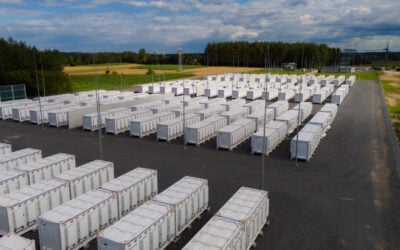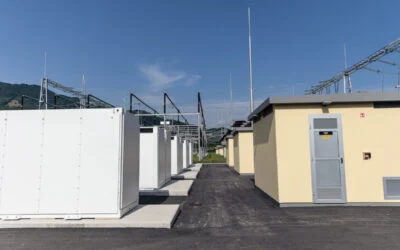
The Ministry of Energy in Lithuania has officially launched a project to deploy 200MW / 200MWh of battery storage in the northern European country.
Expected to be commissioned by November 2022 and providing services to the transmission network by December 2022, the portfolio of four separate 50MW battery energy storage system (BESS) sites will be created by EPSO-G, a state-owned group of energy transmission and exchange companies.
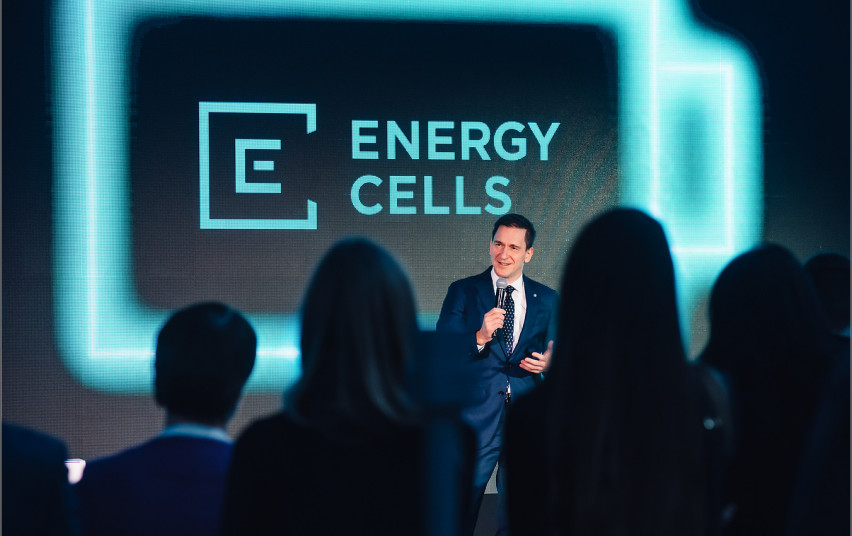
EPSO-G subsidiary Energy Cells, a special purpose group set up at the beginning of this year to facilitate the battery storage roll-out, will install and operate the systems. The batteries will provide instantaneous reserve services to the electricity network.
While Lithuania is seeking closer electric system synchronisation with its partners in Europe, ahead of this synchronisation the country’s electricity system faces an important challenge — being able to operate nodes of the grid in isolation, energy minister Dainius Kreivys said on Monday.
Try Premium for just $1
- Full premium access for the first month at only $1
- Converts to an annual rate after 30 days unless cancelled
- Cancel anytime during the trial period
Premium Benefits
- Expert industry analysis and interviews
- Digital access to PV Tech Power journal
- Exclusive event discounts
Or get the full Premium subscription right away
Or continue reading this article for free
“The facilities under construction will help ensure the stability and reliability of our electricity system in the event of disturbances. In the event of a power outage across Lithuania, these batteries will immediately start supplying power and restore the energy supply,” Kreivys said.
The four systems, at transformer substations of transmission system operator (TSO) Litgrid in the regions of Vilnius, Šiauliai, Alytus, and Utena are being sized with a combined output and capacity of 200MW / 200MWh to be sufficient to provide that capability.
In April, Litgrid CEO Rokas Masiulis said the TSO was in a unique position, in facing not only the same transition to renewable and cleaner energy sources as others, but also in switching from being part of the post-Soviet grid to synchronisation with Europe.
EPSO-G CEO Rolandas Zukas said this week the BESS projects will “help protect against energy threats,” as well as allowing the transmission network operators to implement the European synchronisation smoothly.
The project is being supported with up to €100 million (US$112.9 million) financial assistance from the EU’s Recovery and Resilience Facility, as approved by the European Commission.
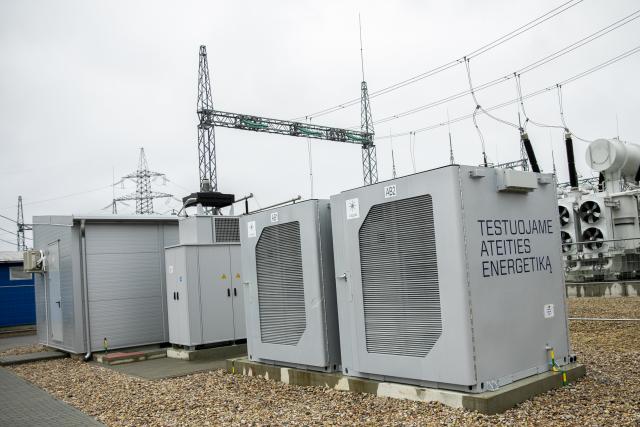
Fluence, Siemens Energy contracted to supply and deploy systems
Energy Cells held a competitive solicitation process and awarded contracts worth €109 million to energy storage technology provider Fluence and engineering group Siemens Energy to design, manufacture and connect the battery systems to the transmission system. They will also provide maintenance services for 15 years after installation.
Energy-Storage.news reported in September as an initial 1MW pilot project was completed at a substation in Lithuania’s capital city, Vilnius.
EPSO-G said the design phase is expected to be completed in February and construction to begin in June, with the systems to be ready for testing by Q3 2022.
“This project is significant for Lithuania and all the Baltic States. It will strengthen the resilience of Lithuania’s energy system. At the same time, this European-scale project is one of the key components in synchronising the Baltic States’ energy grids with continental Europe,” Laimutė Pilukaitė, head of policy analysis and review at the European Commission’s representation in Lithuania said.
“This will not only improve connectivity but also bring innovation to Europe’s energy system.”
Fluence’s product director Rebecca Boll highlighted in a post on the company’s corporate blog that the project marks one of the first direct energy storage procurements in the world by a TSO affiliate to provide transmission-enhancing services.