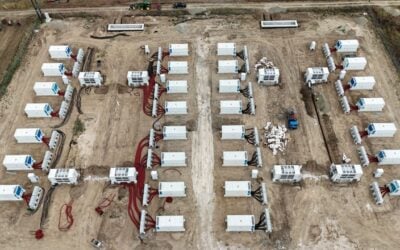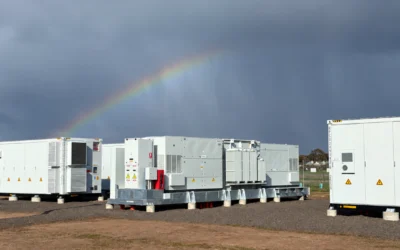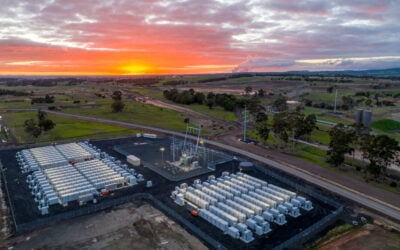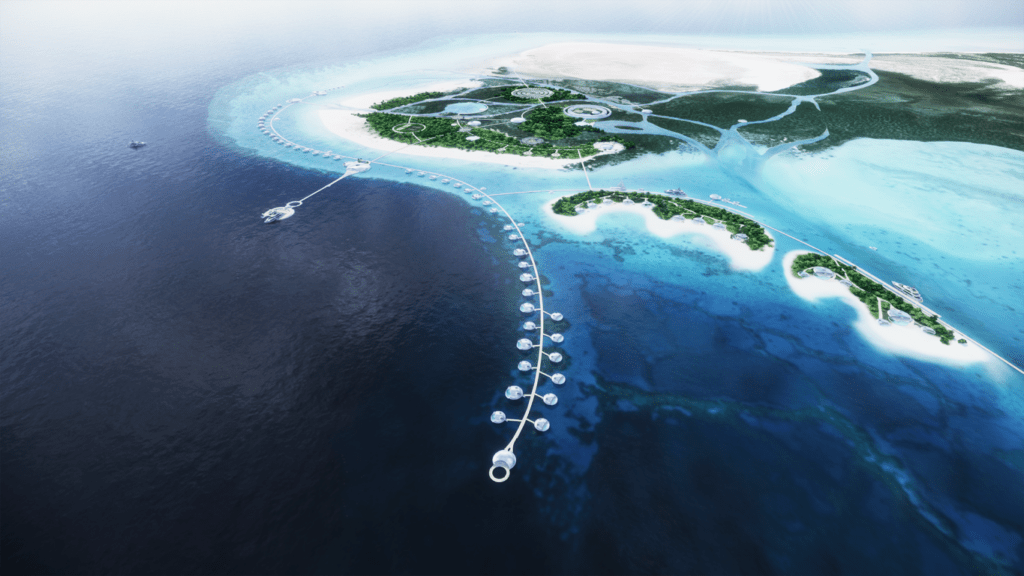
A consortium of developers has achieved financial close for US$1.3 billion in debt facilities for utilities infrastructure at the Red Sea project, a huge resort under construction off the coast of Saudi Arabia which plans to have the largest off-grid battery energy storage system (BESS) in the world at 1,200-1,300MWh.
Developers ACWA Power, SPIC Huanghe Hydropower Development Company and Saudi Tabreed Cooling Company have secured the US$1.302 billion senior debt facilities, ACWA announced last week (24 February).
ACWA Power has been appointed by project developer The Red Sea Development Company (TRSDC) to design, build, operate and transfer the Red Sea Project’s utilities infrastructure. TRSDC secured financial close on its own debt facilities for the project, totalling US$3.76 billion, last month.
Huawei will supply the battery energy storage system (BESS), as reported by Energy-storage.news. Reported figures on its capacity vary between 1,200 MWh and 1,300 MWh, with either figure by far the largest off-grid BESS in the world.
Try Premium for just $1
- Full premium access for the first month at only $1
- Converts to an annual rate after 30 days unless cancelled
- Cancel anytime during the trial period
Premium Benefits
- Expert industry analysis and interviews
- Digital access to PV Tech Power journal
- Exclusive event discounts
Or get the full Premium subscription right away
Or continue reading this article for free
The senior debt is a combination of USD and Riyal-denominated provided by a consortium of Saudi Arabian and international banks, including the Al Rajhi Bank, APICORP, Bank Saudi Fransi, Riyad Bank, Saudi British Bank, Saudi National Bank and Standard Chartered.
ACWA says the Red Sea resort will rely entirely on renewable energy for power generation, water production, wastewater treatment and district cooling. It will include a solar photovoltaic plant with 340MW of power output, ACWA said. Phase one of the project will open in late 2022.
ACWA Power CEO Paddy Padmanathan commented: “The Red Sea Development Project, in the Kingdom of Saudi Arabia, spanning an area the size of Belgium, is a remarkable project in terms of vision, ambition, size and scope that pioneers responsible regenerative tourism, preserving the planet for future generations while enhancing the offering and experience of tourists.”
The Red Sea Development Company (TRSDC) is the overall developer and procurer of the project and will procure all the utilities under a single offtake agreement covering the provision of renewable power, potable water, wastewater treatment district cooling and solid waste treatment.
It is part of Saudi Arabia crown prince Mohammed Bin Salman’s Vision 2030 programme which seeks to modernise the country’s economy, increase its mix of renewable energy and boost the role of the private sector.
Not far along the Red Sea Coast, the state is building an entirely new-build city, NEOM, which it says will be 100% renewable energy-powered including with large-scale green hydrogen.