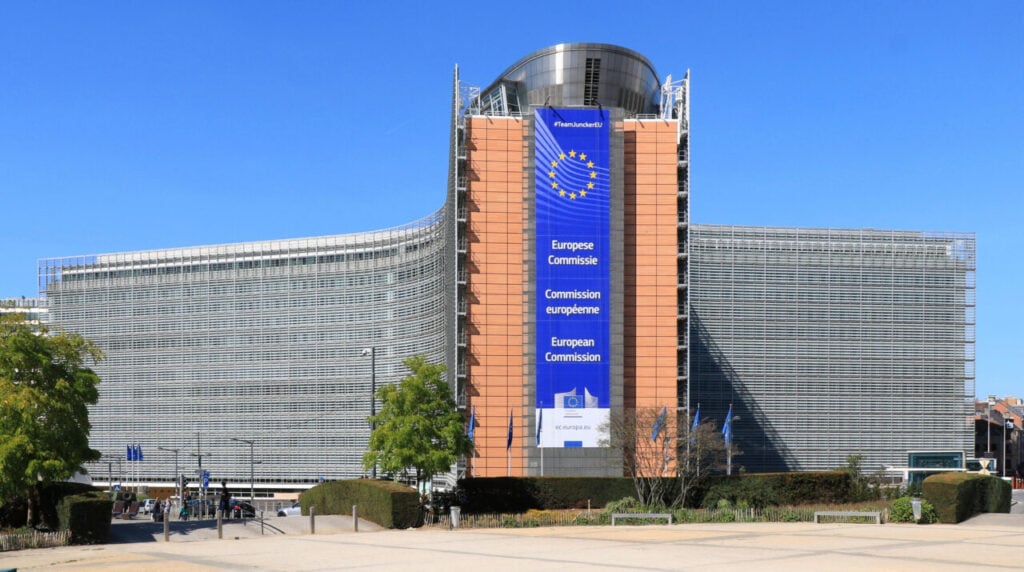
The European Commission has released its final Electrification Action Plan, reaffirming its belief that the EU needs 200GW of energy storage by 2030.
The document was leaked last week, revealing the scaled-up ambitions for energy storage deployments across the continent by 2030, and the finalised version was published on Friday 17 July.
It recognises that energy storage is an essential element to optimise the functioning of the EU energy system, and that 200GW will be needed by 2030 and 500GW by 2050. That is up from 55GW in 2026, said the Commission, which is the executive arm of the European Union (EU).
Trade body Energy Storage Europe (ESE) welcomed the Plan, its storage targets, and its recognition that a range of technologies, including battery storage, thermal storage and long-duration energy storage (LDES), will be needed.
Try Premium for just $1
- Full premium access for the first month at only $1
- Converts to an annual rate after 30 days unless cancelled
- Cancel anytime during the trial period
Premium Benefits
- Expert industry analysis and interviews
- Digital access to PV Tech Power journal
- Exclusive event discounts
Or get the full Premium subscription right away
Or continue reading this article for free
“The next step is to translate these positive signals into concrete deployment measures. While sector-specific roadmaps are a good way to address the needs of individual industries, energy storage is different: it is a crosscutting enabling infrastructure underpinning electrification across buildings, transport, industry and grid,” it said.
“As the Commission develops these roadmaps, ESE encourages it to complement them with a European Energy Storage Deployment Roadmap, bringing together the targeted regulatory, market and investment actions needed to accelerate storage deployment in line with Europe’s electrification ambitions.”
See the trade body’s full statement here, while you can read the full PDF document of the EU’s Electrification Action Plan here.
The Plan is part of the EU’s efforts to make Europe a global leader in clean energy, lower consumer energy costs, and reduce its exposure to geopolitically-driven fossil fuel crises. As part of that an indicative electrification target of 46% by 2040 will now be assessed.
The Plan aims to address all the key barriers to large-scale electrification and decarbonisation, including grid, technologies failing to scale and lack of consumer incentives. That includes reducing the price gap between electricity and fossil fuel costs.
Energy Storage Europe welcomed this latter point and its associated proposal to avoid double network charging for energy storage (where it is charged as both a consumer and generator). That includes giving member states the power to reduce network charges for some groups.
“However, the principle must become a clear and enforceable rule for the member states,” it added.
Double charging is a key barrier, and the potential lifting of an exemption for storage in Germany nearly scuppered the market entirely recently.
All this follows the first EU tripartite agreement on storage in late June, which said 30-35GW of storage should be deployed by 2028.