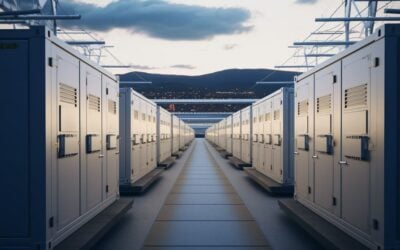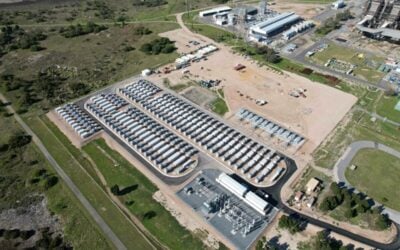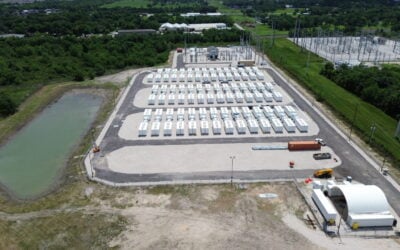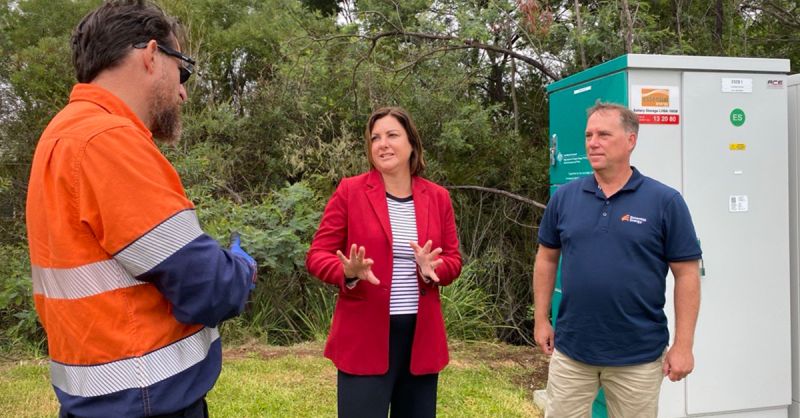
Essential Energy, a state-owned electricity infrastructure company, has switched on three community batteries in the New South Wales towns of Maloneys Beach, Leeton and Goulburn in Australia.
Each of the three Essential Energy batteries can produce 192kW of power and store 530kWh of energy.
The battery energy storage systems (BESS) were installed under the federal government’s Community Batteries for Household Solar programme, which intends to install more than 420 distribution-connected battery storage systems across Australia. This will enable households to collectively store energy generated from rooftop solar PV to drive down bills.
Chris Bowen, the minister for climate change and energy for the New South Wales government, said community batteries help to lower households’ energy bills while also decreasing their carbon footprint.
Try Premium for just $1
- Full premium access for the first month at only $1
- Converts to an annual rate after 30 days unless cancelled
- Cancel anytime during the trial period
Premium Benefits
- Expert industry analysis and interviews
- Digital access to PV Tech Power journal
- Exclusive event discounts
Or get the full Premium subscription right away
Or continue reading this article for free
“The rain doesn’t always fall, but we always have water on tap because we store it for when we need it – community batteries will do the same thing with reliable and affordable renewable energy,” Bowen said.
“The Albanese Government is delivering immediate cost of living relief and building an energy grid for the future, which is why we have brought online new, affordable electricity equivalent to more than three Snowy Hydro schemes.”
Essential Energy is also seeking battery operators, owner-operators, and investors who are looking for an opportunity to build, own, and operate BESS assets that can be connected directly to select Essential Energy zone substations.
Individuals or organizations with a demonstrated history of deploying BESS and a good understanding of the communities in regional, rural, and remote New South Wales are encouraged to submit an expression of interest for a development license. This license pertains to the installation and operation of battery systems.
Australian network company Ausgrid has also been increasing to number of community batteries in and around Sydney in recent months. In January, the organisation switched on a 200kW/284kWh community BESS in the suburb of Cammeray.
The importance of community batteries
The coupling of solar PV technology with these community batteries could support residential decarbonisation and create an additional incentive to introduce renewable energy generation technology to homes, even if the building does not have access to a home BESS asset. This is where the community BESS’s strengths come to the fore.
Australia has some of the highest residential solar penetration rates worldwide, with over four million rooftop installations. The country also leads the world in per capita solar production, with research from think tank Ember indicating that 2023’s average was around 1,810kWh.
Despite various incentive schemes, home batteries have not matched this substantial solar PV uptake. However, larger community batteries have grown in popularity, combining multiple residential areas to pool household renewable energy generation through rooftop solar PV.
This has captured the attention of industry heavyweights the Australian Renewable Energy Agency (ARENA), which last year allocated AU$143 million in financial backing to build 370 community assets across Australia.
Under the organisation’s Community Battery Funding Round 1 initiative, Queensland and New South Wales will receive the most community batteries, with 69 and 95, respectively, followed by Victoria with 37 batteries, Western Australia with 28, South Australia with 24, the Northern Territory with 16, and Tasmania with six.
ARENA said at the time that the batteries would benefit various energy consumers, such as households, hospitals, schools, and other facilities.
The state of Victoria also has a community battery scheme dubbed the ‘100 Neighbourhood Batteries Program’, which aims to provide communities with the benefits collective solar PV can grant.