For the net-zero homes in Fontana, SunEdison designed the advanced battery systems and will monitor and control them to maximise energy savings and optimise load profile. Credit: Meritage Homes
The Electric Power Research Institute (EPRI), a non-profit organisation funded by electric utilities to conduct research on issues related to the electric power industry in USA, is leading a project that will see renewable energy development company SunEdison supply battery systems for nine net-zero energy homes in California.
Net-zero energy homes are able to generate and store their own energy and EPRI is investigating what impact these homes, located in Fontana, will have on local electricity grids.
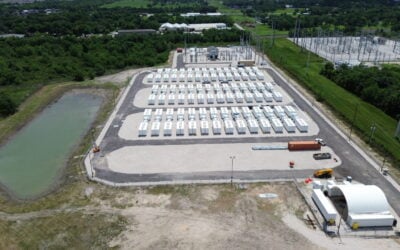
PV Tech Storage reported last year that EPRI, in partnership with utility holding company Southern Company, would be testing and evaluating a 1MW/2MWh lithium-ion battery-based storage system paired with a 1MW solar array in Cedartown, Georgia. That new research project was officially opened today.
For the net-zero homes in Fontana, SunEdison designed the advanced battery systems and will monitor and control them to maximise energy savings and optimise load profile, thus preventing networks from becoming imbalanced.
Try Premium for just $1
- Full premium access for the first month at only $1
- Converts to an annual rate after 30 days unless cancelled
- Cancel anytime during the trial period
Premium Benefits
- Expert industry analysis and interviews
- Digital access to PV Tech Power journal
- Exclusive event discounts
Or get the full Premium subscription right away
Or continue reading this article for free
Other major PV developers have also conducted trials on zero energy homes or offered them as commercial propositions, such as the ‘double zero energy’ home with energy storage and solar PV systems launched in the US last year by a partnership between SunPower and homebuilder KB Home.
For the California project, SunEdison also partnered with Eguana Tech, a supplier of inverters for distributed smart grids and micro-grids, and battery provider LG Chem. It also worked alongside Geli, which provides software for the connection and operation of energy storage and micro-grid systems. Geli’s interface can monitor a storage system’s performance and aggregate systems for virtual power-plant services.
Meanwhile, EPRI partnered with home construction firm Meritage Homes and utility Southern California Edison and was supported by the California Public Utilities Commission (CPUC).
Under CPUC’s Energy Efficiency Strategic Plan, all new homes in California are set to be net-zero from 2020 and all new commercial buildings net-zero by 2030, hence the value of trialling these nine initial homes.
Meritage Homes has started construction of the households, of which the first are due for completion by the end of September.
Tim Derrick, SunEdison’s general manager of Advanced Solutions, said: “With this project, we’re pioneering solutions that will help Californians prepare for the future of the grid, where homes and businesses will be generating their own electricity on a much greater scale than we’re seeing today.”
Ram Narayanamurthy, EPRI’s project lead, said: “We’re using advanced controls and energy storage to manage these mini, distributed power plants that are expected to play a much larger role in the grid of the future.”