
India’s battery energy storage system (BESS) pipeline is expanding rapidly, but delays between tender awards and construction, aggressive tariffs and reliance on imported cells threaten delivery. For power sector investment trust IndiGrid, the next phase of growth depends on engineering discipline, bankable contracts and operational performance.
According to the Central Electricity Authority’s (CEA) tracker, India has approximately 157GWh of battery storage projects in its pipeline as of June 2026. Around 68GWh remains at tender stage, 38GWh has been awarded, 43GWh is under construction and approximately 9GWh is operational.
While India has established a substantial pipeline, converting that capacity into operating assets remains a work in progress.
For Sanil Namboodiripad, chief operating officer (COO) of India Grid Trust (IndiGrid), the distinction between India and mature storage markets lies in how projects earn revenue.
Try Premium for just $1
- Full premium access for the first month at only $1
- Converts to an annual rate after 30 days unless cancelled
- Cancel anytime during the trial period
Premium Benefits
- Expert industry analysis and interviews
- Digital access to PV Tech Power journal
- Exclusive event discounts
Or get the full Premium subscription right away
Or continue reading this article for free
“The biggest difference from markets like the UK, Australia or Texas,” the COO says, “is how projects earn money. Those markets grew on merchant revenues: wholesale arbitrage, frequency response and capacity auctions.”
“India’s growth is tender-led and contracted. Most of the pipeline is procured by state utilities or central agencies on 12-year agreements, with fixed capacity payments linked to availability. That makes Indian storage far more bankable for long-term investors, but it also means the market depends heavily on how well tenders are designed and how quickly contracts are signed,” he adds.
The contracted model offers greater revenue visibility, while government support through viability gap funding (VGF), transmission charge waivers and manufacturing incentives has supported growth. Long-term development will nevertheless depend on stronger procurement frameworks and timely contract execution.
The CEA’s National Generation Adequacy Plan projects a requirement for 174GW/888GWh of energy storage by 2035-36, comprising 80GW/321GWh of battery storage and 94GW/567GWh of pumped hydro. The CEA estimates approximately INR 5.8 trillion (US$63 billion) for pumped storage alone, while independent estimates put battery storage investment at INR 3.5-4.8 trillion (US$38-52 billion) by FY2031-32.
For the industry, the priority is demonstrating that storage assets can be built, financed and operated at scale.
From tender awards to construction
The gap between project awards and execution is one of India’s most significant storage-market constraints.
Of the approximately 157GWh pipeline, around 38GWh has been awarded but is still awaiting a signed storage agreement. Under the CEA’s classification, projects enter the under-construction category only after the agreement is in place.
A letter of award does not provide the certainty of an executed contract. Construction timelines, VGF eligibility and lenders’ financial closure can depend on signing the agreement, which may take several months.
Land and grid connectivity pose further challenges. Standalone BESS projects need suitable land near a substation and the necessary grid infrastructure. If these are not identified before tendering, developers risk delays after winning contracts.
Battery cells and containers remain largely imported, exposing projects to currency and freight fluctuations, certification requirements and delivery schedules. Aggressive bidding can leave insufficient room for engineering requirements, quality equipment and degradation over the contract period.
Namboodiripad argues that addressing these barriers requires more consistent implementation and better-prepared tenders, rather than an entirely new policy framework. Fixed deadlines for signing agreements, assured connectivity at the tender stage and standardised bidding documents would reduce uncertainty. Technical qualification criteria should also place greater weight on execution experience, while developers secure technology partners and supply chains early.
Operational performance becomes the benchmark
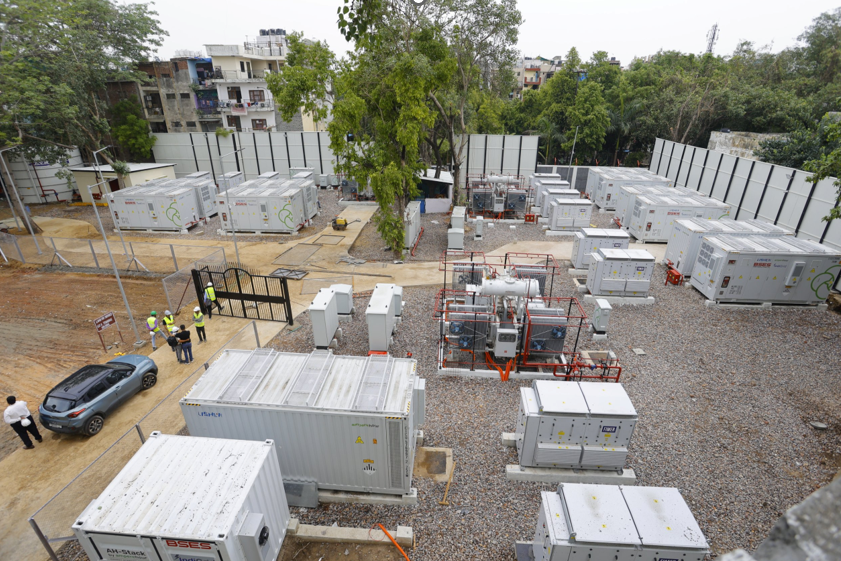
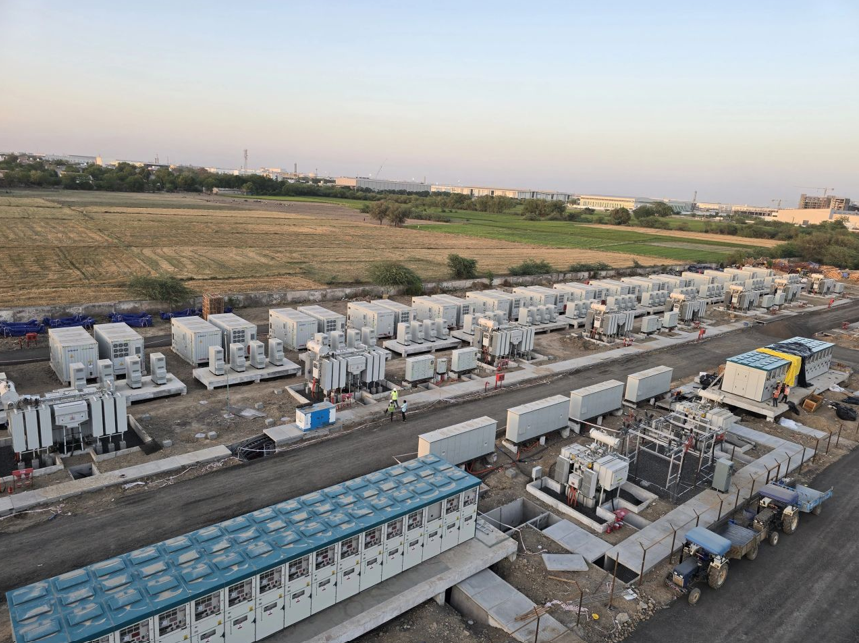
IndiGrid operates two BESS projects: the 20MW/40MWh Kilokari installation in Delhi, described as India’s first regulated utility-scale standalone BESS, and a 180MW/360MWh project in Gujarat. Both operate under 12-year agreements, bringing its operational battery portfolio to 400MWh.
In the first quarter of FY27, the projects achieve weighted average availability of 98.39%, above the contractual requirement of 95%. Their weighted average round-trip efficiency (RTE) reaches 88.44%, exceeding the required 85%.
These figures highlight the importance of asset management in a market where revenues largely depend on contracted capacity payments. Operators must keep batteries available when required while preserving performance throughout the agreement.
Unlike transmission infrastructure, batteries are chemical assets affected by cycling, temperature and degradation. Management requires continuous monitoring through battery management systems (BMS) and energy management systems (EMS), alongside thermal control and regular assessments of state of health.
System sizing also matters. IndiGrid incorporates additional capacity to account for degradation and maintain contracted output over the 12-year agreement.
“Because these are 12-year contracts, we build in additional capacity at the outset, so that even after twelve years of degradation the battery still delivers its full contracted capacity. Unlike a transmission line, a battery is a chemical asset. Its performance depends on how it is cycled, cooled and maintained every day.”
As more projects become operational, Indian performance data should improve understanding of degradation, efficiency and reliability, helping inform bidding strategies and strengthen lenders’ confidence. Ancillary services and exchange-based trading could also expand revenue opportunities beyond fixed capacity contracts.
Storage extends the transmission investment model
IndiGrid’s entry into battery storage reflects the changing requirements of India’s electricity system. Transmission moves electricity across geographical distances, while storage shifts its availability across time. Both require sound engineering, reliable operations and disciplined execution.
As India’s first and largest listed power sector infrastructure investment trust (InvIT), IndiGrid’s transmission business provides a foundation for expanding into contracted storage assets that generate predictable cash flows for unitholders.
BESS development combines electrochemistry, power electronics, electrical and civil engineering, thermal management, fire protection, controls and software. Cell selection is particularly important because chemistry influences performance, degradation and asset life. IndiGrid remains involved throughout procurement, including cell selection, factory acceptance tests and stress testing.
Execution also requires close coordination with utilities and state agencies. Once operational, storage assets need continuous oversight to maintain performance throughout their contracts.
IndiGrid has another 2GWh of battery storage capacity under construction, positioning it among India’s largest BESS portfolio holders.
Safety and domestic manufacturing take centre stage
As deployment accelerates, safety is becoming central to the industry’s credibility.
According to Namboodiripad, safety begins at the design stage. Key measures include proven cell chemistry, certified containers with thermal management, gas detection and fire suppression systems, adequate spacing and battery management systems capable of identifying and isolating faults.
Continuous monitoring, regular inspections and trained site teams are equally important.
India has ratified dedicated BESS safety regulations through the CEA, covering two-fault tolerance, minimum spacing, fire protection and independent fire safety audits. The regulations are scheduled to come into force in April 2027, with applicable technical standards under consultation.
Community engagement also matters. Developers need to explain system operations and safety measures, coordinate with local emergency services and establish responsible end-of-life recycling plans. A serious incident could affect confidence across the sector, making safety a shared responsibility.
Domestic manufacturing is similarly important, although progress remains uneven. Pack assembly, container integration and power conversion are being localised, but battery cells remain difficult to manufacture competitively at scale. Most are still imported, and landed prices for lithium iron phosphate (LFP) cells in India remain approximately 13-23% higher than in China.
Namboodiripad identifies a phased approach: expand domestic assembly and integration, develop gigawatt-hour-scale cell manufacturing through the production-linked incentive scheme for advanced chemistry cells and domestic value-addition requirements in VGF projects, then build upstream manufacturing of cathodes, anodes and electrolytes alongside recycling infrastructure.
Policy incentives can stimulate demand, but manufacturers need confidence that orders will continue beyond individual tender cycles. Long-term procurement visibility, domestic testing and certification, and gradual localisation will help build a competitive industry.
For developers, localisation must not compromise quality or bankability. Suppliers need to demonstrate proven cell performance, reliable warranties and the ability to meet long-term contractual obligations.
Batteries and pumped hydro serve different needs
India’s storage strategy is unlikely to rely on one technology. Batteries and pumped hydro address different grid requirements, making a combination of short- and long-duration solutions necessary as renewable energy penetration increases.
Battery systems respond within milliseconds and can typically be built in 18-24 months. Their integration with existing substations makes them suitable for evening peaks, grid balancing and shifting surplus midday solar generation into periods of higher demand.
Pumped hydro offers longer-duration storage and a long operating life, but projects take years to develop and require suitable geographical conditions.
The tender market is moving towards longer battery durations. Although 2-hour systems account for most tenders to date, four-hour configurations are gaining ground, supported by VGF guidelines. In August 2026, 4-hour systems account for approximately 87% of standalone BESS capacity tendered.
Flow batteries, sodium-ion batteries and compressed air energy storage could also contribute. Their prospects will depend on lifetime cost per delivered cycle, reliable operating data and scalable supply chains.
Tender design will help determine the technology mix. Frameworks specifying required services, including duration and response time, rather than favouring particular technologies, could allow solutions to compete on performance.
Private capital and the next phase of growth
Government support has been instrumental in establishing India’s battery storage market. VGF covers approximately 43GWh of battery storage, including a second tranche of INR54 billion for 30GWh that incorporates minimum domestic value-addition requirements. Transmission charge waivers and manufacturing incentives have further strengthened the investment case.
As the market develops, a consistent framework for private investment will become increasingly important. Standardised storage contracts, strong payment security from utilities, timely agreements and functioning ancillary services markets would improve revenue certainty and reduce execution risks.
Predictable revenues and enforceable contracts could enable private capital to assume a greater share of construction and technology risk, reducing the need for direct subsidies over time.
Long-term investment platforms can bridge the gap between project development and ownership by established infrastructure investors.
EnerGrid, a US$300 million platform co-promoted by IndiGrid, British International Investment (BII) and Norfund through the Norwegian Climate Investment Fund, is one example. The platform develops greenfield transmission and battery storage projects, with BII and Norfund providing patient capital during higher-risk development and construction, while IndiGrid contributes sector expertise and execution capabilities.
Once projects have accumulated a year of operating history, IndiGrid, as a listed InvIT, acquires them. This structure gives the development partners an exit route, allows their capital to be reinvested in new projects and provides IndiGrid’s investors with access to operating energy transition infrastructure.
Such models could become increasingly important as India’s storage requirements grow and the market needs to mobilise domestic and international capital at scale.
Execution will determine the market’s trajectory
Despite the strong pipeline and supportive policy environment, the immediate barriers to growth remain practical. Delays in signing storage agreements, insufficient preparation around land and grid connectivity, reliance on imported cells and limited domestic operating data all affect the pace of deployment.
Aggressive tariffs pose an additional risk. In 2025, the lowest tariff for a 2-hour battery system falls to approximately INR148,000 per MW per month, equivalent to around US$1,600. At such levels, developers have limited room to absorb higher equipment costs, robust engineering requirements or degradation-related risks over the life of a project.
As more companies enter the market, the distinction between winning tenders and delivering assets that perform reliably becomes increasingly important. A project’s success depends not simply on its initial tariff, but on whether it can meet contractual obligations over 12 years or longer.
For India, the next stage requires time-bound contract execution, pre-identified land and connectivity, standardised tender documents, stronger technical qualification criteria and consistent implementation of safety regulations. Deeper markets for ancillary services and flexibility would further strengthen the economics of storage.
The opportunity is clear, but the transition from procurement to dependable operation will determine how quickly India can realise it.
If the industry can close the gap between awards and execution while maintaining safety, quality and financial discipline, the period from 2026 to 2028 could mark a shift in which battery storage becomes a routine component of India’s electricity system rather than a large pipeline of projects awaiting delivery.
For IndiGrid and its peers, the measure of progress is ultimately straightforward: not how much capacity is tendered, but how much is built, how reliably it operates and how effectively it supports a power system increasingly shaped by renewable energy.
Namboodiripad will speak at this week’s Energy Storage Summit India 2026, taking place on 22–24 October at India Expo Mart in Greater Noida, Delhi NCR. Running alongside the Renewable Energy India Expo and The Battery Show India, the event will bring together developers, utilities, policymakers and global technology providers. ESN readers can receive 50% off last-minute tickets using code ESSI50 at checkout.
