We hear from consultancy AFRY about how energy storage can reduce market risks for CfD-winning projects in the UK, now and in the future, as Ørsted launches a BESS at a major wind farm project with a CfD.
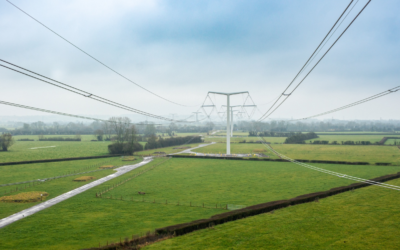
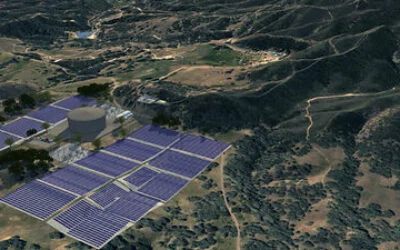
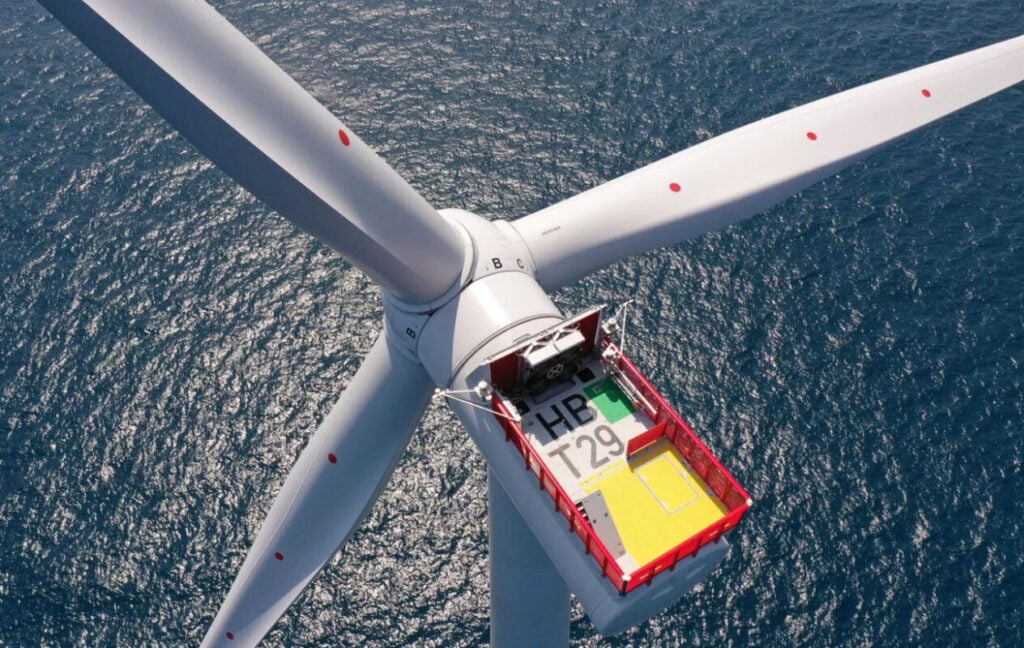
Denmark-headquartered independent power producer (IPP) Ørsted will build a 300MW/600MWh battery energy storage system (BESS) at its 2.9GW Hornsea 3 offshore wind power project in Swardeston, Norfolk, east England.
The BESS, which will use Tesla Megapacks, and wind farm are set to enter commercial operation in 2026/2027. It will help reduce price volatility, provide services to the market operator National Grid ESO and help the buildout of renewable generation.
Hornsea 3 won a contract under the Contracts for Difference (CfD) scheme in July 2022, a programme in the UK which provides renewable generation projects with guaranteed revenues via a strike price and cap-and-floor mechanism that provides a top-up payment if revenues fall below a certain level.
Try Premium for just $1
- Full premium access for the first month at only $1
- Converts to an annual rate after 30 days unless cancelled
- Cancel anytime during the trial period
Premium Benefits
- Expert industry analysis and interviews
- Digital access to PV Tech Power journal
- Exclusive event discounts
Or get the full Premium subscription right away
Or continue reading this article for free
The roughly 10:1 wind-BESS sizing opted for by Ørsted is in line with other wind co-located BESS in the UK market.
Energy storage reducing market risk for CfD projects
CfDs nonetheless still leave projects open to market risks and the UK’s growing BESS fleet is helping to mitigate these, as consultancy AFRY’s senior principal John Perkins explained to Energy-Storage.news.
“Where I see storage becoming relevant for CfD projects is on negative prices, which storage can help reduce,” Perkins said.
Ørsted is co-locating its BESS with Hornsea 3, building it on the same site as the onshore converter station. Energy storage’s role in integrating intermittent renewable generation onto the grid is well-known but for CfDs, a specific and significant benefit is reducing the amount of negative pricing, where generation is so high that prices go below 0.
“For recent CfDs, if the price goes negative for six hours consecutively you lose the top-up payment. Future CfDs will have this applied for even one hour. That was introduced because without it the CfD risked a problematic market distortion, with no incentive to curtail.”
“Negative prices are about 100 hours of the year right now, it’s become a problem and a big risk for generators. And there is short-term potential for negative prices to grow, perhaps to several hundreds of hours though maybe not to 1,000 a year.”
Energy storage can also help reduce market risks for CfD projects around imbalance costs, as Perkins explained: “CfD wind receives fixed income per megawatt hour, but it is exposed to market risk on its imbalance costs. Greater storage deployment, and therefore a smoothing of imbalance prices, is a benefit to CfD generators. It helps reduce the costs associated with its forecast error and balancing.”
Essentially, balancing costs for managing forecasting errors would go up and up without energy storage, but storage can keep those costs at lower levels, further reducing market risk.
Offshore wind has been the primary beneficiary of CfD allocations although in the last procurement. During Auction Round 5 (AR5), in September last year, no offshore wind was granted funding, as reported by our sister site Current. However, some are optimistic that the next round, AR6, will see more successful wind projects win contracts.
Tackling transmission system constraints
Curtailment of renewable generation can also happen due to transmission system constraints, particularly a problem for energy being transported across the Scotland-England border. Storage can help there too, Perkins said.
“Right now the balancing mechanism (BM) can protect generators with CfDs by allowing them to recover the balance of their CfD. But, some CfD projects are now getting non-firm agreements which means you won’t be protected in the same way. And storage has potential to help there as well, by helping National Grid with some of the system reasons that would drive more curtailment, essentially by acting as a transmission asset.”
To this end, transmission system operator (TSO) National Grid recently launched a constraint management intertrip service (CMIS) market. Zenobe, one of the UK’s largest BESS developer-operators, has a BESS project in the first one and while another developer-operator, Field, is proposing a significant expansion of that market, Perkins added.
Ørsted, mainly known for wind, is also active in renewables and storage in the US and is considering deploying a large-scale project using the novel ‘CO2 Battery’ long-duration energy storage (LDES) tech from Energy Dome.
For more information on Ørsted’s Hornsea 3 wind and BESS project see our sister site Current’s coverage of the announcement here.