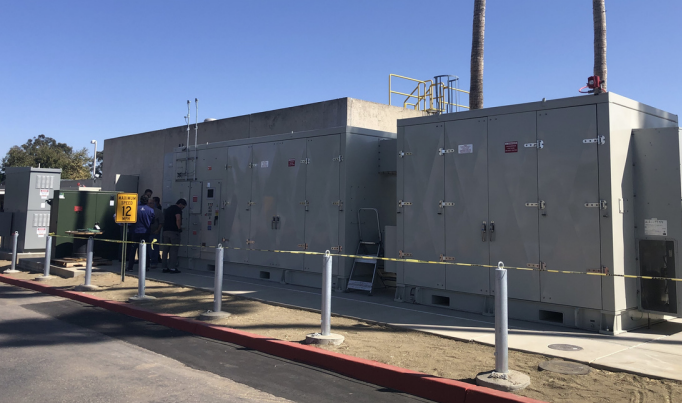
Trade association Energy Storage Canada (ESC) has recommended establishing a Distributed Reliability Track for behind-the-meter (BTM) and distribution-connected energy storage in the country’s most populous province, Ontario.
The recommendation comes from ESC’s Unlocking Distributed Storage Resources: Diversifying Ontario’s Procurement Strategy to Include DERs report, authored with research support from Ontario-based energy storage and software firm Peak Power, released 2 September.
The report outlines how to execute commitments made in Energy for Generations, Ontario’s Integrated Energy Plan. That plan acknowledges that distributed energy resources (DERs) deliver undervalued benefits to the grid and calls for compensation structures that properly reflect those contributions.
According to ESC’s report, Ontario faces a critical electricity supply crunch driven by surging demand, citing the Ontario Independent System Operator’s (IESO’s) projected 65% growth by 2050 and the 2026 closure of the 2,100MW Pickering Nuclear station.
Try Premium for just $1
- Full premium access for the first month at only $1
- Converts to an annual rate after 30 days unless cancelled
- Cancel anytime during the trial period
Premium Benefits
- Expert industry analysis and interviews
- Digital access to PV Tech Power journal
- Exclusive event discounts
Or get the full Premium subscription right away
Or continue reading this article for free
While long-term generation and transmission projects are underway, they won’t deliver capacity for more than five years. Ontario needs firm, dispatchable power within 12-24 months—a gap that traditional infrastructure cannot fill.
BTM battery energy storage systems (BESS) can deploy within weeks and provide grid-reliable capacity, yet Ontario’s current framework treats these assets as demand response rather than infrastructure. Current revenue sits around CAD$210,000-CAD$250,000 (US$151,813-US$180,729)-per-MW annually, with 80-90% derived from volatile Global Adjustment (GA) peak management. The Global Adjustment Charge (GAC) is the pricing mechanism applied to large industrial electricity users in the province, levying a demand charge based on the use of grid power during peak times.
Infrastructure-grade financing requires approximately US$290,000-per-MW annually, leaving a gap of US$108,000-US$137,000-per-MW. This gap represents grid services batteries can technically deliver but aren’t compensated for under existing rules.
ESC proposed establishing a Distributed Reliability Track (DRT) offering 8-10 year standard-offer contracts for 100-500MW of distributed BESS. The goal of this approach would be to close the near-term reliability gap with assets deployable in 12-24 months versus over five years for conventional generation, reduce ratepayer costs by avoiding more expensive centralised procurement, provide revenue certainty to unlock private capital for distributed infrastructure, and complement long-term investments by bridging the 2026-2032 window.
Ashish Naik, vice president of corporate development at Peak Power, stated, “Operational data from deployed Ontario assets shows that batteries are capable of doing much more for the grid than the current framework allows.”
Naik continued, “These systems can respond within seconds, but today they remain underused. A Distributed Reliability Track would activate capacity already connected to the grid and provide the revenue certainty needed to finance new projects before Ontario’s capacity deficit grows.”
Ontario
In May 2025, IPP Northland Power put its 250MW/1,000MWh Oneida Energy Storage Project large-scale battery energy storage system (BESS) into operation, which more than doubled Ontario’s energy storage capacity from 225MW to 475MW.
This May, the IESO launched its Long Lead-Time request for proposal (LLT RFP), with the goal of procuring up to 800MW of long-duration energy storage (LDES), including pumped hydro.
It is also open to 1TWh of generation resources, and successful projects will receive a 40-year contract.
The LLT RFP follows Ontario’s Long-Term 1 (LT1) and Long-Term 2 (LT2) procurement processes. LT1 delivered what was then the largest BESS procurement in Canadian history, awarding contracts for over 850MW of capacity across two tranches in May and June 2023. LT2 launched in July 2025, seeking 3TWh of energy generation and 600MW of new capacity resources.
In July 2026, infrastructure and construction company Aecon Group executed an agreement with the IESO for the 150MW/1,200MWh Simcoe energy storage project in Norfolk County, Ontario.
In 2019, the IESO announced it would launch a demonstration of how DERs connected to the distribution network could be used to lower costs of its transmission operations.
At that time, the IESO stated that approximately 10% of Ontario’ electricity capacity came from DERs. In 2022, the IESO estimated that DER capacity in the province was 10,000MW, with Ontario’s government noting a “significant economic potential” for the technology to meet its needs over the next 10 years.