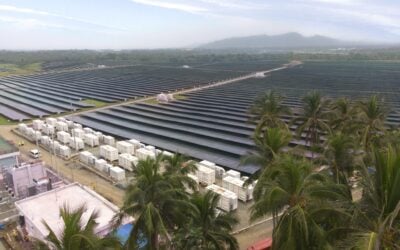
In the Dominican Republic and the wider region in the Caribbean, the energy transition is more focused on energy security and independence.
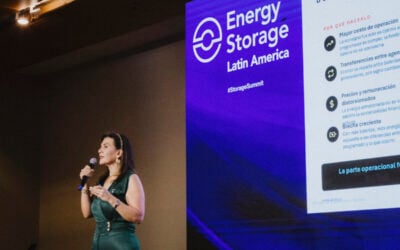
This was one of the key takeaways at a panel about emerging Latin American energy storage markets at the Energy Storage Summit Latin America 2026 in Santiago, Chile, today. The panellists covered several markets across the region, including Colombia, Peru, Mexico and the aforementioned Dominican Republic.
“For us, the energy transition is not just about meeting climate goals; it also involves a significant aspect of energy security and addressing price volatility in the industrial market—an issue that, given the current global situation, is particularly important right now,” said Edison Álvarez, economic transactions assistant manager at energy regulator Superintendencia de Electricidad (SIE) in the Dominican Republic.
Álvarez added that the peak demand in the Caribbean is much lower than in other markets, with the Dominican Republic standing at around 4GW, the highest in the region, while Puerto Rico stands at 3.2GW, and Jamaica has not even 1GW.
Try Premium for just $1
- Full premium access for the first month at only $1
- Converts to an annual rate after 30 days unless cancelled
- Cancel anytime during the trial period
Premium Benefits
- Expert industry analysis and interviews
- Digital access to PV Tech Power journal
- Exclusive event discounts
Or get the full Premium subscription right away
Or continue reading this article for free
This makes it more difficult to stabilise the grid, fulfil its inertia needs, and maintain its frequency. For that reason, the role of battery energy storage systems has primarily been in system stability, followed by flexibility, and, finally, in supporting the country’s energy independence.
The lack of regulation has long been one of the main roadblocks for the development of energy storage projects in Latin America and the Caribbean in the past few years. This will change soon in the Dominican Republic, as new legislation will take effect in 2027.
That new legislation is expected to define the technical requirements for batteries, both for the battery system the country aims to implement and for frequency regulation. And on top of that, the Ministry of Energy is considering new tenders for both existing energy storage projects and new generation with 15-year offtake agreements.
This is on top of the existing regulation that requires every new renewable energy project to be co-located with a four-hour battery that represents half of the project’s solar PV or wind power capacity.
El Niño accelerating need for renewables and energy storage in Colombia
Another key part for the growth of BESS and renewables in the countries covered in the panel is that the energy demand growth is currently outpacing growth in capacity.
This is the case in Colombia, with Natalia García, CEO of advisory firm Enermant, saying that the country’s energy demand was outpacing supply. She added that only 10MWh of BESS were currently operational in Colombia.
García also mentioned that the effects of El Niño are accelerating the country’s need to increase its renewables operational capacity and reduce its dependence on hydropower.
Indeed, García explained that even though other countries have been hit with higher rainfalls than usual, in Colombia, it was the opposite. This could put some constraints on the country’s hydro capacity.
New regulation to launch Peru’s second renewables wave
Another country covered during the panel was Perú, with Eduar Salinas, commercial manager at renewables developer Acciona Energía, highlighting that the country had a first wave of growth for renewables between 2009 and 2016.
The wave of renewable energy auctions was abruptly halted after four auctions due to a generation oversupply, reducing the need to invest in renewable energy tenders.
“I believe that Peru is awaiting a second wave—contingent upon the establishment of regulatory frameworks that provide regulatory and contractual stability—so that these projects, totalling over 20GW, can materialise and contribute to the country’s energy transition,” explained Salinas.
For Salinas, there are three aspects to consider regarding the future growth of energy storage in Perú. These are the availability of solar and wind resources, the demand growth primarily driven by the mining industry and nearly 20GW of renewable energy projects with requests for power delivery to the grid.
Mexico’s mixed private-public drive for growth
In Baja California, the Mexican northern province, regulatory change is dependent on what happens at the national level, despite the region not being interconnected with the rest of the country, but actually with California in the US.
Josué Alberto Valenzuela, director of strategic productive investment projects at the Secretariat of Economy and Innovation of Baja California, spoke earlier this month with Energy-storage.news about the renewed interest in renewables in Mexico, with many projects hybridised or co-located with BESS.
Baja California is aiming to add nearly 1.7GW of renewables by 2030, as well as 1.1GW of new energy storage, said Valenzuela. “This means that we are moving from 60MW of standalone storage capacity to 1,110MW by 2030.”