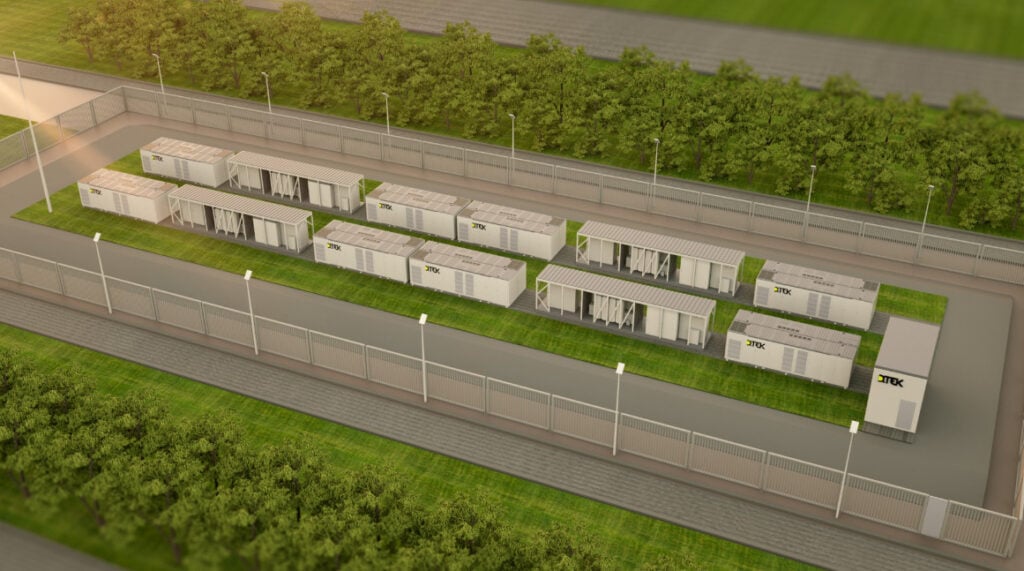
Investor DTEK will build 200MW of battery energy storage systems (BESS) in Ukraine as the country enters its third winter of war with Russia, with continued attacks on its electricity infrastructure looming.
The company will invest €140 million (US$155 million) in the series of projects, which are aimed at both helping to build a more green energy system but also to mitigate against Russian attacks on its infrastructure, which have ramped up recently and are set to continue into winter.
The BESS projects will come online no later than September 2025 and will provide ancillary services to Ukraine’s transmission system operator (TSO) Ukrenergo, following DTEK winning the right to provide ancillary services—primarily automatic frequency restoration reserves—in a competitive auction on 22 August.
The agreement covers numerous projects distributed across Ukraine. BESS are vital in making possible the decentralisation of Ukraine’s energy sector, the announcement said, by helping it move from a system dominated by a few power stations to one with thousands of energy sources. The country needs BESS to balance supply and demand in the event of generation surges.
Try Premium for just $1
- Full premium access for the first month at only $1
- Converts to an annual rate after 30 days unless cancelled
- Cancel anytime during the trial period
Premium Benefits
- Expert industry analysis and interviews
- Digital access to PV Tech Power journal
- Exclusive event discounts
Or get the full Premium subscription right away
Or continue reading this article for free
Russia has been strategically attacking substations to take nuclear power plants offline, a local source told Energy-Storage.news, as attacking the stations themselves risks another Chernobyl-like disaster. The BESS’ ancillary service capabilities have been procured with an eye on minimising such substation outages.
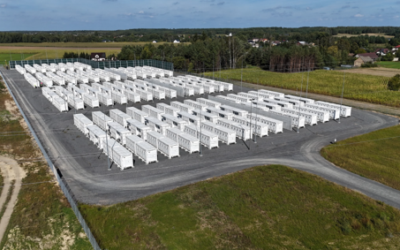
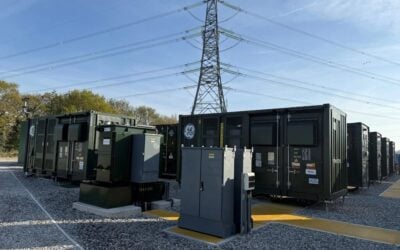
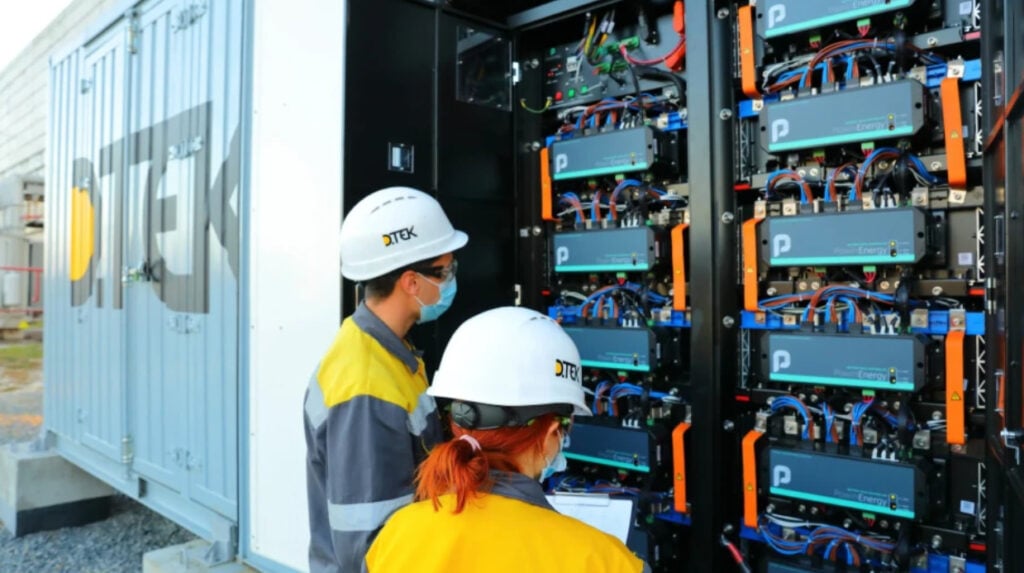
DTEK is also building one of the first large-scale BESS projects in Poland, a 132MW system with a 2027 capacity market contract acquired from developer Colombus Energy earlier this year. DTEK deployed Ukraine’s first large-scale BESS too, back in 2021, utilising Powin battery modules in a BESS integrated by technology firm Honeywell (pictured above).
Executives from DTEK will be speaking at Solar Media’s Energy Storage Summit Central Eastern Europe in two weeks’ time (24-25 September) in Warsaw, Poland.