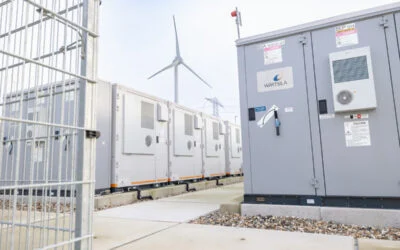
Accreditation and certification house DNV GL has just published an updated version of GRIDSTOR, a best and recommended practice guide for stakeholders in the grid-connected energy storage sector.
An independent set of recommendations, which Netherlands-headquartered DNV GL said combines key standards and guidelines to assist in the safe and reliable deployment of energy storage systems, the document was put together with input from around the industry. It includes advice on areas from how to mitigate technology risks to how to size systems correctly and delivering multiple applications.
Representatives of 15 organisations contributed to both the original GRIDSTOR, published in 2016. They included the likes of Alaska Center for Energy and Power, Dutch system integrator Alfen, capacitor maker Maxwell Technologies, Conergy, Enexis and Irish renewable energy specialist Gaelectric. After it was formulated, GRIDSTOR was then put before some 140 further organisations for their feedback, comments and input.
The new version encompasses newer technologies and insights on market developments, as well as some revised or updated recommendations. It has fresh guidelines on cyber security, communications protocols, microgrids, conformity assessment, warranties, decommissioning, tendering and procurement, bankability, residual value and a tool for calculating carbon emissions.
Try Premium for just $1
- Full premium access for the first month at only $1
- Converts to an annual rate after 30 days unless cancelled
- Cancel anytime during the trial period
Premium Benefits
- Expert industry analysis and interviews
- Digital access to PV Tech Power journal
- Exclusive event discounts
Or get the full Premium subscription right away
Or continue reading this article for free
“This new and updated global standard on advanced utility and microgrid energy storage explains how storage performs as a ‘Swiss army knife’ delivering multiple streams of value to utilities, ratepayers and their regulators,” contributor David Lentsch, head of energy storage at Maxwell Technologies, said.
DNV GL’s business leader in energy storage, Martijn Huibers, and Paul Raats, one of the company’s solar analysts, recently wrote about GRIDSTOR, its aims and some of the ways the guide could help accelerate development in the global energy storage market for Solar Media’s downstream PV technical journal PV Tech Power, out now.