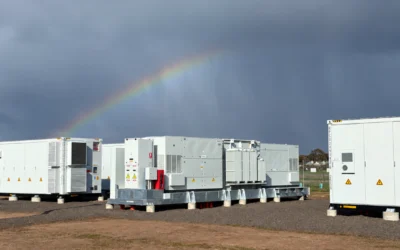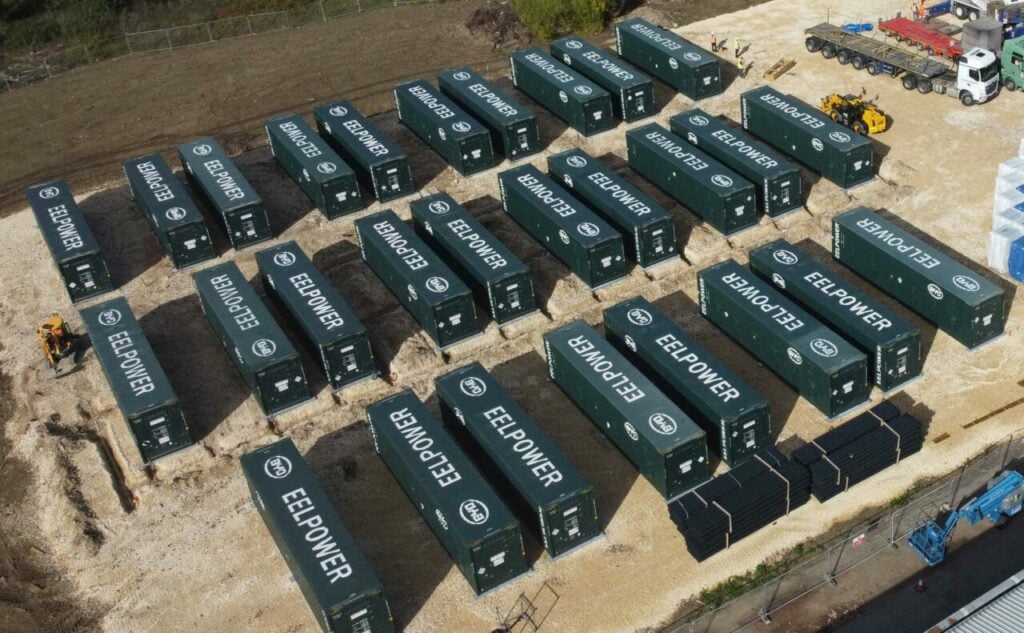
Renewable Power Capital (RPC) has tied up with fellow developer Greenfield to deploy at least 500MW of battery storage in the UK, six months after a similar deal with Eelpower.
The London-based developers have kicked off the partnership with the acquisition by RPC of two projects from Greenfield totalling 83MW, announced today (30 May). No details were disclosed about the two projects other than that they will be ‘fully permitted’ by Q2 2024.
It comes six months after RPC announced it would work with UK battery storage developer Eelpower to deploy 1GW in the UK, covered by our sister site Solar Power Portal, which wasn’t mentioned in today’s announcement.
Kevin Devlin, who took over as CEO of RPC from Bob Psaradellis last month, commented on the partnership with Greenfield.
Try Premium for just $1
- Full premium access for the first month at only $1
- Converts to an annual rate after 30 days unless cancelled
- Cancel anytime during the trial period
Premium Benefits
- Expert industry analysis and interviews
- Digital access to PV Tech Power journal
- Exclusive event discounts
Or get the full Premium subscription right away
Or continue reading this article for free
“Lithium-ion battery storage is currently the most flexible short duration storage technology available and will play a crucial role in balancing our energy system. The UK is already a leader in this sector, and we are excited to partner with Greenfield in order to accelerate and amplify this growth,” he said.
RPC was launched by the Canada Pension Plan Investments (CPP Investments), a state-owned pension investment fund, in December 2020. It recently announced a 1GW JV for onshore wind in Poland with Tundra Advisory and a similar sized development partnership for solar in Spain with Euder Energy.
It’s been a busy week for the UK battery storage market. Today has also seen developers Cero Generation and Enso Energy reach financial close on a 49.5MW/99MWh battery energy storage system in South Gloucestershire, UK. Projects under 50MW benefit from a faster regulatory and permitting process in the UK.
The project will come online in late 2024 and will be co-located with the 49.9MW Larks Green solar farm, which went online earlier this month.
Last week saw Pulse Clean Energy secure over US$200 million in debt for its battery storage pipeline while Clearstone Energy sold two projects totalling 107MW in southern England to Foresight Energy Infrastructure Partners, covered by Solar Power Portal.
RPC’s backer CPP Investments has also been active in investing in the non-lithium-ion battery space, putting capital into iron-air battery firm Form Energy and advanced compressed air energy storage (A-CAES) company Hydrostor.