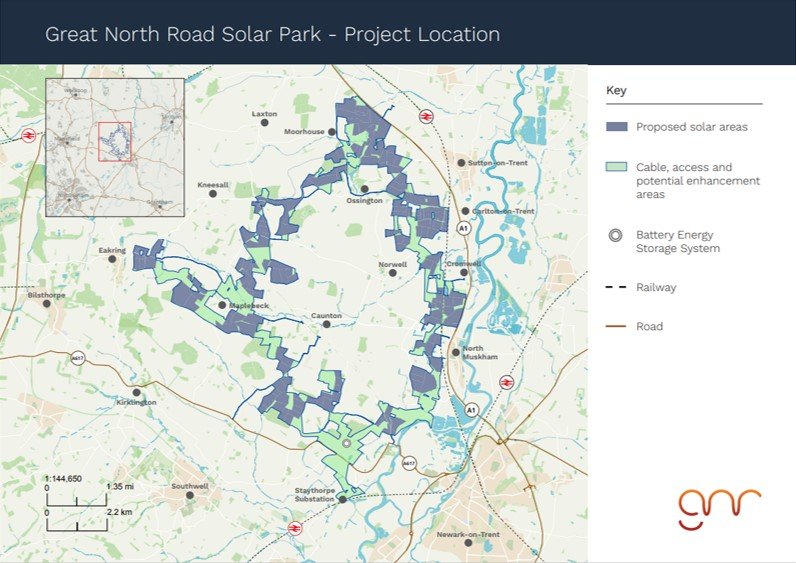
Solar and energy storage developer Elements Green has secured planning permission for its Staythorpe battery energy storage system (BESS) in the East Midlands region of the UK.
The project will have a 360MW peak and a storage capacity of 720MWh, and has a planned operational life of 40 years. Elements Green has set a target date of 2026 for the system to become operational.
The plans include several elements aimed at benefiting the community. These include more than 12 acres of land dedicated to woodland creation and wildflower meadows, planting 129 trees, and creating a new permissive footpath through the site. The site is expected to bring a biodiversity net gain of at least 25.7%.
Elements Green executive chairman Mark Turner commented: “Securing planning permission is a remarkable achievement for our team. We are preparing to begin construction and bring our vision to life, creating not only a state-of-the-art energy storage solution but also making a positive contribution to the local environment with additional planting and the creation of a permissive path. Through its connection into the existing national grid substation at Staythorpe, the project builds on the Trent Valley’s long history of powering the UK.”
Try Premium for just $1
- Full premium access for the first month at only $1
- Converts to an annual rate after 30 days unless cancelled
- Cancel anytime during the trial period
Premium Benefits
- Expert industry analysis and interviews
- Digital access to PV Tech Power journal
- Exclusive event discounts
Or get the full Premium subscription right away
Or continue reading this article for free
“We are excited about the future and the positive impact this project will have on our organisation and the broader community,” Turner said.
“The UK Government has set ambitious and legally binding targets to eliminate carbon emissions by 2050. More renewable energy is needed to fast-track away from fossil fuels, and energy storage and large-scale solar development are recognised as having an important role in achieving this.”
The UK has been ranked the world’s third most attractive country for BESS development in Ernst & Young’s (EY’s) latest edition of its Renewable Energy Country Attractiveness Index (RECAI), and major investment into the sector has been on the rise.
This story first appeared on Solar Power Portal.