Companies in the battery storage sector attracted US$11.4 billion in corporate funding in the first nine months of 2021, a 363% rise on the same period of last year.
Clean energy markets research group Mercom Capital said the amount it has documented in its latest report into battery storage funding and M&A activity comprised 73 separate deals. Last year, from January to September, 35 deals netted battery storage companies US$3.5 billion.
Similarly, venture capital (VC) funding into the sector increased considerably: US$5.5 billion was raised from 59 deals, compared to just US$1.2 billion in 21 deals over the same respective periods.
Mercom’s reports compile activity across three industry sectors: battery storage, energy efficiency and smart grid. Battery storage accounted for all but US$1 billion of VC investments flowing into the three sectors — a combined US$6.5 billion.
Try Premium for just $1
- Full premium access for the first month at only $1
- Converts to an annual rate after 30 days unless cancelled
- Cancel anytime during the trial period
Premium Benefits
- Expert industry analysis and interviews
- Digital access to PV Tech Power journal
- Exclusive event discounts
Or get the full Premium subscription right away
Or continue reading this article for free
Battery storage companies’ corporate funding activity also dwarfed the other two sectors’ — with a total of US$13.5 billion raised across all three. Smart grid companies raised US$1.867 billion and energy efficiency US$595 million.
There was about US$1.8 billion corporate funding raised by battery storage firms in Q3 2021 alone, with Mercom finding in July that about US$9.6 billion had been raised in the first half of 2021. In all it reflects on a massive rise from 2020, although the pandemic-depressed nature of last year perhaps makes it difficult to extrapolate trends: the first half of 2020 saw just US$536 million raised, a 61% drop from H1 2019’s US$1.4 billion.
However in 2020 the sector rebounded strongly in the latter part of the year. A total US$6.5 billion corporate funding was raised for the whole of 2020, more than double the US$2.8 billion raised in 2019; so either way, it looks like 2021 shows a strong appetite for corporate investment into battery storage.
Northvolt tops VC chart yet again
Once again, Sweden-headquartered lithium-ion battery manufacturing startup Northvolt was top of the table for venture capital-funded deals.
Northvolt, which recently announced a US$750 million R&D and commercialisation centre along with its dozens of gigawatt-hours of cell and systems production facilities under construction, raised US$2,750 million from VC investors.
These investors included Volkswagen, OMERS, Goldman Sachs Asset Management, Scania, Spotify CEO Daniel Ek and a number of others.
Also in the top five VC-funded deals were a US$590 million Series F funding round by Sila Nanotechnologies in second place. Sila is developing next generation materials for lithium battery design.
One curious thing to note is that the third-placed deal in the VC deal chart was achieved by Form Energy, a company which, like Northvolt and Sila Nanotechnologies, has a former Tesla executive as CEO.
Form Energy and the US$240 million it raised for its novel iron-air battery technology from groups including Bill Gates’ Breakthrough Energy Ventures and Macquarie Capital in a Series D funding round closed in August placed the company in Mercom’s chart above Nexamp, a community solar and energy storage project developer, which also got US$240 million from clean energy investor Generate Capital.
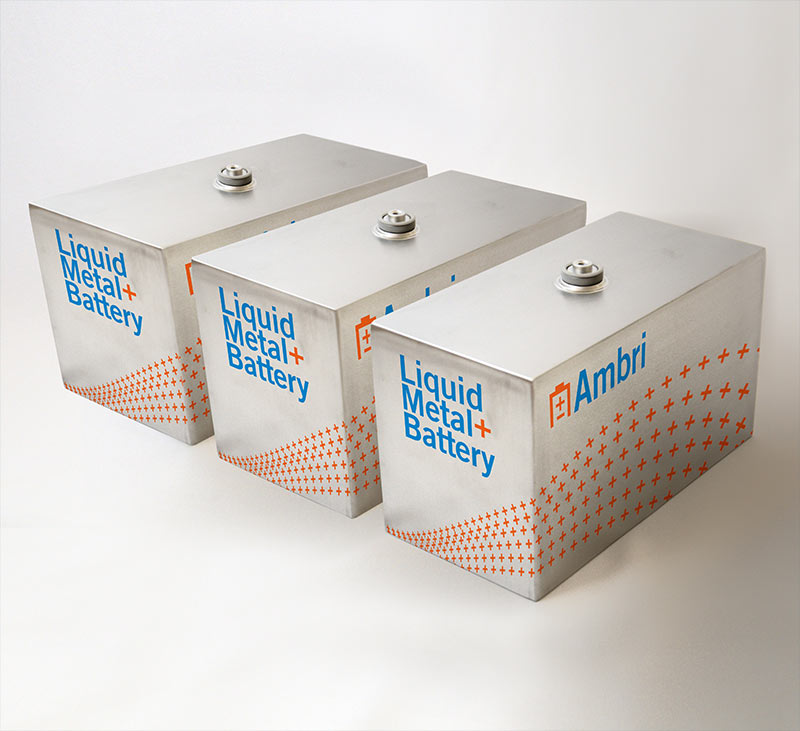
Fifth in the list was another novel long-duration battery storage tech company, Ambri, which makes a high temperature liquid metal battery and raised US$144 million in a deal that was also announced as closed in August. Investors included Bill Gates again, Japan Energy Fund and Reliance Industries, which is looking into building Ambri systems in India.
Other investors included Paulson & Co, which has a materials subsidiary that signed a supply deal with Ambri for one of its battery’s key ingredients, antimony.