Developer Primergy Solar has entered into a sole battery supplier agreement with lithium-ion battery manufacturer CATL for the Gemini solar-plus-storage project in Nevada, US.
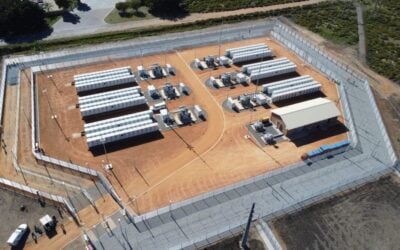
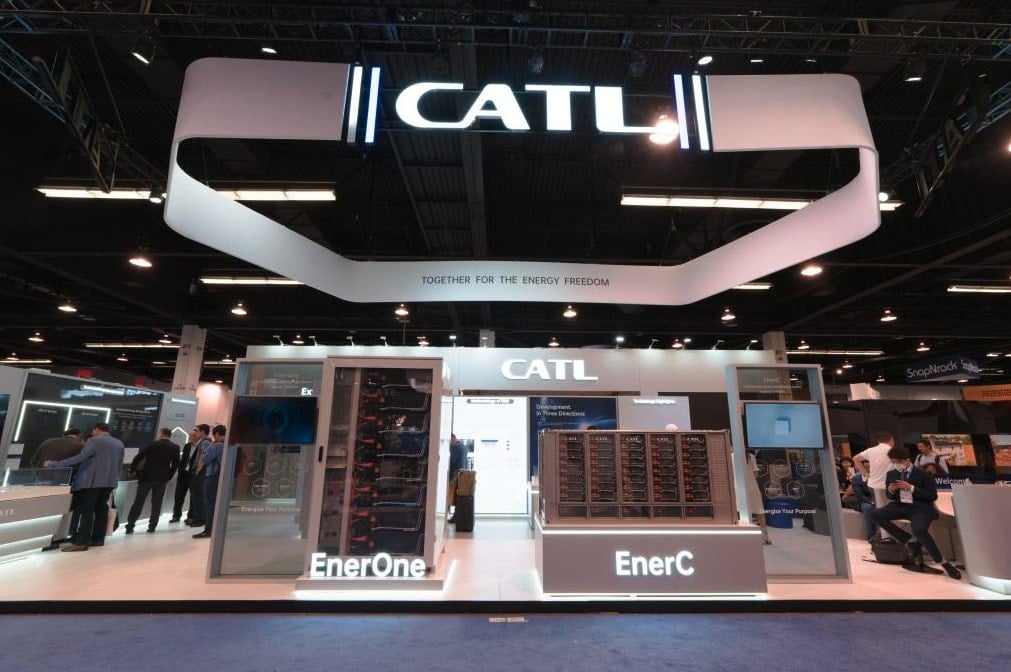
CATL will provide its modular, liquid-cooled energy storage system EnerOne, pictured above, for the storage portion of the project which will total 1,416MWh of capacity. It uses lithium iron phosphate (LFP) battery cells and will accompany a 690 MWac/966 MWdc solar PV array at the site, which is near Las Vegas.
The battery energy storage system (BESS) will be put together by system integrator IHI Terrasun, as announced in March’s selection of the project’s contractors by Primergy. Kiewit Power Constructors Co. will be the US$1.2 billion project’s overall engineering, procurement and construction (EPC) partner.
Ty Daul, Primergy CEO, said: “The future of our country’s energy reliability and resiliency relies on the mass deployment of battery storage capacity that can supply consistent power back into the grid when it’s needed most.”
Try Premium for just $1
- Full premium access for the first month at only $1
- Converts to an annual rate after 30 days unless cancelled
- Cancel anytime during the trial period
Premium Benefits
- Expert industry analysis and interviews
- Digital access to PV Tech Power journal
- Exclusive event discounts
Or get the full Premium subscription right away
Or continue reading this article for free
“Together with CATL, we are building a market leading and highly sophisticated battery storage system that can capture surplus solar power during the day and store it for use in the early evening after the sunsets in Nevada.”
Jamal Burki, IHI Terrasun president, told Energy-Storage.news in an interview earlier this year that Gemini was a “milestone project”, the scale of which showed “how the industry has really come together”.
Nigde, China-headquartered CATL’s EnerOne system has a compact structure which uses 35%
less floor space compared to traditional air-cooling products, the company claims. Its battery management system (BMS) can also identify unhealthy battery cells in advance and an intelligent thermal management system can limit temperature difference between cells to improve energy availability.
Quinbrook, Primery’s parent company, sold a stake in the Gemini project to Dutch pension fund asset manager APG last week.
CATL also recently signed a 10GWh, multi-year supply agreement with system integrator FlexGen, which Energy-Storage.news interviewed the latter’s CEO and CFO about whilst at RE+ in California last month.