Lithium battery recycling company Li-Cycle is planning its fourth facility in North America, the company said, as it made its first financial results release since listing on the New York Stock Exchange (NYSE) in August.
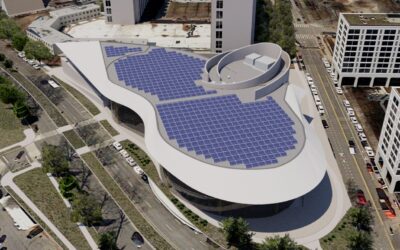
Behind-the-meter battery storage projects announced last week in California and Ontario will cut electricity costs and carbon emissions for a variety of commercial and industrial (C&I) businesses.
Success for project proposals combining solar PV with battery storage in Germany’s latest multiple technology tenders for renewable energy are proof of the importance of energy storage, the managing director of German energy storage association BVES has said.
LG Energy Solution has acquired NEC Energy Solutions (NEC ES), the NEC Corporation subsidiary focused on energy storage which announced its exit from the industry last year.
US Vanadium has followed up a recent commitment to ramp up its flow battery electrolyte production with a deal to secure vanadium feed material and the acquisition of a processing plant near its existing facilities in Arkansas.
Canadian Solar’s project development subsidiary Recurrent Energy has sold a majority stake in its 350MW / 1,400MWh Crimson energy storage project currently awaiting the start of construction in California.
South Korean energy company SK E&S has agreed to acquire Key Capture Energy, a developer, owner and operator of grid-scale battery energy storage systems (BESS) in various regions of the US including Texas and New York.
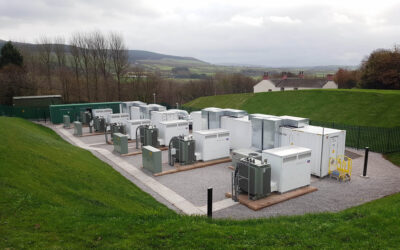
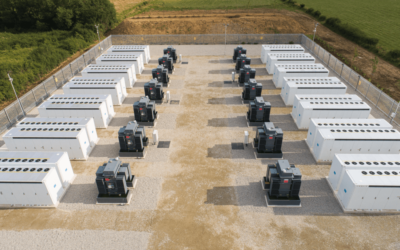
Work has started at a battery storage site lauded as the largest of its kind under construction in the UK by developers Harmony Energy and Fotowatio Renewable Ventures.
California-headquartered distributed battery energy storage provider SimpliPhi Power has been bought by Briggs & Stratton, a company best known for its gasoline engines and portable generators.