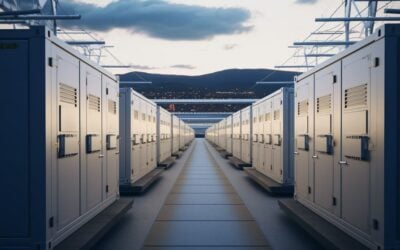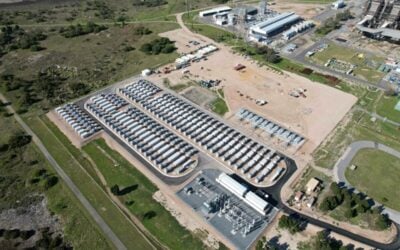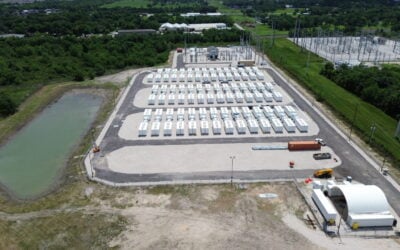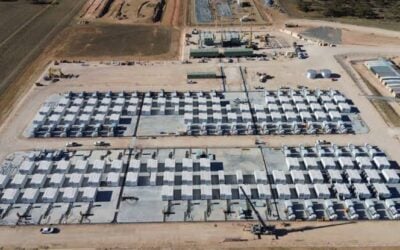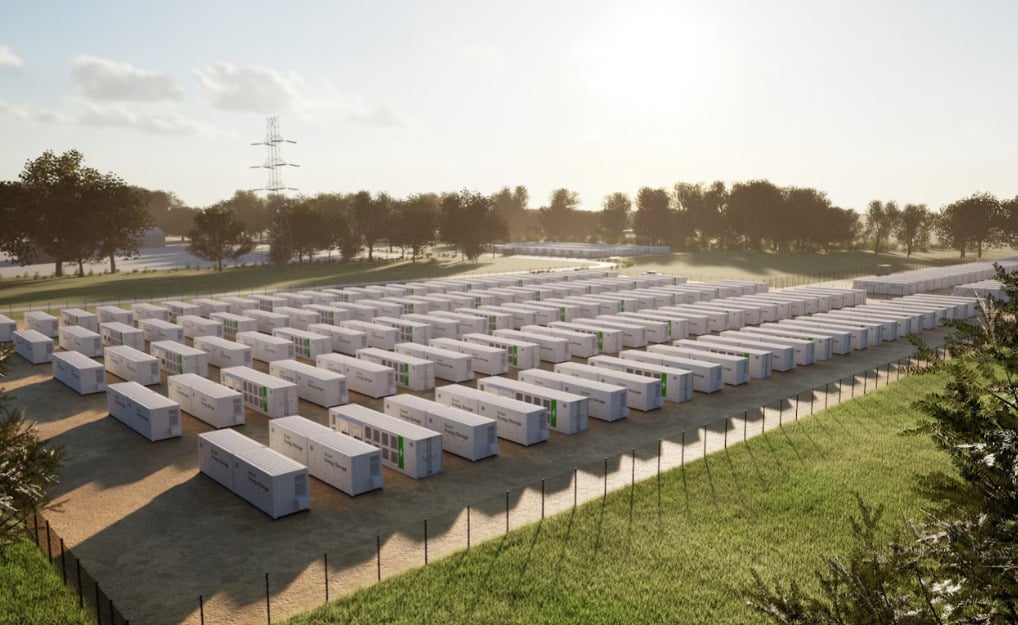
Six energy storage projects, totalling 3,626MWh of energy, have been successful in the Australian government’s Capacity Investment Scheme (CIS) for Victoria and South Australia.
The tender allocation will deliver 1,630MWh to Victoria and 1,996MWh to South Australia. Once a conditional CIS agreement has been signed, the projects are due to start operation by mid-2027.
The CIS promotes new investments in renewable energy dispatchable capacity, such as battery storage, solar, and wind power generation. This will enable Australia to meet the increasing electricity demand and bridge reliability gaps as old coal power stations phase out of the grid, something that is expected to be achieved on the National Electricity Market (NEM) by 2038.
The joint tender for Victoria and South Australia launched in December last year and federal energy minister Chris Bowen announced a mid-2024 start of a Western Australia tender in April.
Try Premium for just $1
- Full premium access for the first month at only $1
- Converts to an annual rate after 30 days unless cancelled
- Cancel anytime during the trial period
Premium Benefits
- Expert industry analysis and interviews
- Digital access to PV Tech Power journal
- Exclusive event discounts
Or get the full Premium subscription right away
Or continue reading this article for free
Victoria sees two successful energy storage projects in the CIS
Two Victoria-based projects were successful in the Capacity Investment Scheme. This includes energy generator-retailer EnergyAustralia’s 350MW/1,400MWh Woreen battery energy storage system (BESS). The 4-hour duration project is being built in part to replace EnergyAustralia’s 1,450MW Yallourn coal-fired power station, which is scheduled for retirement in mid-2028. The BESS is expected to be completed and connected to the grid in 2026.
The other Victoria-based project to see success under the CIS is project developer Progress Power’s 115MW/230MW Springvale Energy Hub. Stage one of the project includes the development of the 2-hour duration BESS, with it set to be operational in 2027.
Stage two will then deliver an increase in the capacity and duration of energy storage to more than four hours. This requires network upgrades to allow additional capacity which is not feasible in stage one. A utility-scale solar PV project could also be added in the future.
South Australia gains support for nearly 2GWh of energy storage
South Australia saw double the number of projects successful in the latest CIS tender round, with four, with Pacific Green Energy, ZEN Energy, Pacific Blue, and EnergyAustralia to benefit.
Pacific Green Energy’s 250MW/1,000MWh Limestone Coast West BESS is situated in Mingbool, to the southwest of the state capital, Adelaide. The energy park will be developed as four standalone projects. Three of the batteries will have 2-hours of energy storage (250MW/500MWh), and one will be 4-hours (250MW/1,000MWh).
ZEN Energy’s 170MW/653MWh Solar River BESS and 230MW solar PV hybrid project, located north of Adelaide between Burra and Morgan, was also successful in the CIS tender.
ZEN is currently varying the development approval to allow for up to 8-hours of battery storage but plans to proceed in the near term with approximately 2.5 hours of storage capacity, which the Capacity Investment Scheme covers. Construction is expected to commence in 2024 and is due to start supplying electricity in 2026.
Pacific Blue has seen its 60MW/143MWh Clements Gap BESS successful in the CIS tender, around 20km northeast of Port Broughton, in the northern part of the Yorke Peninsula. It will be co-located at the site of the Clements Gap Wind Farm, which has a generating capacity of 56.7MW.
The Clements Gap BESS will be the company’s first energy storage system. Construction started in June 2024 and will commence operation in 2026.
The final project in South Australia to be successful in the latest CIS tender is EnergyAustralia’s 50MW/200MWh Hallett BESS, located 210km north of Adelaide. The 4-hour duration BESS will be located alongside Energy Australia’s Hallett Power Station, with plans to increase the size system to 150MW/600MWg after completion of the project’s first stage.
Western Australia sees first CIS tender oversubscribed ‘six times over’
Western Australia, which recently launched its first CIS tender, has been “oversubscribed six times over”, Australia’s minister for climate change and energy Chris Bowen revealed, as reported by The Guardian.
The tender, launched in mid-July 2024, seeks an indicative 500MW of renewable energy resources in Western Australia, dispatchable over a 4-hour duration (2,000MWh). Registration for the tender will close in early August.
The project bid phase closed in mid-August, with selected bidders to be invited to submit financial value bids in the second stage of the process between September and November. Successful bids will then be announced in February 2025.
Salim Mazouz, branch head of the energy division at the Department of Climate Change, Energy, the Environment and Water (DCCEEW), told Energy-Storage.news Premium that the CIS has been created to help investors and developers in renewable energy and energy storage manage downside risk.
For this, the DCEEW was able to take some inspiration from other schemes around the world and Australia, including the New South Wales LTESAs, tenders in the Australian Capital Territory (ACT) and Victoria, and the UK’s Contracts for Difference (CfD) scheme.
Applying a “traditional” CfD scheme where the floor and ceiling are essentially the same would not maintain market signals, as stated by Mazouz.
“When you’ve got a CfD, locational decisions, technology decisions, all of those are fully made by the off-taker, namely the government in that case. Whereas with our scheme, you actually have a number of incentives that retain the market incentives for locational decisions, technology choices and so forth,” Mazouz told Energy-Storage.news Premium.