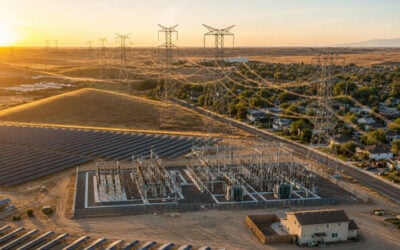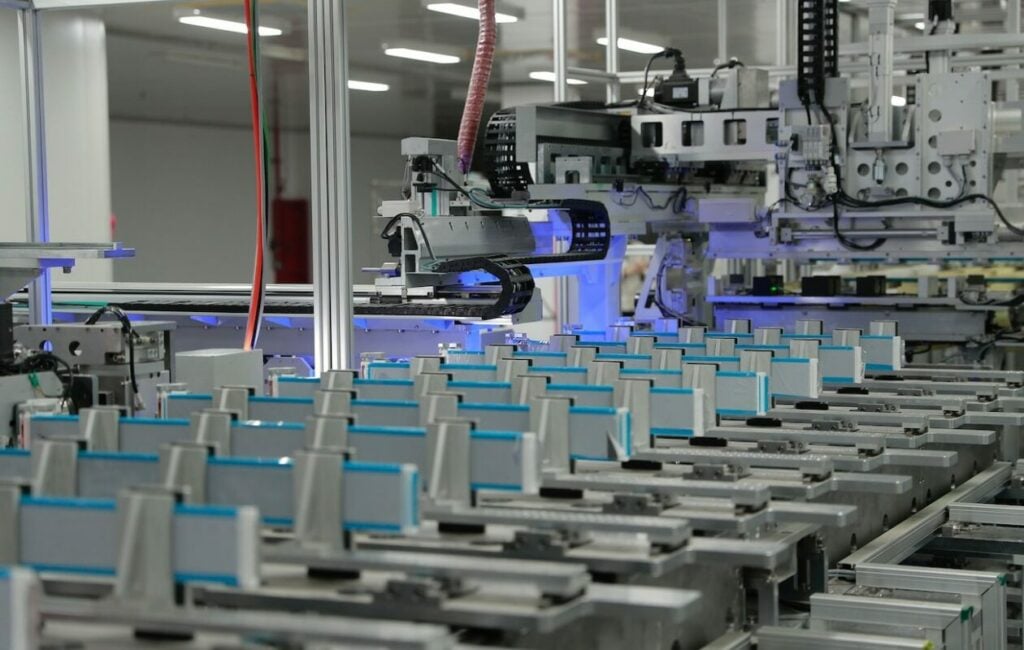
EV and BESS company BYD will supply its product for a project from Grenergy in Chile which has been claimed as the largest energy storage project in the world.
Independent power producer (IPP) Grenergy and BYD have signed a strategic agreement for the supply of 1.1GWh of battery energy storage systems (BESS) for the Oasis de Atacama project in the Atacama desert, northern Chile.
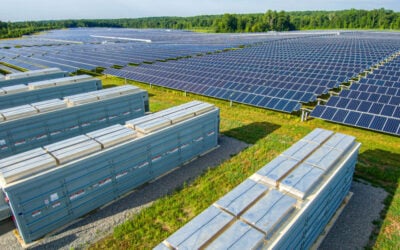
The project, which was revealed by Grenergy in November 2023, will pair 1GW of solar PV with 4.1GWh of energy storage, which the company said makes it the largest energy storage projects in the world.
“The agreement with a leading company like BYD demonstrates our firm commitment to energy storage and represents a major step forward in securing the supply needed to be able to develop and build the battery projects we have recently announced,” said David Ruiz de Andrés, CEO of Grenergy.
Try Premium for just $1
- Full premium access for the first month at only $1
- Converts to an annual rate after 30 days unless cancelled
- Cancel anytime during the trial period
Premium Benefits
- Expert industry analysis and interviews
- Digital access to PV Tech Power journal
- Exclusive event discounts
Or get the full Premium subscription right away
Or continue reading this article for free
The company has not given a clear timeline on when the Oasis de Atacama project will reach full operational capacity.
BYD is primarily an electric vehicle (EV) manufacturer but has expanded into the battery energy storage system (BESS) market too. It recently overtook Tesla for EV sales, making it the world’s largest while recent research from Wood Mackenzie as joint fourth-largest (with Huawei) BESS supplier globally in 2022.
Chile is by far the busiest energy storage market in Latin America and one of the most active in the world as the country looks to integrate vast quantities of intermittent solar PV generation, with the Atacama desert often called the ‘sunniest place in the world’.
Massive amounts of solar curtailment are leading IPPs to add storage to existing solar projects while a new regulation allowing standalone storage to participate in the electricity market has opened that segment up too. Chile also has huge lithium reserves which the state recently moved to gain control over.