Two potential game-changing developments for Brazil’s energy storage sector were announced this week by its regulator and its energy ministry.
On Tuesday (2 June), the National Electric Energy Agency (ANEEL) approved its first regulation on energy storage systems (ESS) at an Ordinary Public Meeting. The decision brings an end to a public consultation period that ran from December 2024 until the end of January 2025.
ANEEL will regulate and supervise electricity storage as an activity in the energy sector, including access to the network and revenue stacking from providing multiple services across grid-connected and off-grid installations, as well as in front-of-the-meter (FTM) and behind-the-meter (BTM) applications.
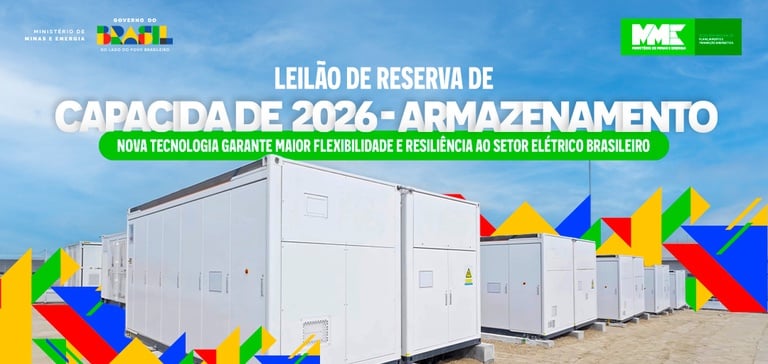
The regulation paves the way for the South American country’s first national energy storage auctions, which the government’s Ministry of Mines and Energy announced the following day (3 June). The first auction is expected to be held this year.
Try Premium for just $1
- Full premium access for the first month at only $1
- Converts to an annual rate after 30 days unless cancelled
- Cancel anytime during the trial period
Premium Benefits
- Expert industry analysis and interviews
- Digital access to PV Tech Power journal
- Exclusive event discounts
Or get the full Premium subscription right away
Or continue reading this article for free
Approval of ANEEL’s regulation had been long-awaited, but the agency had delayed the process, which was first floated in 2019. After the conclusion of the public consultation, debate resumed in April, prompted by a request for review by board member and reporting director Fernando Mosna.
There had been fears that a new request for review, made by ANEEL director Willamy Frota that month, would put the decision back on hold, drawing concern from the national energy storage trade association Associação Brasileira de Armazenamento de Energia (ABSAE).
Decision follows ‘years of debates and regulatory construction’
This week, ANEEL said Frota “largely agreed” with the regulation as set out by Mosna, pertaining to models for the operation of ESS assets, remuneration and revenue stacking, and contract terms for network access.
However, Frota made a proposal on charges for network use that was approved by a majority of the ANEEL board.
ESS assets that would be fully controlled by the national electricity system operator, ONS, will see reduced grid consumption charges, while assets not centrally controlled by ONS will continue to operate under existing rules for network usage.
ONS will also control dispatch and define when battery energy storage systems (BESS) should charge and discharge to offer the most value and benefit the grid, for assets with system usage agreements (SAE) in place. Given that the economic benefit to the asset owner will be in line with ONS instructions, these systems will only pay charges based on their injection to the grid.
The network operator must also publish maps annually, indicating the optimal points of interconnection, and submit proposals to ANEEL within 180 days of Tuesday’s decision to adapt its network procedures to incorporate the new rules.
The regulation also incorporates tax benefits for energy storage systems, under Brazil’s Special Incentives Regime for Infrastructure Development (REIDI).
“Energy storage has definitely entered the agenda of the Brazilian electricity sector,” ABSAE said in a statement posted to LinkedIn yesterday.
“After years of debates and regulatory construction, Brazil now has the three fundamental pillars for the development of the market: legal framework, regulation, and centralised contracting.”
December auctions to be split into two tranches
The Ministry of Mines and Energy (MME) said yesterday that the bidding process for the country’s first BESS capacity reserve solicitation will be split into two separate auctions, both set to open in December.
“Brazil is taking another decisive step towards modernising its electrical system,” Minister of Mines and Energy, Alexandre Silveira, said.
“The battery auction will allow for the storage of energy and its delivery when the system needs it most, increasing stability, making better use of renewable sources, and stimulating the national production of strategic equipment for the energy transition.”
Both auctions will be open only to new ESS facilities, offering 15-year contracts for supply beginning 1 August 2028, contracted through Reserve Capacity Power Contracts (CRCAPS).
Assets will be remunerated based on the availability of contracted power, and winning projects must comply with charging and discharging commands from ONS, covering daily scheduling and real-time operation.
Proposed technical requirements include 30MW minimum availability over 4-hour durations, a minimum overall efficiency of 85%, and a maximum 6-hour recharge time. Projects must also comply with ONS and Energy Research Office (EPE) requirements, including grid-forming capabilities.
There may also be bonus payments for projects that connect to the National Interconnected System (SIN) grid at strategic locations, providing additional system benefits.
The first auction, on 2 December, will be open to BESS projects that meet the financing conditions of the national development bank BNDES, the second, on 4 December, will be open to all projects.
Also this week, ANEEL also approved rules to calculate and pay financial compensation for the grid curtailment of renewable energy production.
Our publisher Solar Media, part of Informa Connect, will host the Energy Storage Summit Latin America 2026 on 27-28 October, 2026, in Santiago, Chile. Use our discount code ESN20 for 20% off tickets.