Cheap solar electricity will be traded between neighbouring residents in apartment blocks in Western Australia, enabling peer-to-peer (P2P) trading of electricity in a project supported by the Australian Renewable Energy Agency (ARENA).
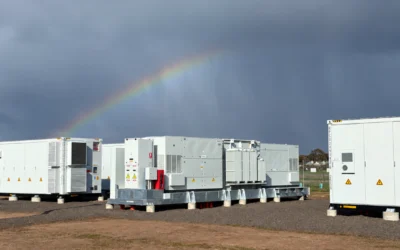
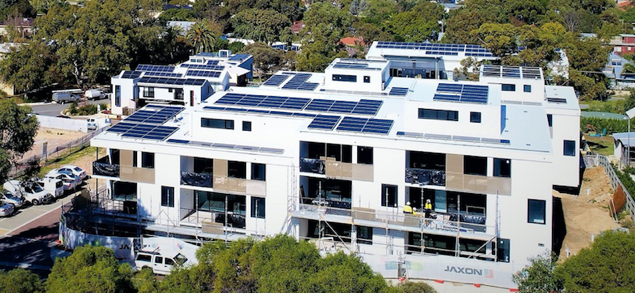
White Gum Valley, a residential development near Fremantle, Western Australia, has rooftop PV installed on its blocks. A modest 53.6kW solar PV system has been paired with a 150kW lithium-ion battery energy storage system on Evermore, one of the apartment blocks.
Using Power Ledger, a blockchain-based technology developed by a local firm will be used to provide a so-called ‘transactive’ layer to the management of the solar-plus-storage installation. Residents will be able to freely sell their power to one another, allowing those with surplus production, for example, to sell power to their neighbours as required.
Yolk Property Group, the developer behind the apartment complexes, is already advertising Evermore’s ‘Solar powered apartments’ on its website, with the development scheduled for official launch in just over seven days’ time. Yolk partnered up with Power Ledger for the project. In May, Tech Crunch reported that Power Ledger had made its first commercial deployment in the US, for Northwestern University in Illinois.
Try Premium for just $1
- Full premium access for the first month at only $1
- Converts to an annual rate after 30 days unless cancelled
- Cancel anytime during the trial period
Premium Benefits
- Expert industry analysis and interviews
- Digital access to PV Tech Power journal
- Exclusive event discounts
Or get the full Premium subscription right away
Or continue reading this article for free
There is also an academic slant to the Evermore White Gum Valley P2P trial. The pilot has been lead by Curtin University, with groups including LandCorp, Solar Balance, Low Carbon Living Cooperative Research Centre, ARENA and CSIRO. Yolk Property Group received a AU$280,000 grant from ARENA for the project.
Around 80% of electricity demand from apartments involved in the trials will be met with the solar-plus-storage solution, while simultaneously lowering residents’ bills by about 30%. Water and power consumption will be measured throughout. Meanwhile the overall project could inform governance frameworks and technical research into distributed energy solutions, particularly in so-called ‘strata’ developments under Australian law. Strata residential developments are individually owned residences with communal areas under shared ownership.
“Buyers are getting more discerning and looking for developments that offer more in terms of sustainability, a reduced carbon footprint, genuine cost savings and modern technology,” Yolk director Tao Burton said.
“Through this project, we’ve shown that sustainability and affordability can go hand in hand, delivering an apartment where it is easy, attractive and affordable to lead a sustainable lifestyle.”
Bourton said the blockchain technology, as well as other power-saving initiatives at Evermore, gives residents a level of control over their power usage and power costs which is “exceptional”, “with residents only paying for the energy they need and on-selling excess energy to neighbours, always taking advantage of discounted rates”.
Other blockchain-powered trials of peer-to-peer energy trading or sharing have been taking place around the world, including Sonnen’s efforts with grid operator TenneT to balance grids in Germany and Holland through sharing renewable resources over long distances. The UK launched its first “energy trading community” on a housing development in east London in November 2017.
The Evermore project was hailed by the national Smart Energy Council, which is currently campaigned to overturn the proposed National Energy Guarantee, which the council and other groups say will support an otherwise-dying coal industry and will slow the progress of renewable and clean energy technologies and their deployment.