
As the battery storage industry matures through competition and scale, a significant push for efficiency is coming, writes Dr Kai-Philipp Kairies, CEO and co-founder of ACCURE Battery Intelligence.
The energy system is being reshaped by three forces at once. A decade of heavy renewables build-out has left grids fighting curtailment and congestion; ageing network infrastructure is straining under loads it was never designed to carry; and AI is driving exponential, entirely new demand.
Against a backdrop of decarbonisation and sharpening geopolitics, the system now needs security, resilience and flexibility above all. Investment in the system is the common thread that answers all three, and grid-scale battery storage is fast becoming the critical infrastructure that underpins it.
Batteries are no longer a single, uniform bet. The value increasingly sits in a widening range of end uses, from longer-duration storage, through transmission and distribution deferral, to buffering the large, spiky loads of AI data centres. Each places its own demands on the system. This is a maturing market entering a more considered phase of growth, one that must learn from the renewables or oil & gas booms, rather than repeat their mistakes.
Try Premium for just $1
- Full premium access for the first month at only $1
- Converts to an annual rate after 30 days unless cancelled
- Cancel anytime during the trial period
Premium Benefits
- Expert industry analysis and interviews
- Digital access to PV Tech Power journal
- Exclusive event discounts
Or get the full Premium subscription right away
Or continue reading this article for free
Standards and baseline expectations for asset performance are being redrawn, as operators make objective, trusted data central to more decisions and as asset owners integrate AI capabilities across functions. I believe that we will see a significant efficiency push right across BESS markets in the next 12 to 18 months.
BESS efficiency standards are shifting, and fast
Led by the multi-gigawatt portfolios, I expect new standards for operational performance and capital efficiency will infuse into the mass market, raising the expectations for all other BESS owners and operators in turn.
A new set of performance standards could bring genuine consequences for the asset owners that are not leading the charge, though. I expect that in the months and years ahead, a CFO seeking to expand their BESS portfolio or refinance an existing asset will have valuable cards to play if they can demonstrate their portfolio is performing at or above the level of comparable sites. If their assets are performing below the mean, they risk accessing less capital, on worse terms, with more restrictive covenants. Put simply, they are less investable and bankable.
The reality is that most BESS operators, whether they are in planning mode or operating live assets, are leaving money on the table by failing to demonstrate consistent operating discipline.
Independent, third-party analysis helped identify potential savings of around 10% of overall expenditure. We estimate average OpEx spend of US$40,000-US$45,000 per MW on a typical site, not including land leases. A tenth of that spend really matters – particularly for larger assets. It is not just about saving cash, though. We also see the power of better BESS analytics in the top line. Thanks to more accurate state estimation and faster issue response times, some portfolios see revenue boosted by as much as 5%.
And CFOs that leave this kind of money on the table are baking in more business risk than is necessary, given the potential impact on investor, lender and insurer relationships, as well as on each asset’s ultimate end use. There is a common set of operating priorities where BESS asset owners tend to exploit efficiency gains fastest. I’ve listed these below.
Baseball fans will remember the ‘Moneyball’ approach that helped the cash-strapped Oakland Athletics compete with, and often beat, teams with three times their payroll in the early 2000s, by using data to uncover small, undervalued edges that added up to outsized results.
In BESS, the economics work much the same way: durable returns come from stacking together thin slivers of value across arbitrage, ancillary services and availability, rather than from any single revenue stream. No single operating improvement should be seen as a ‘silver bullet’ that revolutionises asset performance and returns. But when asset owners apply these optimisations together, enabled by performance engineering layers, the results can be startling.
The marginal gains that help BESS assets outperform
SoC errors
Reducing deviations between BMS estimates and empirical reality in the battery generates significant efficiencies and improved revenue outcomes. In validation exercises carried out alongside leading BESS asset manager Gore Street Capital, we identified single discharge cycles where inaccurate state of charge (SoC) estimates led to revenue shortfalls worth over US$1,000, even on smaller sites (<100 MWh).
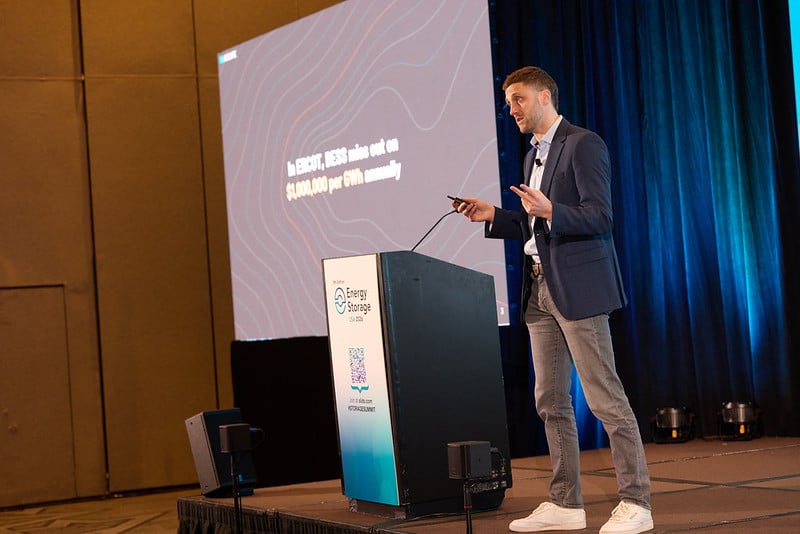
Across larger BESS portfolios (say, around 1GWh), the direct revenue benefit of more accurate SoC estimates can reach US$1 million or more per year.
Daniel Sherlock-Burke, Director of Asset Management at Gore Street, put it best: “With the analytics available, it’s a no-brainer to leverage this knowledge to improve commercial operations.”
Insurance fees
Using the right technology to understand and act on raw system signals mitigates against critical issues that put people and facilities at risk, as well as affecting performance efficiency, availability, and revenue generation. Accessing favourable insurance terms is a major contributing factor for many independent power producers (IPPs) when deciding which analytics vendor they’ll partner with.
Compliance and penalties
Investors, bankers and insurers want to see the battery storage assets they back uphold their different contracts and covenants. Failing to meet the terms of warranties or performance guarantees can lead to financial penalties which potentially harm reputation as well as net financial returns.
Another important second-order impact is on productivity.
Rather than spending up to a full day every working week filing warranty tickets for on-site availability issues, repetitive work like this should be completed using electrochemical intelligence down to the cell level, pulling in information automatically. As well as giving more time back to focus on high-level strategic work, distributing relevant information in a more timely fashion will reduce overall downtime, contributing to the overall health of the system.
Predictive maintenance
Knowing what to fix, and when, means site managers can carry out planned maintenance on problematic racks lasting, say, tens of hours, rather than hundreds of hours of restricted operations on racks or even (in critical events) entire battery storage containers if issues are left untreated.
In an exercise with a utility-scale BESS operator, we estimated that proactive maintenance will save tens of thousands of dollars in greater uptime this year, across just one asset. Leading analytics platforms are also able to generate root cause analyses so that asset managers immediately understand where an issue is coming from, contributing not only to diagnosis but directly to remediation.
Augmentation and degradation planning
Many BESS asset managers feel they must simply take supplier recommendations at face value when it comes to augmentation plans. But it doesn’t have to be that way.
Independent augmentation and degradation simulations have unlocked opportunities for customers to make smart improvements when needed and not before, improving cash flow as well as overall asset durability. I still remember hearing how surprised and grateful a senior performance engineer at a multinational energy company was when we presented our findings challenging certain supplier assumptions regarding their augmentation planning.
An independent analysis enabled that team to renegotiate several aspects of future augmentation work with the supplier, creating real operating efficiencies. That one aspect of our cooperation alone delivered US$300k of immediate value compared to ‘out of the box’ supplier recommendations.
Resetting market standards: how we can all build better BESS in the next decade
Developing a profitable, stable BESS asset should not rely on hunches and estimates. CFOs, who are responsible for cash flow and financial planning, need to make sure each BESS asset is set up to deliver sustainable returns, not just day-to-day but for their portfolio’s entire useful lifespan.
The pressure to execute and move beyond default energy management system (EMS) dashboard solutions will only intensify as leading companies improve their asset and portfolio-level efficiency, resetting market standards.
Leadership teams who let asset issues sit undiagnosed and untreated are leaving money on the table. As such, they could struggle to secure the terms they desire from investors, lenders and insurers when they go back to market, whether to refinance existing developments or expand their portfolios with new assets.
Baseline expectations from investors and insurers are already evolving. Leading operators globally are deploying these performance engineering techniques right now, exploiting the ‘marginal gains’ approach to stand-up sites that can deliver the power the market needs, exactly when it’s needed. For existing assets, that means bringing in independent analysis to recover value that is already leaking away; for new build, it means getting technology selection and commercial terms right at the scoping stage, when the biggest gains can still be locked in.
A new era of flexibility does not mean BESS operators can sit back and enjoy inevitable outperformance in the years ahead. Quite the opposite. Grid-scale BESS is no longer an experiment. I expect that in the years ahead BESS will be seen as core not only to grid reliability, but to the performance and stability of the data centres that power the AI revolution.
A new era of BESS is approaching fast, and the race is on to understand what success and failure means in these new operating conditions.
About the Author
Dr. Kai-Philipp Kairies is co-founder and CEO of ACCURE Battery Intelligence, a leading provider of solutions to manage battery safety, performance, and health for electric vehicles, energy storage, and other industries. During more than 15 years working in the battery industry, Dr. Kairies co-authored some of the most-quoted analyses on the costs, benefits, and market potential of battery systems and consulted several governments on their battery adoption strategies. Before launching ACCURE in 2020, Dr. Kairies led Europe’s largest research group devoted to stationary battery systems and provided technical advice and consulting services to a variety of mobility and energy companies around the world. He has a PhD in Electrical Engineering and Information Technology from RWTH Aachen University.
Battery Asset Management Summit USA 2026 will be held 15-16 September in Garden Grove, California, hosted by Energy-Storage.news publisher Solar Media (part of the Informa Group). The agenda emphasises addressing the roles of AI, cybersecurity, and second-life applications, broken down into two tracks: Technical Asset Management and Commercial Asset Management. This year, the conference is also co-located with Solar & Storage Finance Summit USA. Energy-Storage.news readers can use code ESN20 at checkout for a 20% discount on tickets. Visit the official site for more details.
