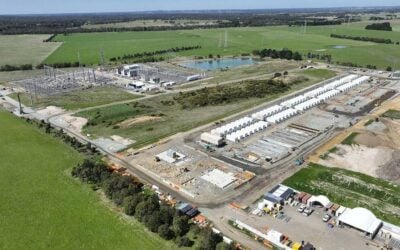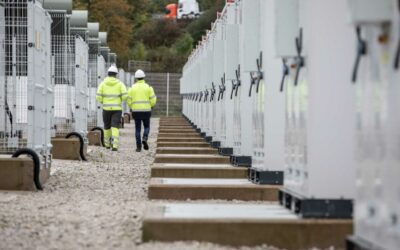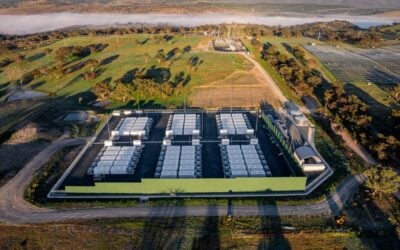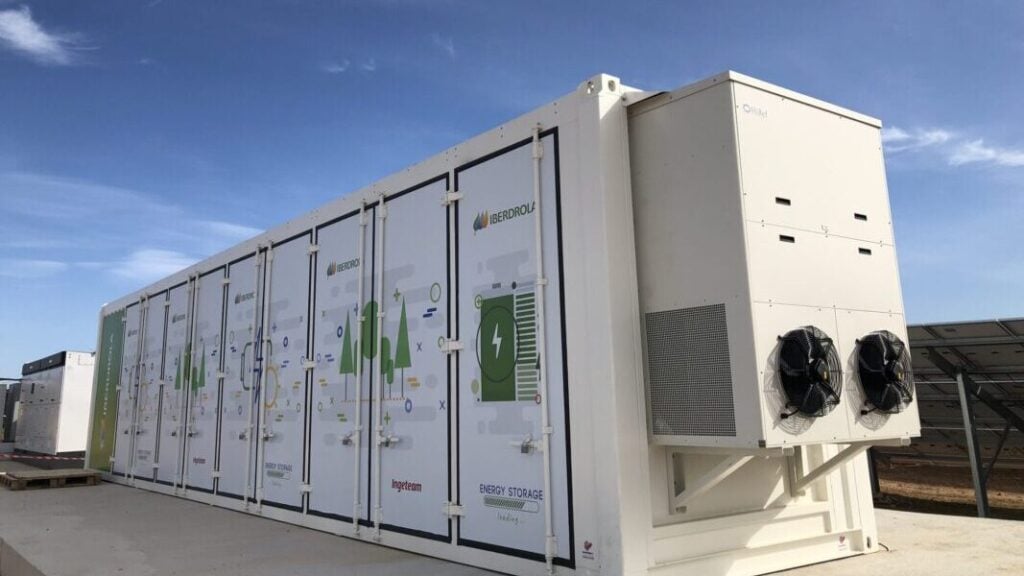
Spanish utility Iberdrola’s subsidiary Avangrid has announced plans to construct a 41MW/82MWh BESS facility in Gilliam County, Oregon.
Announced 24 June, the battery energy storage system (BESS) is expected to begin operations in 2027.
Dubbed the Shutler Energy Storage project, it will support grid reliability across the company’s 3GW generation footprint in the Pacific Northwest. Shutler will be located near two existing Avangrid sites and a third currently under construction.
According to Avangrid, the project is designed to support its independent Balancing Authority, which manages real-time electricity supply and demand balancing across the company’s Pacific Northwest generation fleet.
Try Premium for just $1
- Full premium access for the first month at only $1
- Converts to an annual rate after 30 days unless cancelled
- Cancel anytime during the trial period
Premium Benefits
- Expert industry analysis and interviews
- Digital access to PV Tech Power journal
- Exclusive event discounts
Or get the full Premium subscription right away
Or continue reading this article for free
Avangrid claimed that construction of the facility is expected to create approximately 35 local union jobs. Additionally, as part of the project development, Avangrid will make annual donations totaling US$110,000 to two Gilliam County nonprofit organizations focused on early childhood education and childcare.
The contributions will be split equally between Condon Early Learning Centre and Arlington Childcare Centre, each receiving US$55,000 annually for the life of the project.
Gilliam County Judge Cris Patnode indicated that childcare cost and availability represent barriers to workforce sustainability in the county and described the arrangement as a public-private partnership aimed at reducing childcare costs and expanding availability for families.
Oregon does not participate in a Regional Transmission Organisation (RTO) or Independent System Operator (ISO). Grid management in the state is handled by investor-owned utilities (IOUs) and consumer-owned utilities, with the Oregon Public Utility Commission (OPUC) overseeing utility rates and services.
In March, utility Portland General Electric (PGE) finalised agreements for over 1,000MW of new renewables and BESS projects in Oregon, procured through PGE’s 2023 all-source request for proposals (RFP), power purchase agreement (PPA) procurements, and the 2025 RFP.
According to the US Energy Information Administration (EIA), “Hydroelectric power typically provides more than half of Oregon’s in-state total electricity net generation. However, because of abnormally dry weather and drought in recent years, hydroelectric power has not supplied more than 50% of Oregon’s in-state electricity since 2022.”
Renewable energy accounts for approximately two-thirds of the state’s total electricity net generation, with the remainder generated from natural gas. The state’s renewable energy portfolio standard requires that at least 50% of the electricity sold in Oregon come from renewables-sourced generation by 2040.
Avangrid CEO Jose Antonio Miranda noted of the Shutler project, “Shutler Energy Storage reflects Avangrid’s long‑term commitment to Oregon and the Pacific Northwest. This project adds a flexible resource that will strengthen grid reliability, support good‑paying jobs, and help ensure the energy we generate is available when communities need it most.”