The Central-West Orana Renewable Energy Zone (REZ) in New South Wales, Australia, has increased in size, now allowing 7.7GW of renewable energy generation and energy storage capacity to connect to it.
As revealed by state-owned energy Energy Corporation of New South Wales (EnergyCo) last week (16 January), the increase has been enabled by raising the intended network capacity for the REZ from 3GW to 6GW. This was achieved following a headroom assessment that started in early August 2024.
The New South Wales government initially announced an increase in the REZ’s intended network capacity in December 2023. Still, EnergyCo had yet to formally confirm an increase in projects able to connect.
The network capacity of the Central-West Orana West REZ will initially operate at 4.5GW. This network capacity enables up to 7.7GW of solar PV, wind and battery energy storage system (BESS) projects to inject power into the grid, as they will be doing so at different times of the day and not all exporting energy simultaneously, EnergyCo said.
Try Premium for just $1
- Full premium access for the first month at only $1
- Converts to an annual rate after 30 days unless cancelled
- Cancel anytime during the trial period
Premium Benefits
- Expert industry analysis and interviews
- Digital access to PV Tech Power journal
- Exclusive event discounts
Or get the full Premium subscription right away
Or continue reading this article for free
One of the perks of this increased capacity means that projects listed within the Central-West Orana REZ Environmental Impact Statement (EIS), submitted in October 2023, which included measures to avoid, minimise, or mitigate potential environmental and community impacts, could add additional co-located BESS to capture renewable energy generated from solar PV and wind to be exported at times of low output.
EnergyCo also confirmed that the increase in capacity means that the company would increase the Community and Employment Benefit funding from access fees, which is currently at an initial AU$128 million (US$79 million).
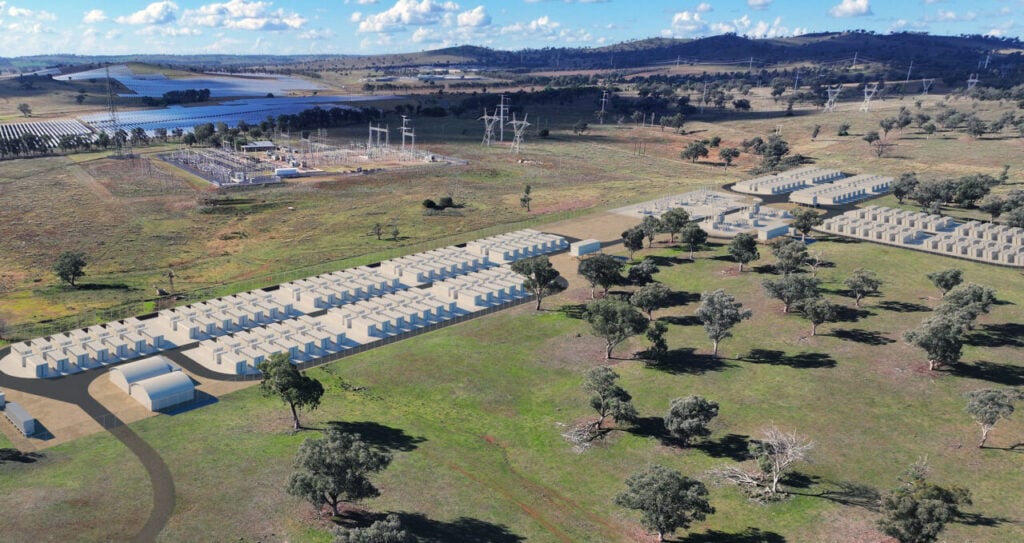
The Central-West Orana REZ will be built on roughly 20,000 km2 near Dunedoo, Mudgee, and Dubbo, a rural area about 330km northwest of Sydney. It will potentially unlock an estimated AUS$20 billion in private investment in solar PV, wind, and energy storage.
Energy storage developer Akaysha Energy is one such company exploring the opportunities within the Central-West Orana REZ via its proposed 1,660MWh 4-hour duration Orana BESS. In July 2024, 11 banks agreed to lend AU$650 million towards its development.
You can read the full article on PV Tech.