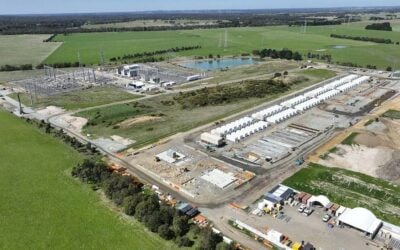
Credit: Ausgrid
State-owned Australian utility Ausgrid is streamlining applications and cutting fees for consumers installing solar or battery storage systems.
Ausgrid, previously known as Energy Australia and whose shareholder is the New South Wales government, supplies electricity to 1.7 million consumers in Sydney, the Central Coast and Hunter regions. Of these, roughly 100,000 customers have already installed embedded generation systems; mainly residential rooftop PV.
The utility will now fast track all solar and battery systems of up to 30kW capacity, which it says will save customers more than AU$200 (US$149) on technical assessment fees and speed up the process by two weeks. Consumers requiring new or upgraded connections for these technologies will also be able to apply with a simple online form.
Ausgrid’s acting chief executive Trevor Armstrong said: “These changes will make it easier and cheaper for our customers to become more energy efficient. By cutting red tape, fees and processing times, we can help more homes and businesses across our network install solar and battery systems.
Try Premium for just $1
- Full premium access for the first month at only $1
- Converts to an annual rate after 30 days unless cancelled
- Cancel anytime during the trial period
Premium Benefits
- Expert industry analysis and interviews
- Digital access to PV Tech Power journal
- Exclusive event discounts
Or get the full Premium subscription right away
Or continue reading this article for free
“This can also make the grid more efficient and help save all our customers long-term by reducing the need to build more capacity into the network.”
These remarks about helping the grid to be more efficient come in stark contrast to the plethora of power industry bodies and media reports blaming renewables for the electricity price hikes in South Australia of late as well as others claiming that efforts to hit renewables targets are compromising the stability of the grid.
Armstrong said the utility receives around 10,000 applications a year for embedded generation systems of <30kW. Around one in ten of these requires more detailed technical assessments as they are for larger micro-generation systems. However, Ausgrid decided that this extra assessment is no longer required.
A set of energy storage installation guidelines from the Clean Energy Council (CEC) was released in May for industry and consumers which will be mandatory for installers accredited by CEC schemes by October.