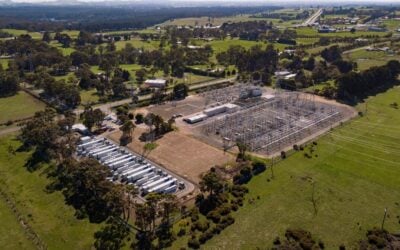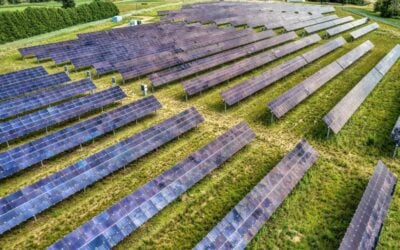
The ASM deal could even put utility Southern California Edison’s “momentous” 235MW storage procurement in the shade. Image: Southern California Edison.
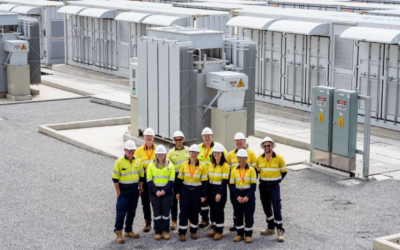
Energy storage system installer Advanced Microgrid Solutions (AMS) has chosen Tesla to provide up to 500MWh of batteries for its utility-scale energy storage projects.
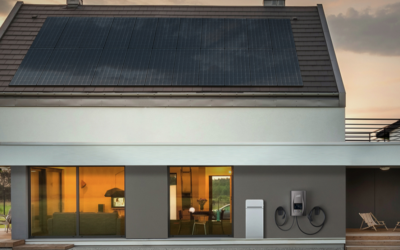
AMS will also install and operate Tesla’s recently launched Powerpack energy storage systems in commercial and industrial facilities. The Powerpacks, which are utility-scale lithium ion rechargeable batteries, will provide grid support to utilities using customer load.
The size of the procurement could be significant, although it is not yet clear how close to 500MWh actual deployment through the deal will come to. In context, the AMS deal could dwarf utility company Southern California Edison’s procurement of 235MW of battery energy storage projects, the largest utility procurement of storage to date when announced in November last year and described as a “momentous decision” by Janice Lin of the California Energy Storage Alliance (CESA).
The combination of smart software and the battery technology will allow utilities to use customer loads as “virtual power plants”, according to an AMS statement. The company will place the distributed energy storage systems into regional “fleets” to assist utilities with load reduction. This provides greater reliability in areas with circuit overload and assists with the integration of intermittent renewable energy technologies.
Try Premium for just $1
- Full premium access for the first month at only $1
- Converts to an annual rate after 30 days unless cancelled
- Cancel anytime during the trial period
Premium Benefits
- Expert industry analysis and interviews
- Digital access to PV Tech Power journal
- Exclusive event discounts
Or get the full Premium subscription right away
Or continue reading this article for free
This executive director of the US-based Energy Storage Association Matt Roberts told PV Tech Storage that aggregating connected energy storage systems to create ‘virtual power plants’ is likely to become a big part of the next phase of storage.
Earlier this week, Tesla and renewable energy developer Gaelectric announced a 1MW joint test project to evaluate utility-scale storage to facilitate the integration of renewables onto the grid.
AMS has also signed a master agreement with international engineering, procurement and construction company Black & Veatch for engineering and construction services.
Last autumn AMS secured contracts of 50MW to construct grid-scale energy storage projects for Southern California Edison, including a number of Hybrid-Electric Buildings, which are smart houses with extensive sensor systems.
The firm’s first 10MW Hybrid-Electric Building project will be installed in Irvine, California in 2016. The company is also poised to sign battery supply agreements with other technology providers.
Co-founder of AMS and former assistant secretary of the Navy Jackalyne Pfannenstiel said: “This is all about building resilience into the grid. Energy storage turns traditional demand response into firm, reliable capacity – it changes everything about the way the grid is operated.”
AMS chief executive Susan Kennedy said: “Tesla’s focus on performance and design makes them the stand out technology choice for our projects. AMS’ projects require intelligent, powerful and scalable energy storage solutions.”