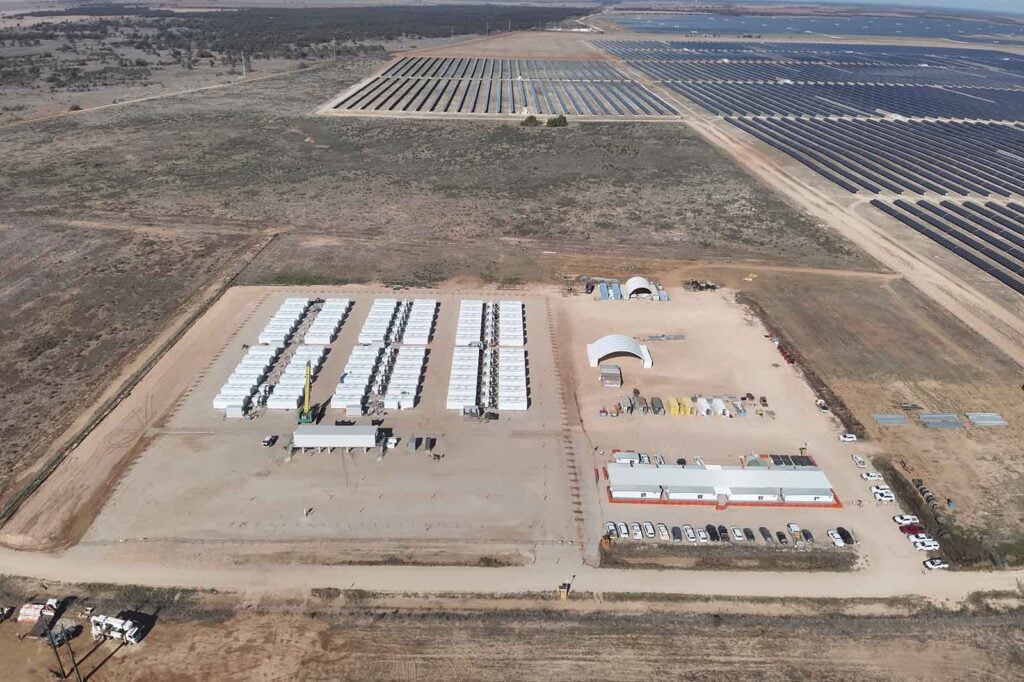
RWE has received official sign-off from the Australian Energy Market Operator (AEMO) and Transgrid to operate Australia’s first 8-hour battery energy storage system (BESS) at full capacity.
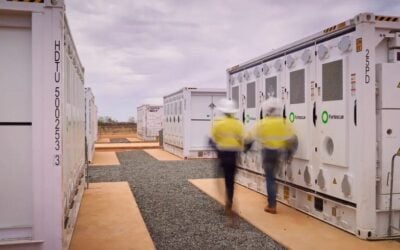
The 50MW/400MWh Limondale BESS, located adjacent to RWE’s existing 249MW Limondale solar PV power plant near Balranald in southern New South Wales, comprises 144 Tesla Megapacks and is uniquely registered to charge at 100MW and discharge at 50MW.
The system can deliver its registered maximum discharge output for more than 8-hours, making it the longest-duration battery storage currently operating in Australia, RWE claims.
Following commissioning, the battery successfully completed grid-compliance and performance tests, demonstrating the plant’s ability to safely operate at maximum capacity.
Try Premium for just $1
- Full premium access for the first month at only $1
- Converts to an annual rate after 30 days unless cancelled
- Cancel anytime during the trial period
Premium Benefits
- Expert industry analysis and interviews
- Digital access to PV Tech Power journal
- Exclusive event discounts
Or get the full Premium subscription right away
Or continue reading this article for free
The approval enables the system to store excess renewable energy generated during high solar and wind output periods and dispatch it during peak demand, enhancing grid stability and reducing reliance on gas peaker plants during extended periods of supply-demand imbalance.
The project was sized at 8-hours in response to the New South Wales government’s Electricity Infrastructure Roadmap and was the first to receive a long-duration energy storage (LDES) Long-Term Energy Service Agreement (LTESA) as part of the first tender undertaken by AEMO Services.
As reported by Energy-Storage.news, RWE won the government contract in 2023, with the 14-year LTESA designed to encourage the development of storage assets capable of providing extended discharge durations to complement growing renewable energy penetration.
About a year after being awarded the LTESA, RWE reached final investment decision on the Limondale BESS.
Sopna Sury, CEO of RWE Renewables Europe & Australia, said: “This groundbreaking project transforms battery storage in Australia, marking a significant milestone in the development of long-duration energy storage and enhancing the reliability and resilience of the national energy system.”
From registration to full operations
RWE successfully registered the Limondale BESS with AEMO in September 2025, marking the transition from construction to hold-point testing.
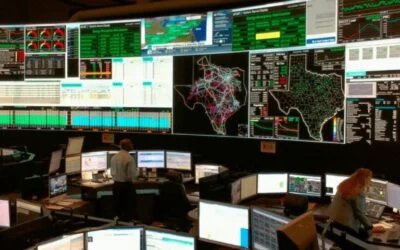
The registration entered the project into AEMO’s Market Management System, the core IT system that manages the National Electricity Market (NEM) wholesale market.
The battery storage system connects to the existing 33kV transmission line that serves the adjacent Limondale solar PV power plant, which has been operational since 2021. The solar PV power plant features 872,000 modules.
The 8-hour duration capability positions the Limondale BESS to address longer periods of supply-demand imbalance than shorter-duration systems, which typically focus on frequency control and peak shaving applications.
This extended duration enables the system to provide backup during periods of low renewable energy generation or high demand, potentially reducing reliance on gas peaker plants.
The selection of lithium-ion technology for an 8-hour duration system initially raised eyebrows due to its limitations at the time.
However, fast-forward to the present day, numerous LDES lithium-ion battery storage projects are being developed and continue to capture the attention of international markets. This has been spurred by varying breakthroughs in the battery market, including falling system costs, higher power densities and modularity.
The use of lithium-ion battery storage systems for LDES recently prompted Keith Lovegrove, managing director of consultancy ITP Thermal, to warn that Australia’s energy storage sector risks over-reliance on the technology.
Instead, Lovegrove told ESN Premium that there should be a diversification into long-duration technologies, highlighting the potential of solar thermal, pumped hydro and hydrogen storage to ensure grid stability as coal plants retire.
Australian renewable energy and infrastructure contractor Beon Energy Solutions provided balance of plant (BOP) equipment, with RWE also partnering with Lumea and Transgrid to deliver the project.
Although RWE’s Limondale BESS is Australia’s first 8-hour duration BESS to receive full operational approval, other long-duration energy storage batteries are being pursued nationwide.
Australian developer Edify Energy, which has been acquired by global investment group La Caisse (formerly CDPQ), received federal approval in September 2025 for a 2,400MWh 8-hour duration BESS in Victoria. The Nowingi hybrid project will combine a 300MW solar PV power plant with an integrated 300MW/2,400MWh BESS.
RWE currently operates battery storage systems with a total capacity of 1.7GW globally, with a further approximately 2.5GW under construction.
Interested in Australia? Read Energy-Storage.news’ Energy Storage Summit Australia coverage and related content.