Bids have been received by Latvia’s grid operator AST for an 80MW/160MWh BESS project while developers Corsica Sole and Everon will build a 200MW system in Estonia, as the Baltic region prepares to decouple from Russia’s electricity system in 2025.
Latvia’s transmission system operator (TSO) Augstsprieguma tīkls, or AST, has received three offers for the supply and installation of two battery energy storage systems (BESS) it said in a Baltic Nasdaq filing last week (17 November).
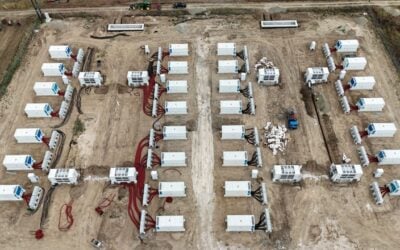
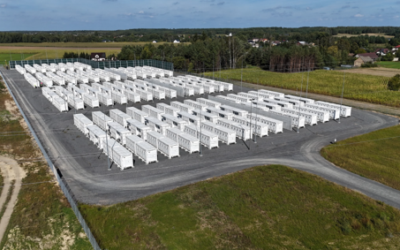
A 20MW/40MWh system will be built at a substation in Tume and a 60MW/120MWh one will be built at a substation in Rezekne, meaning a total contracted deployment of 80MW/160MWh. Bids for the contract came from SIA Monum, Nidec ASI and Rolls-Royce Solutions, with financial offers ranging from €79-87 million (US$86-95 million).
SIA Monum is a local engineering, procurement and construction (EPC) firm, Nidec ASI is a BESS integrator, while Rolls-Royce Solutions is part of the large aerospace and engineering conglomerate which has deployed large-scale projects in Germany and the Netherlands.
Try Premium for just $1
- Full premium access for the first month at only $1
- Converts to an annual rate after 30 days unless cancelled
- Cancel anytime during the trial period
Premium Benefits
- Expert industry analysis and interviews
- Digital access to PV Tech Power journal
- Exclusive event discounts
Or get the full Premium subscription right away
Or continue reading this article for free
It comes as the Baltic states – Latvia, Lithuania and Estonia – prepare to disconnect from the electricity system of Russia and synchronise with the European electricity system in 2025. The states will therefore need to be able to independently regulate their grids’ system frequency, with BESS projects set to play a huge role by providing much of that balancing service.
The BESS will provide backup at high-speed and automatically activate frequency regulation reserves, and at a much lower cost than conventional power plants are currently doing, AST said. Both projects will be co-financed from EU funds, with the Tume project benefitting from the infrastructure-focused Connecting Europe Facility (CEF) while the Rezneke system will receive funds through RePowerEu.
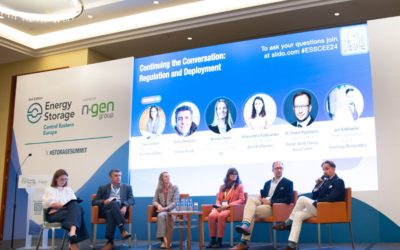
AST did not describe them as ‘grid booster’ or storage-as-a-transmission-asset projects, which have been seen in nearby Lithuania and Germany. Lithuania’s TSO Litgrid discussed its 200MW project, deployed by system integrator Fluence, with Energy-Storage.news at the recent Energy Storage Summit Central & Eastern Europe 2023.
Estonia
In concurrent news, developers Evecon and Corsica Sole announced they would be building two BESS projects in Estonia totalling 200MW, in a news report posted on LinkedIn by Evecon, which is based there.
The two projects will be in Kiisa in the Saku Rural municipality and Arukylä in the Raasiku Rural municipality and will be completed in Q2/Q3 2025, and will provide emergency reserve power. Kiisa is the location of an emergency power plant operated by TSO Elering.
The project can also be ‘converted into a storage facility for renewable energy’ in future, the report said, indicating it will exclusively be providing grid balancing services for some time.
Elering is building the grid connection points for the projects, with construction on Kiisa set to start in Spring 2025 while Arukylä will begin earlier, in Q4 2024.
The projects are being deployed through the Baltic Storage Platform, a vehicle which is 80% owned by Corsica Sale and 20% by Evecon.
Corsica Sole is the France-based developer and operator which commissioned continental what was then Europe’s largest project in December last year, a 50MW/100MWh system in Belgium.
The report also said that a procurement run by state-owned utility Eesti Energia for a 25MW/50MWh BESS project, launched in June 2023, has failed to secure a contract. However, Eesti Energia is still planning to go ahead with the project, the report added.
Energy-Storage.news’ publisher Solar Media will host the 9th annual Energy Storage Summit EU in London, 21-22 February 2024. This year it is moving to a larger venue, bringing together Europe’s leading investors, policymakers, developers, utilities, energy buyers and service providers all in one place. Visit the official site for more info.