Hakainde Hichilema, president of the Republic of Zambia, attended the recent launch of the African country’s largest hybrid renewable energy project combining solar PV and batteries.
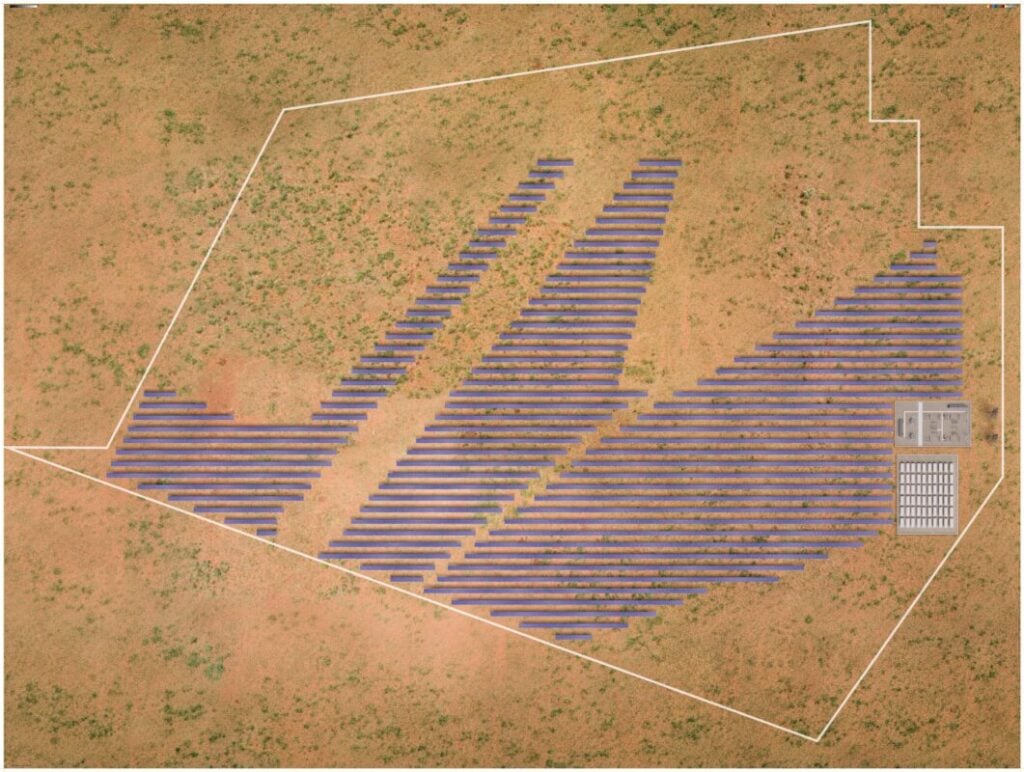
Independent power producer (IPP) Globeleq’s Leopard’s Hill solar-plus-storage project is planned for construction near Kyindu Ranch, Chongwe District, around 25km from the southern African country’s national capital Lusaka, in Lusaka Province.
The company announced details of the event yesterday (21 April), noting that President Hichilema was joined by other dignitaries including Rebecca Terzeon, British High Commissioner to Zambia, and Zambia’s acting Minister of Energy, Rodney Sikumba, who is also Minister of Tourism.
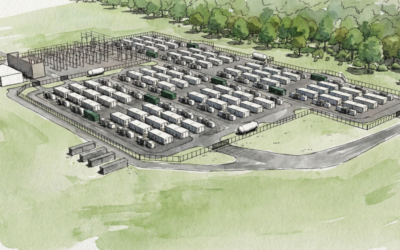
The project will combine a 250MWp solar PV installation with a 150MW/600MWh battery energy storage system (BESS). The BESS will enable grid integration of renewable energy, mitigate peak demand, and perform frequency regulation and voltage ancillary services.
Try Premium for just $1
- Full premium access for the first month at only $1
- Converts to an annual rate after 30 days unless cancelled
- Cancel anytime during the trial period
Premium Benefits
- Expert industry analysis and interviews
- Digital access to PV Tech Power journal
- Exclusive event discounts
Or get the full Premium subscription right away
Or continue reading this article for free
Financial close is targeted for the end of this year, Globeleq said. The company opened its office in Lusaka in 2025 and is co-developing the Leopards Hill project with Zambian agricultural investment company Leopard Investment Company.
In a separate release from the President’s office, the expected investment value of the project was cited at US$315 million. The presidential announcement noted that, according to a developer’s representative speaking at the event, the project’s bankability had improved due to policy and legislative reforms that had seen it shelved for nearly a decade since it was first proposed.
President Hichilema described the project as a major step in stabilising the Zambian grid and outlined the need for a holistic approach to the energy sector that encouraged investment in a diversified energy mix and the sharing of resources. He also claimed the project to be evidence of the success of energy sector reforms.
IPP Globeleq, which is jointly owned by British and Norwegian overseas investment funds British International Investment and Norfund, signed a grid connection agreement (GCA) on the sidelines of the launch ceremony with Zambia’s national utility, ZESCO.
“Globeleq is building a balanced and flexible platform that supports the country’s long-term energy strategy and enables sustained growth in the local mining sector,” Globeleq CEO Jonathan Hoffman said.
“The Leopards Hill project strengthens Zambia’s energy system and expands the opportunities for private sector offtake in a rapidly growing market.”
Globeleq and investment platform African Rainbow Energy achieved financial close on Africa’s largest standalone BESS project to date in June 2025, the 153MW/612MWh Red Sands project in South Africa. The IPP develops, owns and operates power plants in Africa with a focus on energy transition technologies. It has a 1,885MW generation portfolio across 18 countries, with a further 665MW under construction and a claimed 2GW development pipeline.
Environmental Impact Statement was submitted in January
An Environmental Impact Statement for Leopards Hill was filed with ZESCO in January, prepared by SLR Consulting (Africa). The statement notes that the project is entirely on private land adjacent to an existing ZESCO substation and will not require any resettlement.
An initial Environmental Impact Assessment (EIA) was undertaken between 2016 and 2018 before the project was put on hold and after the long gap, a new one was requested by the Zambia Environmental Management Agency (ZEMA) in 2025.
According to the documents, construction is expected to begin in 2026 or 2027 subject to permitting, EPC appointment and financial close and expected to take around 18 to 24 months. Around 200 staff will be employed at peak of construction and around 20 long-term jobs will be created including operations and maintenance (O&M) roles.
The EIS stated that the project is “considered environmentally acceptable and socio-economically beneficial, provided that the recommended mitigation and management measures are fully implemented.”
Electricity price rises in Africa making energy storage relatively cheap by comparison
Hichilema said Zambia could potentially generate up to a gigawatt of solar, citing ongoing projects including Chisamba Solar, a 200MW, two-phase project of which the first 100MW phase was commissioned by the president in mid-2025, developed by a ZESCO subsidiary with PowerChina.
In an interview with our colleagues at PV Tech Premium, John van Zuylen, CEO of the Africa Solar Industry Association (AFSIA), said the continent’s solar PV sector is more dependent on energy storage than in “any other region,” due to the lack of reliable grid infrastructure to support it.
“We’ve had almost a decade of constant [electricity] price decreases, up to a point where storage is becoming so cheap that it’s making storing electricity economically viable in Africa,” van Zuylen said in January.
“Solar-plus-storage becomes totally competitive with grid prices and other electricity needs 24/7.”