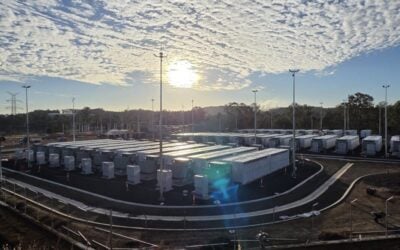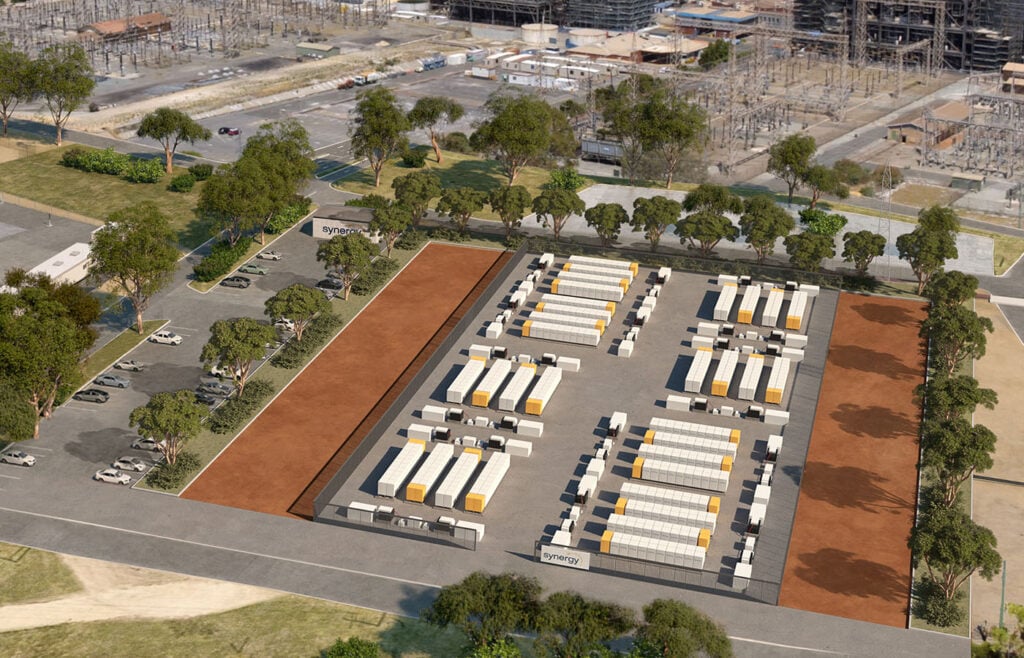
Western Australia (WA) has said it will provide funding for two battery energy storage system (BESS) projects that will be among the biggest in Australia to date.
The government announced its State Budget 2023-2024 on Thursday, two days after its Federal counterpart announced the national Commonwealth budget for the period.
Of a AU$2.8 billion (US$1.87 billion) total package of funding for renewable energy, storage and transmission line upgrades, the vast majority – AU$2.3 billion – will go towards the two large-scale BESS assets.
Notably, both will be up to 4-hour duration systems, which marks a big step for the Australian market which has been largely dominated by systems of up to 1-hour duration and only more recently joined by a handful of 1.5-hour and then 2-hour projects.
Try Premium for just $1
- Full premium access for the first month at only $1
- Converts to an annual rate after 30 days unless cancelled
- Cancel anytime during the trial period
Premium Benefits
- Expert industry analysis and interviews
- Digital access to PV Tech Power journal
- Exclusive event discounts
Or get the full Premium subscription right away
Or continue reading this article for free
That’s likely to be due to the aim of the projects, which are planned to help the state manage its electricity supply and reliability as coal-powered thermal generation goes off the South West Interconnected System (SWIS) grid of the state’s southwestern regions.
That means they will likely be supplying firmed capacity from the growing share of renewable energy on the grid into the Wholesale Electricity Market of Western Australia, rather than the type of pure play merchant business model more commonly seen in Australia’s National Electricity Market (NEM), which covers most of the rest of the country moving east and southwards.
WA’s coal plants are earmarked for decommissioning by 2030, and leveraging the high shares of rooftop solar PV in the state, as well as adding new large-scale wind resources through funding in the budget, are considered key to this – with storage and transmission as enablers.
Another contender for ‘Australia’s biggest BESS’
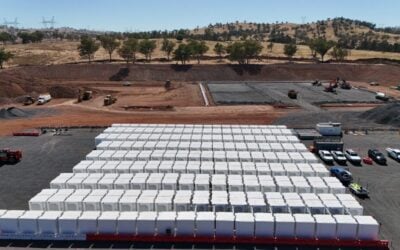
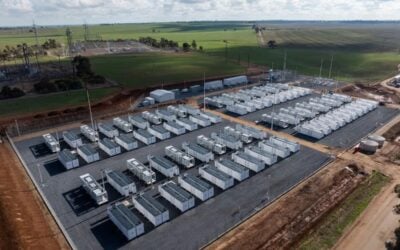
The flagship project of the two is a 500MW/2,000MWh BESS at Collie, a historic seat of Australia’s coal industry. The handover from coal to cleaner energy sources has been coming for some time, and private entities including French independent power producer (IPP) Neoen have proposed their own BESS projects for Collie too.
The Western Australia government said the system being funded will be operational before the end of 2025. As things stand, it would be Australia’s biggest BESS to date, although given the recent frequency of announcements and the Commonwealth government’s plan to launch large-scale dispatchable renewables tenders, it could well be joined by similar-sized or even bigger projects in the pipeline by then.
Current holder of the title is the 300MW/450MWh Victorian Big Battery, while the biggest project committed to is the Waratah Super Battery in New South Wales, which will be at least 1,400MWh.
The state will also fund KBESS2, a 200MW/800MWh BESS at Kwinana, just south of Perth. That would join a 100MW/200MWh lithium iron phosphate (LFP) BESS already completed and close to reaching commercial operations, which is being delivered by state-owned energy company Synergy and BESS equipment supplier-system integrator NHOA.
Synergy owns the existing coal-fired plant at Collie, which will be retired in 2027. The Western Australian government’s energy generation-retail company said in a LinkedIn post yesterday that it will be building both BESS projects.
“Synergy is proud to be delivering these large-scale batteries as WA transitions away from coal fired generation to a more sustainable energy future,” the company said.
The news today is perhaps not a major surprise – the WA government has funded feasibility studies for battery installations in Collie and elsewhere in the state, although statements issued previously laid expectations that such a project would be more in the range of 600MWh to 800MWh.
Energy-Storage.news’ publisher Solar Media will host the 1st Energy Storage Summit Asia, 11-12 July 2023 in Singapore. The event will help give clarity on this nascent, yet quickly growing market, bringing together a community of credible independent generators, policymakers, banks, funds, off-takers and technology providers. For more information, go to the website.