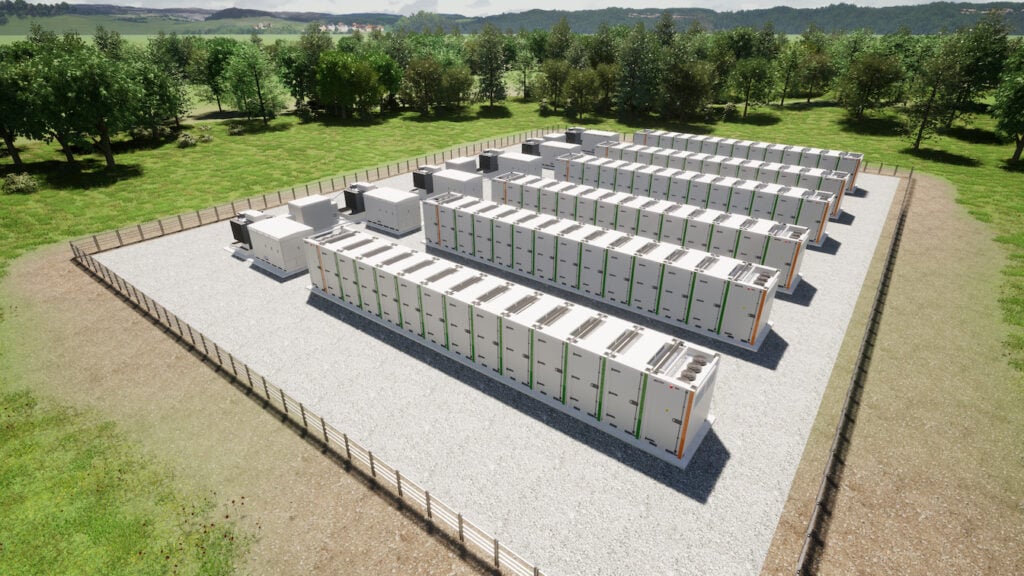
Energy-Storage.news was delighted to host this sponsored webinar with Leclanché, as the company launches its latest design for more modular, transportable and safe battery storage system, called LeBlock.
Batteries have become a commodity. To reduce total cost of ownership (TCO), energy storage operators and installers are focused on soft costs and on ‘upgradeability’. In addition to the competitive environment of energy storage solutions, the environmental footprint of these systems is of growing concern for companies and customers engaged in the low carbon energy transition and committed to the reduction of greenhouse gases. Safety, too, is a key concern.
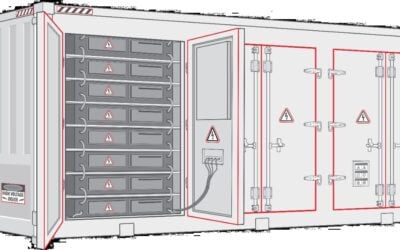
Aimed at reducing the cost, complexity and environmental footprint of stationary energy storage system (ESS) installations, Leclanché launched a modular battery storage solution based on easily transportable plug and play racks that can be put together onsite.
Today, batteries and other components are mainly transported in specific packaging and mounted within a container on-site. This leads to high complexity and long installation times. Meanwhile, adding battery capacity into an existing installation after several years of operation, is a major issue with the standard battery container approach. LeBlock looks to solve these problems, as well as many of the issues associated with transportation and packaging waste, which can be a bigger emitter of CO2 and a bigger overall sustainability and logistics problem than people realise.
Try Premium for just $1
- Full premium access for the first month at only $1
- Converts to an annual rate after 30 days unless cancelled
- Cancel anytime during the trial period
Premium Benefits
- Expert industry analysis and interviews
- Digital access to PV Tech Power journal
- Exclusive event discounts
Or get the full Premium subscription right away
Or continue reading this article for free
Leclanché’s VP of system engineering Daniel Fohr and EMEA region sales and business development manager Cyril Carpentier take you through the LeBlock concept. In the second part of this webinar, Jens Clemens from the German utility swb presented the HyRek grid-scale battery-plus-heat project developed with Leclanché in 2018. HyRek is an innovative project, mixing battery storage and water heating to improve the efficiency of the system, which operates in the FCR grid services market.
To download webinar presentations, register your details through the On-Demand link here.