Vertically integrated solar PV and clean energy company Qcells has closed a US$150 million financing deal for its first large-scale standalone battery energy storage system (BESS) project.
The company announced yesterday that it had secured a revolving credit loan facility with lead arrangers BNP Paribas and Crédit Agricole CIB for its 190MW, two-hour duration (380MWh) Cunningham Energy Storage Project in Texas. The money will also support other projects in Qcells’ pipeline.
It’s also Qcells’ first financing deal with the pair of European banking and investment heavyweights. Qcells USA head of project finance Rich Chung said the energy company appreciated their “confidence and trust” in Qcells to be able to execute on its project pipeline.
Qcells acquired the project late last year, as reported by Energy-Storage.news in November 2021. Then known as Sputnik Energy Storage and since renamed, the project was bought from PV and energy storage developer Belltown Power for an undisclosed sum.
Try Premium for just $1
- Full premium access for the first month at only $1
- Converts to an annual rate after 30 days unless cancelled
- Cancel anytime during the trial period
Premium Benefits
- Expert industry analysis and interviews
- Digital access to PV Tech Power journal
- Exclusive event discounts
Or get the full Premium subscription right away
Or continue reading this article for free
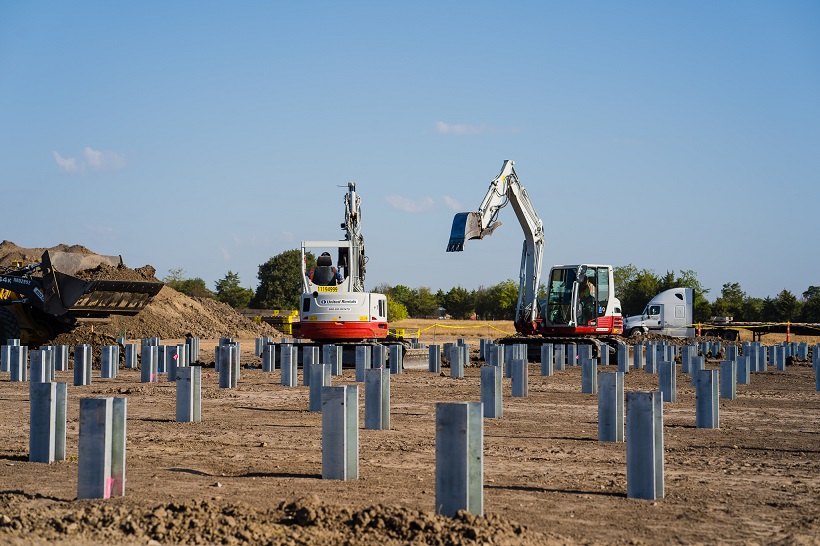
It is anticipated that Cunningham Energy Storage Project, on which construction has already begun, will be the largest standalone battery storage system operating in Texas’ ERCOT grid service area and market when it comes online.
Qcells, a supplier of PV modules, asset manager, EPC, and solar PV and project developer, had limited its involvement in battery storage for the most part to smaller scale residential and commercial and industrial (C&I) market segments prior to the acquisition.
The multinational company, owned by South Korea’s Hanwha Group, acquired US C&I energy storage software specialist Geli in late 2020, a few months after its German business launched a ‘whole home’ smart energy solution combining distributed energy resource (DER) tech like solar PV and batteries, promising to cover customers’ entire home energy consumption with renewable energy.
Qcells made an investment last year into US C&I solar-plus-storage, making what it called a Grid Equity investment into a portfolio of already-operating projects in California developed by Amped Solutions. Qcells provided an undisclosed sum of capital to Amped Solutions in exchange for rights to future grid services revenues.
In related news from the Texas market, sister site PV Tech reported this week that independent power producer (IPP) Cypress Creek Renewables has closed a US$216 million financing deal for a solar-plus-storage project. Cypress Creek is developing the Zier Solar and Storage project, pairing 208MW of solar PV with a 40MW/80MWh BESS.