It has become harder to finance some battery energy storage system (BESS) projects in the US as equity requirements increase and market volatility dampens, according to a renewable energy investment banking executive.
“What has happened is that we’ve had more modest summers over the last couple of years—particularly in the ERCOT and CAISO markets—which has caused the volatility to go down, and that has caused a lot of distress in terms of the underwriting standards for some of these storage assets,” said Ronak Maheshwari, a director at CRC-IB.
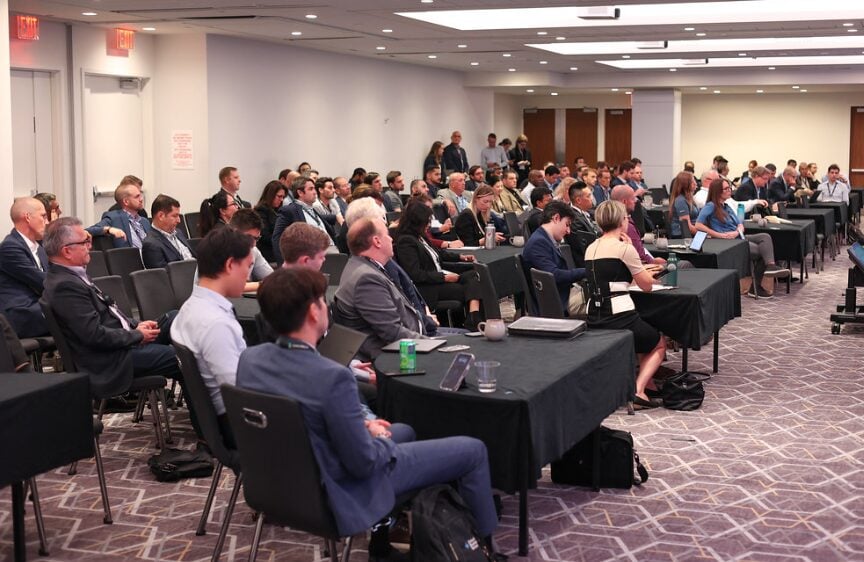
Maheshwari was speaking to our sister site PV Tech for an interview ahead of Solar Media’s Solar & Storage Finance USA event in New York, which concludes today (22 October), where he was a speaker yesterday on day one.
He contrasted that with solar projects that benefit from growing virtual power purchase agreement (PPA) demand driven by data centres, which helps secure finance.
Try Premium for just $1
- Full premium access for the first month at only $1
- Converts to an annual rate after 30 days unless cancelled
- Cancel anytime during the trial period
Premium Benefits
- Expert industry analysis and interviews
- Digital access to PV Tech Power journal
- Exclusive event discounts
Or get the full Premium subscription right away
Or continue reading this article for free
BESS project owners are therefore increasingly pursuing five-to-seven-year contracted revenue deals to get initial project financing before transitioning to merchant operations after that period.
“I think where a lot of the market is moving right now is to get short-term contracts for BESS,” Maheshwari noted.
“We’re seeing a lot of pressure at this point on the PV assets, to basically take the load of the storage assets on the financing,” Maheshwari added.
Read the full interview with a subscription to PV Tech Premium here.
PV Tech publisher Solar Media is hosting 12th edition of the Solar & Storage Finance USA event on 21-22 October 2025 in New York (yesterday and today). Panellists will discuss the fate of US solar and storage in a post-subsidy world, the evolving economics of standalone BESS and de-risking solar and storage supply chains. All are encouraged to respond to an anonymous survey on the US solar and storage sector, that will shape discussions at the summit.