Two Chinese energy storage companies have been awarded top-class certifications for safety and technical requirements from TÜV Rheinland, with award ceremonies held earlier this month.
Electronics manufacturer Huawei received 2PfG 2698/08.19 and VDE-AR-E 2510-50 for its smart string energy storage systems (ESS) for residential use in the German market, while the battery cells of integrated energy storage system company Pylontech were certified to meet earthquake protection standards for the Japanese market.
Germany’s residential battery storage market continues to grow, with over 300,000 systems installed by households across the country. In place since 2014, TÜV Rheinland’s 2PfG 2698/08.19 is considered a comprehensive assessment standard for energy storage system performance and technical requirements while VDE’s VDE-AR-E 2510-50 specifies safety standards for stationary energy storage systems using lithium batteries.
TÜV Rheinland’s global head of power electronics and general manager for Greater China solar and commercial products, Li Weichun, said that 2PfG 2698/08.19 and VDE-AR-E 2510-50 are the “most rigorous certification standards in the world,” meaning that Huawei’s systems have overcome the world’s “most demanding energy storage market entry threshold”.
Try Premium for just $1
- Full premium access for the first month at only $1
- Converts to an annual rate after 30 days unless cancelled
- Cancel anytime during the trial period
Premium Benefits
- Expert industry analysis and interviews
- Digital access to PV Tech Power journal
- Exclusive event discounts
Or get the full Premium subscription right away
Or continue reading this article for free
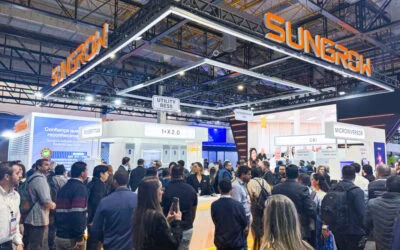
Huawei’s LUNA2000 series of modular ESS now satisfies the requirements of the German market as well as other markets around the world, including in European Union territories. Huawei representatives were awarded their certificates from TÜV Rheinland at the recent SNEC 2021 solar industry event held in Shanghai, China.
Pylontech’s LFP cell deemed earthquake-safe by TÜV Rheinland Japan
Pylon Technologies (Pylontech), which already achieved the 2PfG 2511 and VDE-AR-E 2510-50 accreditation in 2017 — and in fact was the first company to do so — said earlier this month that it is now the first Chinese manufacturer to pass Japan’s stringent earthquake test requirements.
Pylontech received Earthquake Disaster Countermeasures Standard for Battery Cells status for its flexibly-packaged PF37M lithium iron phosphate (LFP) battery cells from TÜV Rheinland Japan, passing puncture test and extrusion test standards. The 37Ah battery cell was verified, evaluated and tested first in-house by Pylontech before being checked by TÜV Rheinland Japan engineers on the production line and then at the standards group’s laboratory.
Like Germany, Japan’s energy storage market has high safety and performance standards and Pylontech has already achieved other necessary certifications and undergone testing through Japanese Industrial Standards (JIS), UL and International Electrotechnical Commission (IEC) for the PF37M cell.
Pylontech said the cell has now been cleared to be used in the Japanese market for applications including residential, commercial and industrial, grid-scale and telecommunications and could qualify for government subsidy schemes designed to encourage uptake of household energy storage systems and reduce grid electricity consumption.
In February this year, shortly after the company raised about US$300 million through a listing on the Shanghai Stock Exchange, Pylontech said it is planning to have 4GWh of battery energy storage system (BESS) manufacturing capacity in operation within three years, more than doubling about 1.5GWh of annual manufacturing capacity which was on-stream in 2019. The company is active in markets including the US, Australia, Europe and China and reached 1GWh of cumulative ESS shippings worldwide by 2018.