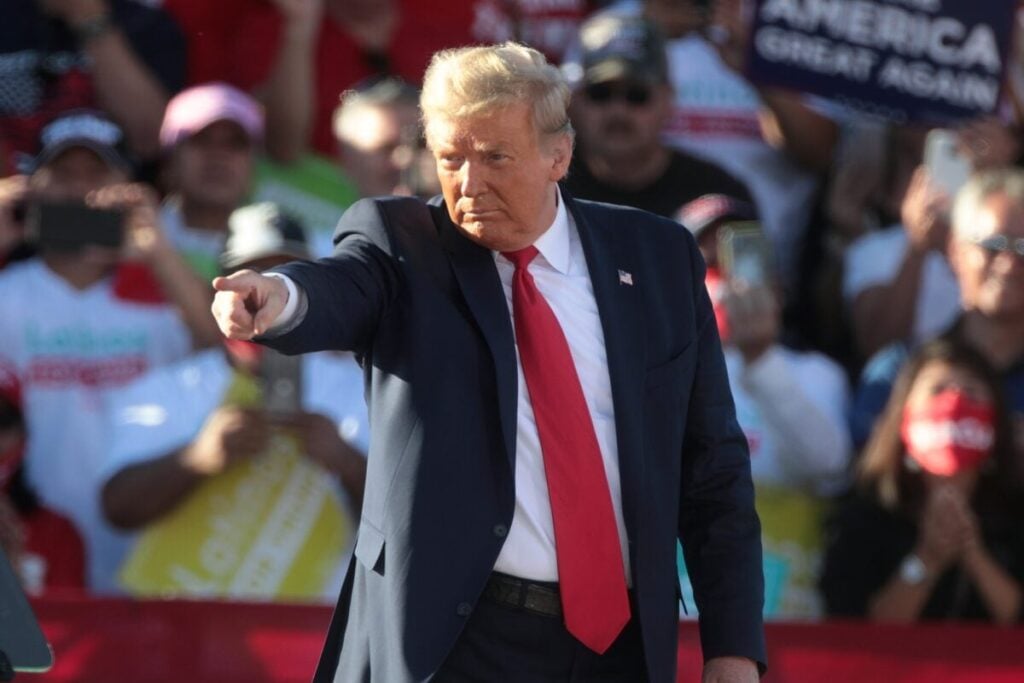
Following his inauguration on Monday morning, US president Donald Trump signed a raft of executive orders outlining his administration’s plans for the next four years.
Among orders on social measures, international relations and the naming of parts of the map, the energy sector received a lot of attention.
Revocation of Biden’s 2022 Executive Order on IRA implementation
The president has announced challenges to the Inflation Reduction Act (IRA), a cornerstone piece of climate and economic legislation from the Biden administration.
Trump’s executive order on “Unleashing American Energy” announced plans to revoke an executive order on the “Implementation of the Energy and Infrastructure Provisions of the Inflation Reduction Act of 2022.”
Try Premium for just $1
- Full premium access for the first month at only $1
- Converts to an annual rate after 30 days unless cancelled
- Cancel anytime during the trial period
Premium Benefits
- Expert industry analysis and interviews
- Digital access to PV Tech Power journal
- Exclusive event discounts
Or get the full Premium subscription right away
Or continue reading this article for free
The order said that this act and a number of others “are revoked and any offices established therein are abolished”. It is unclear exactly how much of the IRA and its effects this order intends to revoke. Trump also called for an end to the “Green New Deal”, which encompasses the IRA and the Bipartisan Infrastructure Law (BIL).
It required that “all agencies shall immediately pause the disbursement of funds” administered through either bill. It is unclear whether this would cover tax credits or just direct funding, such as that which is provided by the Department of Energy’s Loan Programs Office (LPO).
Though it remains unclear exactly which parts of the IRA or which offices are covered by the order, it clearly shows Trump’s ambition to undo the legislation which has spurred the US’ clean energy revolution more than any other.
The executive order also announced a review of agencies that “potentially burden the development of domestic energy resources”. It calls on government agencies to “identify those agency actions that impose an undue burden on the identification, development, or use of domestic energy resources—with particular attention to oil, natural gas, coal, hydropower, biofuels, critical mineral and nuclear energy resources.”
Trump also announced an end to the electric vehicle (EV) mandate and a suspension on offshore wind leasing.
Second withdrawal from Paris Agreement
As in his previous term, Trump has ordered the withdrawal of the US from the Paris climate agreement, the international treaty on climate change signed in 2016.
In an executive order, the president said the US would “immediately submit formal written notification” to the United Nations withdrawing from the agreement.
Trump also declared a national energy emergency, promised to fill the country’s strategic oil reserves and doubled down on his pledge to “drill, baby, drill”. He plans to increase fossil fuel production in Alaska and begin exporting natural gas.
The Paris agreement aims to limit global warming to 2 degrees Celsius above pre-industrial levels. Countries that have signed the treaty agree to support these efforts through domestic decarbonisation plans and financial support from large economies to enable decarbonisation in developing countries.
To read the full version of this story, which focuses on the above Executive Orders and others from a solar PV and energy transition perspective, visit PV Tech.