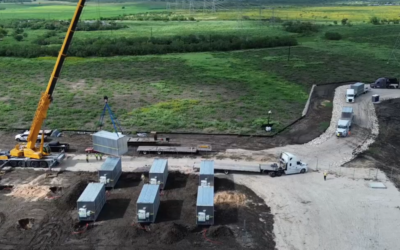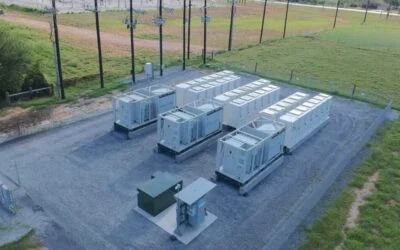
EPRI, Southern Company and Storworks have completed testing of a concrete thermal energy storage pilot project at a gas plant in Alabama, US, claimed as the largest of its kind in the world.
The companies announced the completion of testing at the project, located at the Ernest C. Gaston Electric Generating plant in Alabama, last week (16 May), saying it was the largest such pilot in the world.
The system has an energy storage capacity of 10MWh (electricity). It uses heat generated from one of the gas plant’s units to heat concrete blocks that store the energy thermally. That thermal energy is then returned to the power plant by converting feedwater into steam to generate electricity.
EPRI (Electric Power Research Institute) is an independent non-profit that conducts research into the electricity system and is owned by utilities. Southern Company is a gas and electric utility, which owns the Gaston plant via subsidiary Alabama Power, while Storworks is the provider of the concrete thermal energy storage project used in the project.
Try Premium for just $1
- Full premium access for the first month at only $1
- Converts to an annual rate after 30 days unless cancelled
- Cancel anytime during the trial period
Premium Benefits
- Expert industry analysis and interviews
- Digital access to PV Tech Power journal
- Exclusive event discounts
Or get the full Premium subscription right away
Or continue reading this article for free
More than 80 energy charge and discharge cycles on the project were successfully performed, with over 700 hours of total operation. It was temporarily integrated into the plant for the pilot. The goals of the project were exceeded with steam production at several pressure levels demonstrated.
“Advancements in long-duration energy storage (LDES) are key to unlocking the full potential of variable renewable energy resources on the path to net-zero,” said Neva Espinoza, EPRI vice president of Energy Supply and Low-Carbon Resources. “As the power sector navigates a highly complex transition, CTES could play an important role in efficiently delivering the reliable and affordable electricity society depends on.”
The project received federal funding from the US Department of Energy (DOE) under award DE-FE0031761.
Industrial heat is a huge portion of global greenhouse gas emissions (GHG) for heavy industry making thermal energy storage a huge opportunity, as well as challenge, for decarbonising. Thermal energy storage can either store heat for conversion back to electricity or provide that heat for industrial needs.
Just this week, Saudi oil giant Aramco signed a memorandum of understanding (MOU) with ‘heat brick’ firm Rondo to decarbonise its operations globally. In late April, a MW-scale molten salt hydroxide energy storage project was inaugurated in Denmark, also the first of its scale in the world, technology provider Hyme claimed.
Two months prior to that, thermal energy storage startup Antora raised US$150 million to commercialise its tech which uses heat stored in blocks of carbon material.