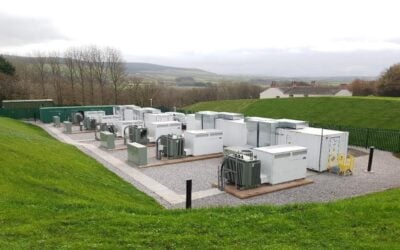
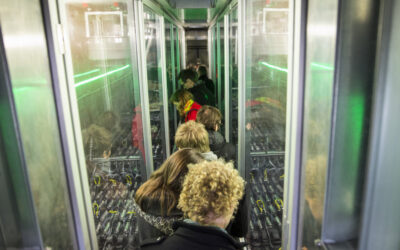
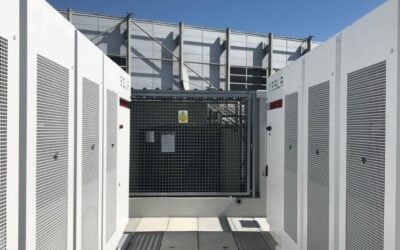
Two commercial battery energy storage systems owned by a family-owned wholesale food business in the UK have been used by aggregator Flexitricity to trade in the Balancing Mechanism (BM)
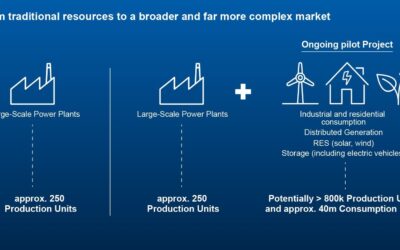
Paul Verrill, director of energy data analysis & consultancy firm EnAppSys, explains how renewable energy generation, with the integration of smart grid technologies and efficiency energy storage systems, can create a sustainable power system for the future.
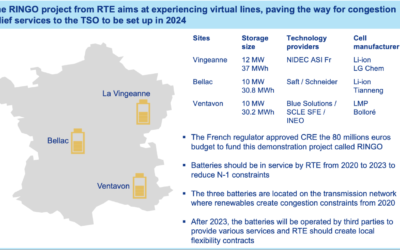
An ‘experiment’ in France where grid-scale energy storage will be deployed to assess how batteries can ease congestion on transmission operator RTE’s network is paving the way for further opportunities in the coming decade, Energy-Storage.news has heard.
A regulatory framework put in place by Italy’s grid operator TERNA has enabled Enel X to aggregate residential energy storage systems to pool their capabilities.
Italy’s electric system operator, Terna, approved contracts for dozens of megawatts (MWs) of energy storage facilities to serve grid-balancing applications each month throughout 2019.
Not only can energy storage be used to “mimic” the roles of existing assets in the electricity network, a gigawatt-scale initiative in Germany shows how ways of thinking about energy storage could save transmission and networks “billions of dollars”, the COO of Fluence has said.
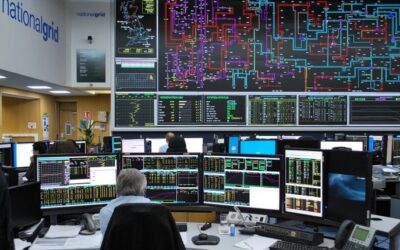
UK editor Liam Stoker writes in a blog for the energy transition and smart power site this week that National Grid’s Distributed Resource Desk – a new platform for managing distributed resources on its network – is starting to enable wider participation in the BM.
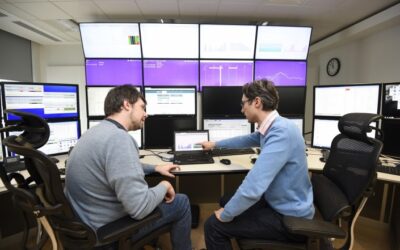
National Grid, in its capacity as the UK’s Electricity System Operator (ESO), last week launched a new ‘Distributed Resource Desk’ in its control room in a move hailed as a “huge step forward” for electricity flexibility markets.
A route to market for residential flexibility resources to access grid balancing revenue streams could save individual households in Britain more than £200 (US$260.90) each, according to a new study.