The “vast majority” of issues identified in Intertek CEA’s 2025 audits of battery storage manufacturing quality were system-level defects that could pose risks to projects if undetected and unresolved.
Intertek CEA (formerly Clean Energy Associates) has just published the 2026 edition of its Global Energy Storage Manufacturing Quality Report, outlining key risks and defect trends based on the market intelligence and technical consultancy firm’s latest inspection data.
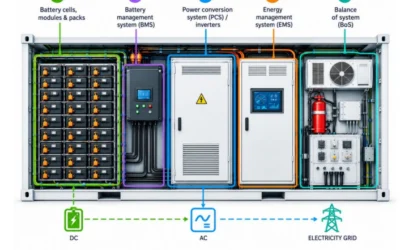
The headline takeaway remains the same as in the 2025 edition: only a small percentage of defects were found in battery cells and modules, while components such as battery management systems (BMS), thermal management, and integration quality accounted for around three-quarters of total defects.
In fact, the percentage went up slightly from 72% in last year’s report—on 2024 factory inspections—to 75% system-level issues found in 2025.
Try Premium for just $1
- Full premium access for the first month at only $1
- Converts to an annual rate after 30 days unless cancelled
- Cancel anytime during the trial period
Premium Benefits
- Expert industry analysis and interviews
- Digital access to PV Tech Power journal
- Exclusive event discounts
Or get the full Premium subscription right away
Or continue reading this article for free
According to Intertek CEA, the main contributors to the high number of system-level issues include the highly manual and labour-intensive nature of most battery energy storage system (BESS) integration processes and rapid product iteration that prevents the maturation of production techniques.
It is also due to the sheer complexity of systems that makes them vulnerable to underlying problems originating from defects in upstream components. These problems can often go undetected during earlier quality checks.
Developers cannot afford to assume the terms of a procurement contract, even with a Tier-1 manufacturer, will protect them, an Intertek CEA spokesperson said.
“While procurement contracts may provide partial protection, they do not eliminate the risk. Developers still absorb the time and effort to resolve issues, and all defects may not be clearly covered, leading to disputes and added downtime,” the spokesperson said.
“This creates fragmented accountability and hidden risk for developers, meaning independent validation and system-level performance guarantees are still needed to ensure long-term reliability and protect against latent defects and warranty disputes.”
Cell and module production more automated than system integration
Intertek CEA has conducted factory quality audits on more than 70GWh of lithium-ion (Li-ion) energy storage projects since 2018 and audits of more than 60% of Tier-1 energy storage cell manufacturers.
In 2025, it found 3,370 issues across 880 inspections. Without those and other third-party inspections, “many of these issues would likely go undetected until commissioning or operation, when the cost downtime and complexity of remediation increase significantly,” the spokesperson said.
“In effect, developers are leaving defect detection to chance [without QA inspections]. A portion of latent defects can still ship and only surface during commissioning or early operation, when fixes are more disruptive and costly.”
While cells and modules are often the focus of industry discussion on quality, just 10% of 2025 quality assurance (QA) issues were found in module manufacturing and 15% in cell manufacturing.
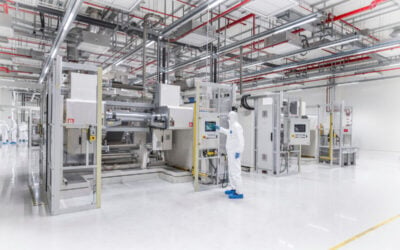
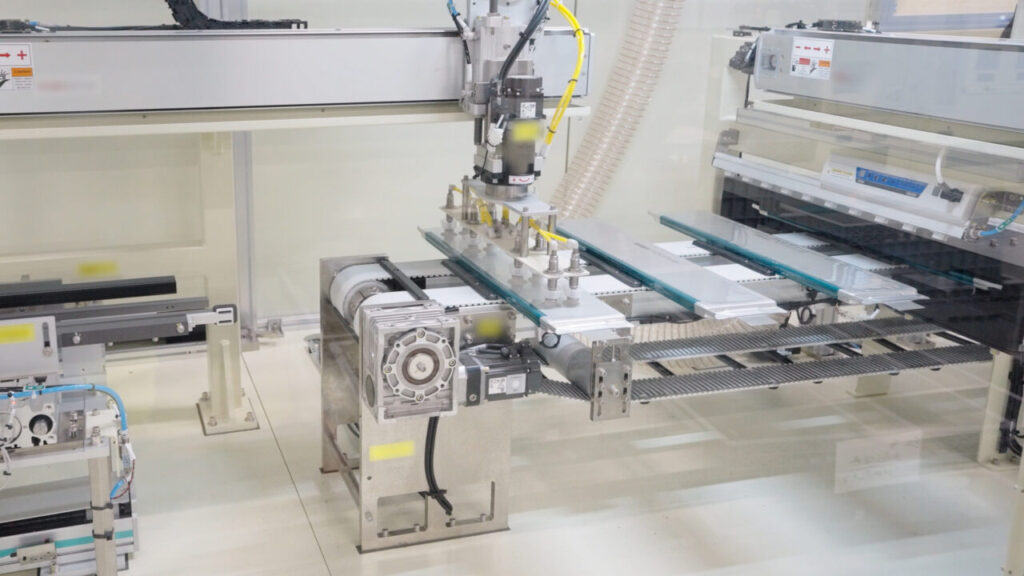
As opposed to system integration, cell and module manufacturing are highly automated. Although cell manufacturing has the highest level of automation, its lengthy production processes and higher precision requirements account for the higher percentage over modules.
That said, cell-level audit findings are more severe when they occur, since cells are the building blocks of a BESS and defects can be directly detrimental to system performance and safety.
Around 38% of cell-level findings were made during electrode manufacturing, 34% during cell assembly and 28% during cell finishing.
In a Guest Blog for this site in September last year, CEA associate director for energy storage Jeff Zwijack wrote that battery and cell manufacturing today “benefits from years of process maturity and automation.”
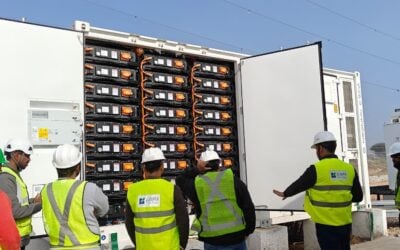
“In contrast, container integration remains highly manual, involving wiring, piping, and fire system assembly by hand.”
Most defects CEA found across 700 inspections in 2024, Zwijack wrote, appear during final integration, not cell production.
System-level defects and some of their causes
That remained the case in 2025. Intertek CEA said most system-level defect types have a safety impact and 3.7% of those inspected last year failed performance tests.
Of system-level defects in 2025:
47% were related to balance of system (BOS) issues, including liquid coolant leakage due to improperly or loosely assembled coolant circulation system components, malfunctioning thermal management systems (TMS) and BMS that failed to react to alarms being triggered.
42% were enclosure-related, including poor strength and rigidity, poor wiring and cabling, grounding insulation test failures, water ingress issues and appearance defects.
11% were performance test-related, meaning systems underachieved capacity and round-trip efficiency (RTE) due to low uniformity and unstable operational temperature and voltage of battery cells, or experienced things like charging/discharging failure due to wiring issues in high voltage boxes.
While fire and overheating incidents in BESS projects are rare and becoming increasingly more so given the industry’s scale and maturity, a number in recent years have been caused by water ingress into enclosures.
Intertek CEA found water ingress issues in 4.4% of inspected units, which could often have a very simple cause, such as a drainage hole being left unsealed during a water spray test.
The spokesperson said that in a defective system, water ingress “can occur anytime water is present, such as after rain,” yet could go undetected until after damage is done by moisture.
“By the time they’re found, the system may have already experienced corrosion, connector degradation, sensor damage, or partial ground faults, all of which can quietly compromise performance and safety,” the Intertek CEA spokesperson said.
“In more severe cases, moisture intrusion can lead to nuisance trips, accelerated component failure, or increased risk of electrical faults and thermal events before the root cause is identified.”