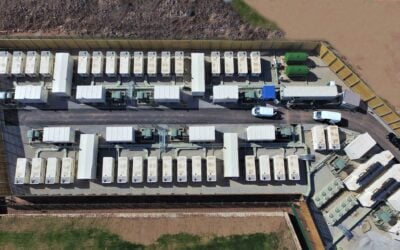
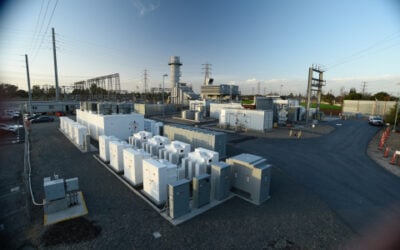
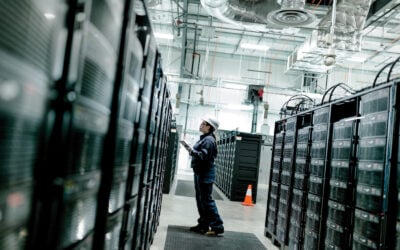
Energy asset developer and owner Statera Energy has clinched a refinancing deal for its 50MW Pelham utility-scale battery storage plant in England, in a transaction which it says demonstrates both the maturity and “bankability” of the asset class.
Jardelund, Germany, is now host to what is currently Europe’s largest battery energy storage system, a 50MWh project completed and announced just a few days ago by NEC Energy Solutions.
EDF has completed one of the UK’s largest battery storage projects, bringing online the 49MW West Burton B project to provide Enhanced Frequency Response (EFR) services to National Grid.
Even among high level stakeholders, there are real gaps in education, knowledge and understanding of what energy storage is, and what it can do. We were privileged at last week’s Intersolar Europe/ees Europe shows in Munich, Germany, to be joined by four leading thinkers – and doers – in the energy storage industry, who helped us tackle this difficult question.
While at Intersolar Europe/ees Europe this week, we caught up with Detlef Neuhaus, CEO of the Dresden-headquartered Solarwatt who told us more about his company’s strategy, as well as offering up some candid views on the industry.
Vistra Energy has contracted energy storage integrator FlexGen to install a 10MW / 42MWh energy storage system (ESS) at the 180MW Upton 2 Solar Power Plant in Texas.
This week the editorial teams of Solar Media’s international brands, PV Tech and Energy-Storage.news, will be among those travelling to Munich for the Intersolar Europe trade show, which once again includes the electrical energy storage Europe (ees Europe) event.
Increasingly, solar energy and behind-the-meter battery storage assets are being deployed on an ‘as-a-service’ basis and system integrator Younicos has decided to replicate the strategy for microgrids.
Irish state utility ESB has confirmed its entry into the UK grid-scale energy storage market with the purchase of a 7MWh facility from developer Anesco.
First developed by NASA, flow batteries are a potential answer to storing solar – and wind – for eight to 10 hours, far beyond what is commonly achieved today with lithium-ion. In the first of a two-part special report, Andy Colthorpe learns what the flow battery industry faces in the fight for commercialisation.