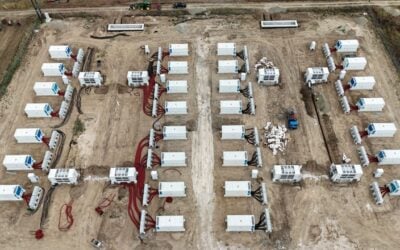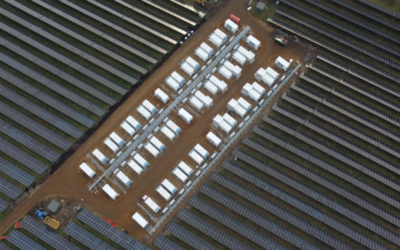
Cyprus’s electricity regulator has approved plans to install 400MWh of battery energy storage system (BESS) projects in the Mediterranean island country.
Cyprus Energy Regulatory Authority (CERA) announced the approval earlier this week (18 June) of three projects which will be owned and operated by the Cyprus Transmission System Operator (TSOC).
CERA’s senior managers agreed the approval based on the immediate public interest need for energy storage to be installed on the electricity system to ensure its reliable and safe operation, while preventing curtailment of renewable energy production.
The approval covers: a 40MW/80MWh system at Athalassa Substation, a 40MW/160MWh BESS at the Free Industrial Zone Substation and another 40MW/160MWh system at Anatoliko Substation.
Try Premium for just $1
- Full premium access for the first month at only $1
- Converts to an annual rate after 30 days unless cancelled
- Cancel anytime during the trial period
Premium Benefits
- Expert industry analysis and interviews
- Digital access to PV Tech Power journal
- Exclusive event discounts
Or get the full Premium subscription right away
Or continue reading this article for free
As mentioned, they will be owned by the national TSO, and their operation will prioritise the delivery of services required by the network operator. CERA said there is further scope for private investment into energy storage systems which would operate on a commercial basis.
The facilities are scheduled to be in operation by June 2026.
CERA noted that the plan is aligned with European Union (EU) directive 2024/1711, which exempts Cyprus from certain electricity market requirements based on its lack of interconnection with fellow EU Member States’ electricity grids and allows TSOC to “own, develop, manage and operate energy storage facilities without following an open, transparent and non-discriminatory tendering procedure.”
Cyprus faces ‘unique set of challenges’
The news comes less than three months after the country’s energy minister described energy storage as “not just a technical solution, but a strategic asset in our energy security framework.”
In a keynote address to open a conference on energy storage and hydrogen in March, George Papanastasiou of the Ministry of Energy, Commerce and Industry (MECI) noted that Cyprus faces a “unique set of energy challenges, which require tailored solutions.”
Papanastasiou said that the country stands at a critical juncture in its green energy transition. Within the global context of the climate crisis and countries seeking to diversify their energy supply, Cyprus’ high dependence on imported fossil fuels and lack of interconnection to European grids means it is seeing elevated energy costs and vulnerability to electricity price fluctuation and supply disruptions.
Despite these challenges, the country has made progress on its renewable energy goals, which include meeting a third of gross final electricity consumption from renewable sources by 2030, the minister said.
The groundwork has been laid by measures including the 2023 adoption of a policy framework for the implementation and integration of energy storage and regulatory reforms adopted in late 2024 that enable storage facilities to participate in electricity markets.
There is also an investment support scheme for renewable energy power plants integrated with storage, enabled through the European Union (EU) Recovery and Resiliency Facility which was initially confirmed at a value of €35 million (US$36.89 million) and later upped to €40 million.
That scheme opened in February and will support the deployment of 150MW/350MWh of energy storage.
“The results of these efforts are already becoming visible,” George Papanastasiou said.
“To date, CERA has issued licenses for standalone storage systems with a total installed capacity of 482 MW and 1,600 MWh, and for hybrid storage systems combined with RES projects of 790 MW.”
The country is also seeking to develop pumped hydro energy storage (PHES) capacity with technical assistance from the European Commission (EC) and is formulating a National Hydrogen Strategy.