Credit: Steag
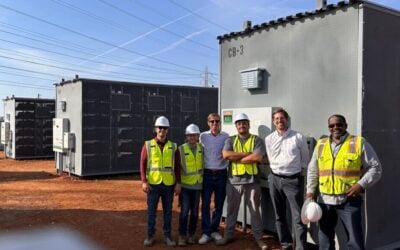
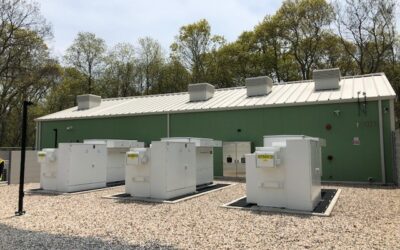
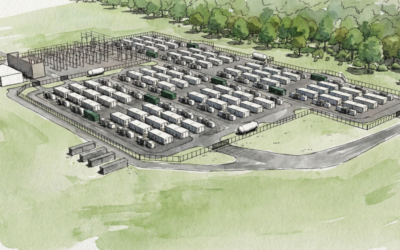
Major German utility Steag and automation company Nidec ASI, formerly known as Ansaldo Sistemi Industriali, have inaugurated a 90MW energy storage system in Germany, in what is the largest installation of its kind.
The project consists of six 15MW Nidec ASI storage systems that aid Steag in the stabilisation of the country’s grid via frequency regulation and voltage control.
Germany’s largest battery system was celebrated in an inauguration ceremony held in Duisburg-Walsum, attended by North-Rhine Westphalia minister of Economic Affairs Garrelt Duin and Saarland’s Minister President Annegret-Kramp-Karrenbauer. During the ceremony, the select systems were officially put into operation at the Weiher power plant.
This monumental project has been a long time in the making, with Steag commissioning Nidec in November 2015 to supply and install the systems that use Korea’s LG Chem batteries. The project, that reportedly cost around US$100 million, broke ground last May and subsequently installed six energy storage systems at different sites including Weiher, Bexbach and Fenne.
Try Premium for just $1
- Full premium access for the first month at only $1
- Converts to an annual rate after 30 days unless cancelled
- Cancel anytime during the trial period
Premium Benefits
- Expert industry analysis and interviews
- Digital access to PV Tech Power journal
- Exclusive event discounts
Or get the full Premium subscription right away
Or continue reading this article for free
Six lithium-ion battery-based systems were deployed in North-Rhine Westphalia, in the northwest of the country and in Saarland, in the south, three in each region.
“The battery storage system makes an important contribution to the energy turnaround,” said Duin at the ceremony. “On the one hand, it stabilizes the power grid and increases supply security; on the other hand, emissions are reduced by saving fossil fuels. In the current energy environment with a high dynamics of change, we welcome the investments made by STEAG, especially in view of the fact that the project is implemented without subsidies. It shows that good ideas can be developed to market quickly with decisive action “.
“The grid stability and security of supply inherent are currently the most important criteria for the success of the energy transition,” commented Joachim Rumstadt, CEO of Steag. “Due to the ever-increasing share of volatile electricity from renewable energies, the electricity network is becoming increasingly stressed. I am proud that the large battery system is not only a technological pioneer, but that our investment has also been fully implemented on the market, without public funding. “