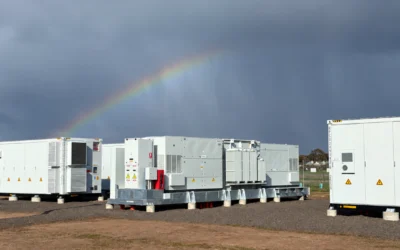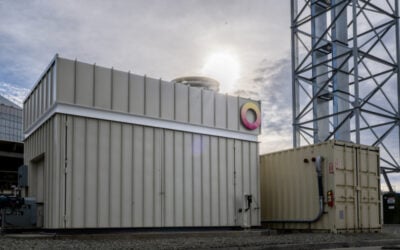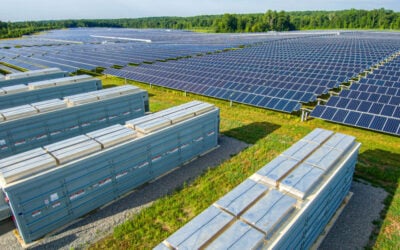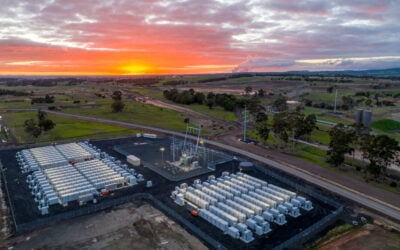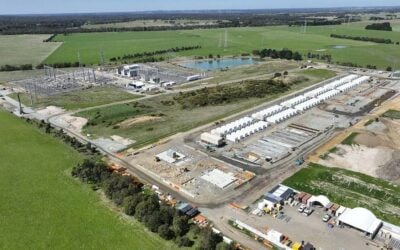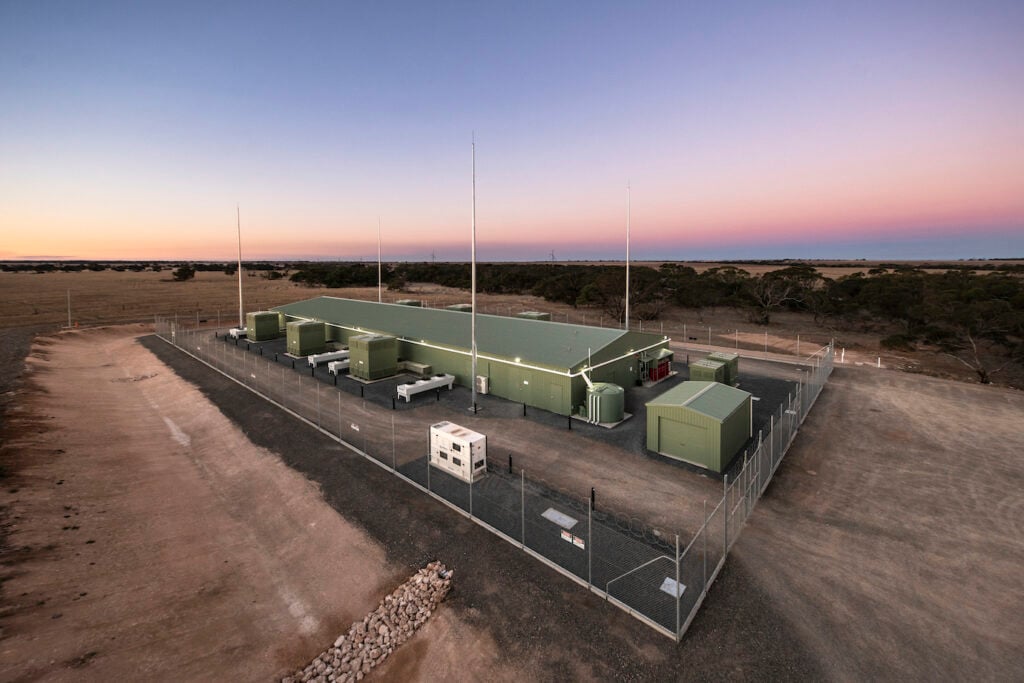
A state-owned power company has begun the construction phase of a 35MW grid-scale battery storage project in Australia’s Northern Territory.
Territory Generation’s Darwin-Katherine Battery Energy Storage System (DK BESS) will provide essential services to stabilise the local Darwin-Katherine Electricity System grid which serves about 150,000 people.
While the project’s expected cost is AU$45 million (US$30 million), it should unlock AU$9.8 million in operating cost savings every year, meaning that it will pay for itself in about five years. It will also help contribute towards the Northern Territory (NT) reaching its policy goal of running on 50% renewable energy by 2030.
The Territory Labor government’s chief minister Natasha Fyles and minister for renewables and energy Selena Uibo issued a statement earlier this week, announcing that earthworks are already complete and work to put in heavy foundations, in-ground services infrastructure and culverts is underway.
Try Premium for just $1
- Full premium access for the first month at only $1
- Converts to an annual rate after 30 days unless cancelled
- Cancel anytime during the trial period
Premium Benefits
- Expert industry analysis and interviews
- Digital access to PV Tech Power journal
- Exclusive event discounts
Or get the full Premium subscription right away
Or continue reading this article for free
The politicians noted the project as an important early step in reducing the NT and the Darwin-Katherine Electricity System’s reliance on gas generation.
A competitive tender run by Territory Generation to supply the BESS solution was won by Hitachi Energy towards the end of last year. The project will be built at the site of the power company’s Channel Island Power Station.
“We’ve backed renewables and so have Territorians – they know renewables deliver cleaner, cheaper and secure power,” Fyles said.
“The cutting-edge technology in our Battery Energy Storage System will reinforce the Northern Territory as the solar capital of Australia. It will store power and be the backbone of the Darwin to Katherine Electricity grid.”
As reported by Energy-Storage.news last November as Hitachi Energy’s awarding of the project was announced, the DK BESS will provide spinning reserve to the local grid, directly replacing one gas generation unit at the Channel Island power plant. That means fuel cost savings as well as reduced emissions.
The BESS will also provide inertia to the grid, again a service traditionally provided by fossil fuel power plants. Hitachi Energy actually delivered Australia’s first battery project equipped with advanced inverters to inject ‘synthetic inertia’ using power stored in a lithium-ion BESS, back in 2018.
Regular readers of this site will note that batteries-as-inertia is an application of growing interest in Australia, with Tesla’s Hornsdale Power Reserve BESS recently retrofitted with advanced inverters to deliver the grid service, and the Australian Renewable Energy Agency (ARENA) offering financial support to a number of large-scale projects around the country using the technology.
The DK BESS will also provide backup contingency in the event of local power outages.
Installation of the BESS is expected to begin later this year and the project will be online in 2023.
“The Darwin-Katherine battery not only delivers on a portion of the government’s Darwin-Katherine Electricity System Plan but is also key to unlocking flexibility in our generation fleet to better manage the increasing impacts of solar on the system,” Territory Generation CEO Gerhard Laubscher said.