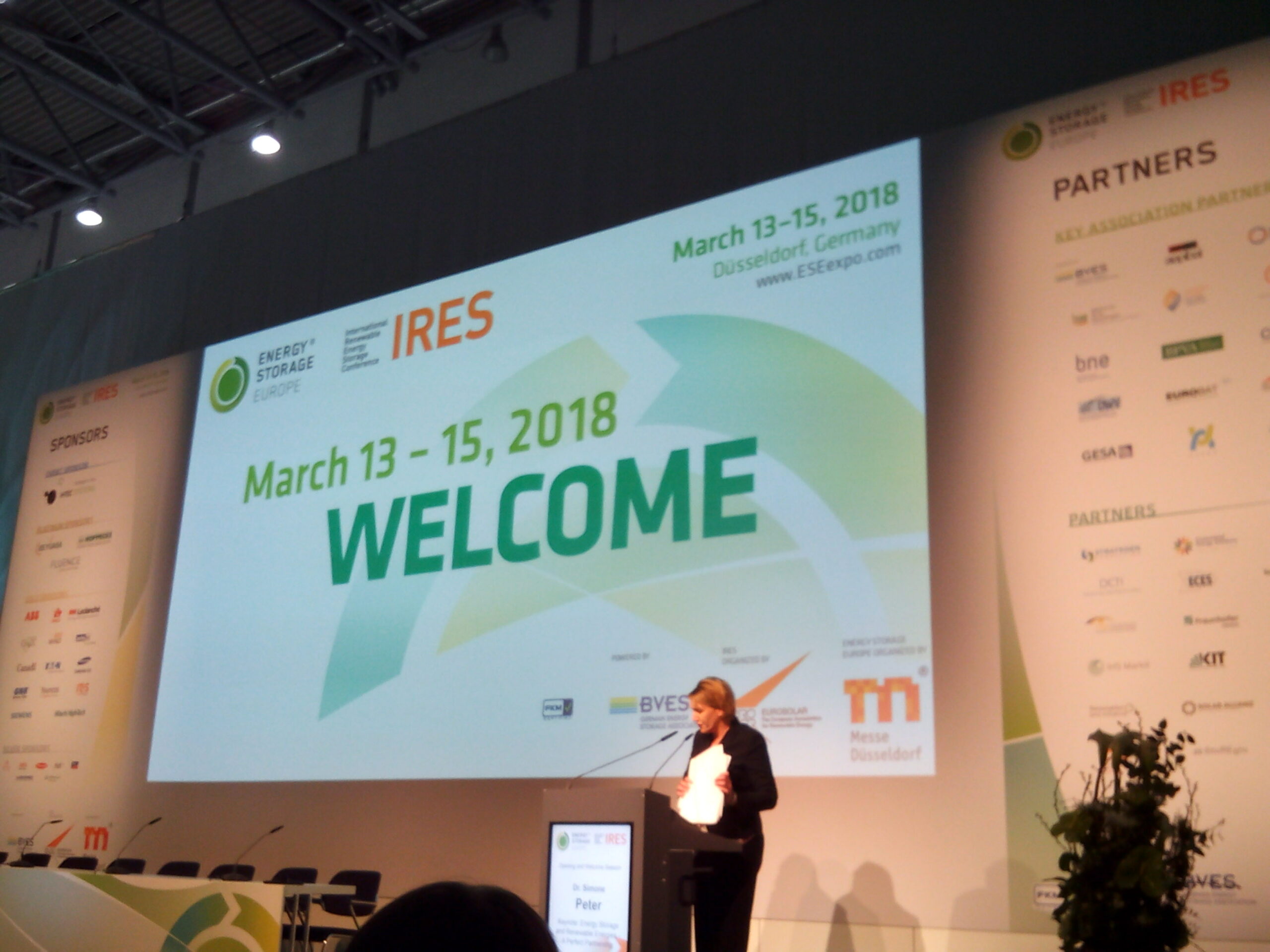
The former head of the German Green Party, Dr Simone Peter, has said that the Energiewende (‘Energy Transition’) is in its second phase, and now requires more ‘sector coupling’ between electricity, heat and transport sectors.
Peter, who is now, since the beginning of March the president of Bundesverbands Erneuerbare Energie (BEE), the country’s Federal renewable energy association, spoke with Energy-Storage.News following her keynote address at Energy Storage Europe in Dusseldorf, Germany, on Tuesday morning.
While her background in Green Party politics means the Energiewende has always been a key topic of her work, Peter pointed out that with more than 15 years of the transition movement behind them, “all German politicians are involved”, with Germany among the countries pressing for the implementation of the Paris Agreement.
While she was pleased with Germany achieving 36% renewables in its energy mix, the obvious next step should be to increase that share further, Peter said.
Try Premium for just $1
- Full premium access for the first month at only $1
- Converts to an annual rate after 30 days unless cancelled
- Cancel anytime during the trial period
Premium Benefits
- Expert industry analysis and interviews
- Digital access to PV Tech Power journal
- Exclusive event discounts
Or get the full Premium subscription right away
Or continue reading this article for free
“We now have the technologies, renewable energy and more and more storage technologies. We need more ways to connect it, to have more sector coupling, more intelligent grids and to find the next wave to go from 36% in the electricity sector to 100% renewable energy.”
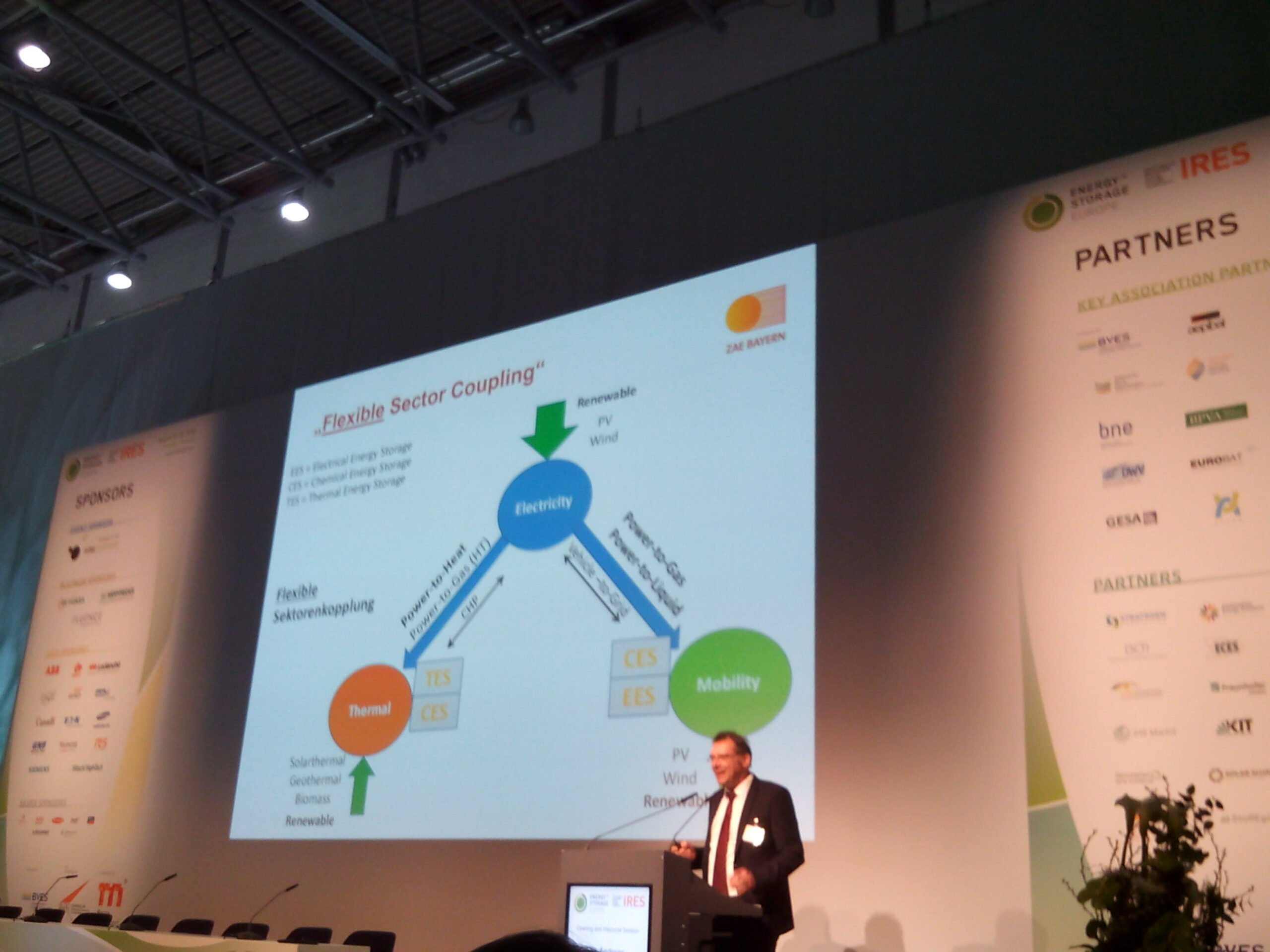
An earlier speaker at the event, Dr Andreas Hauer of ZAE Bayern, described “sector coupling” as a particularly Germanic expression, but one that is precise and appropriate. It has been discussed at previous editions of the Dusseldorf trade show but definitely appeared an even more prominent focus at the event this time around. It essentially means bringing energy use across the sectors of electricity, heat (and cooling) and transportation together where possible, for example in the use of solar and energy storage to charge electric vehicles or water heaters that charge from surplus domestic renewables.
A definition by BMWI, the German Federal Ministry for Economics and Energy, calls for sector coupling in terms of the use of renewable energy for “electricity, heat and propulsion”.
Necessary changes are ‘economical as well as ecological’
Dr Peters agreed that through the Energiwende, which began with policies to end reliance on nuclear power and support renewables through the feed-in tariff and other frameworks, Germany had a “huge increase in renewables” and the country has now reached the “next phase”. Energy-Storage.News had heard this assertion from several commentators previously, with ministers and experts at a national Energy Transition event in Berlin a couple of years ago saying that the next challenge for the Energiewende and clean energy in Germany, along with sector coupling, would be to make the whole process as affordable as possible and to create economic opportunities along the way.
“It’s the next phase and we have to start with the heating and cooling and mobility sectors. We have big firms here in Germany with the money and lots of people working in the automotive industry,” Dr Simone Peters told Energy-Storage.News on Tuesday.
“So we need this change not just for ecological reasons but also now economical. That’s why we have to do sector coupling, binding with the heat and mobility sectors”.
Simone Peter: Energy Storage and Renewable Energies are perfect partners for new flexible energy markets: interconnected, sustainable, attractive. #IRES2018 #ESE2018 @peter_simone @EnergyStorageMD #Energiewende #EnergyStorage #RenewableEnergy pic.twitter.com/wviU86rHYZ
— BEE (@bEEmerkenswert) March 13, 2018