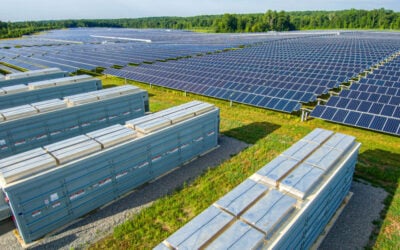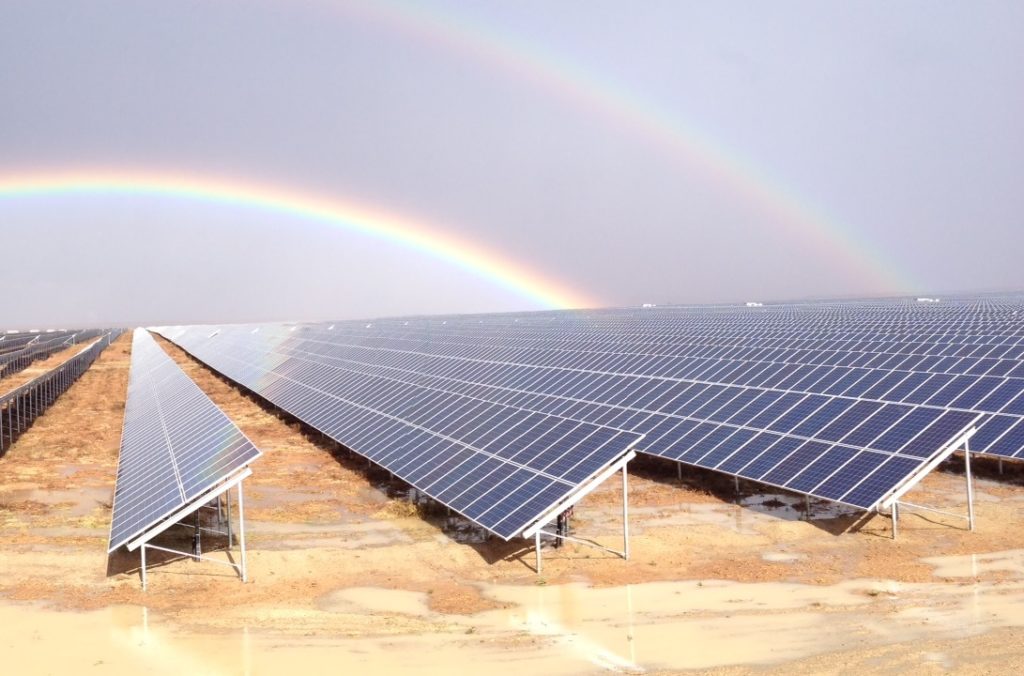
Renewable energy power producer Scatec has started building three co-located solar projects with 1.1GWh of energy storage in South Africa, after achieving financial close.
Once operational the projects will have a total solar PV power of 540MW and battery storage capacity of 225MW/1,140MWh. The project has been designed to reduce the size of the grid connecion required, with only 150MW of dispatchable power to be provided under a 20-year power purchase agreement (PPA) with the local Kenhardt region.
The launch of construction comes six weeks after the Norway-based company secured PPAs for the three projects in Northern Cape, as reported by Energy-Storage.news. And it comes a year after the company won the tender to deliver them under South Africa’s Risk Mitigation Power Procurement Programme (RMIPPP) programme which is seeking to reduce capacity shortfalls on the grid.
“This project is a first of its kind and will be one of the world’s largest solar and battery facilities. We are now looking forward to starting construction of this unique and exciting project, which will be a major contribution to South Africa’s economy and green energy sector,” said Scatec CEO Terje Pilskog.
Try Premium for just $1
- Full premium access for the first month at only $1
- Converts to an annual rate after 30 days unless cancelled
- Cancel anytime during the trial period
Premium Benefits
- Expert industry analysis and interviews
- Digital access to PV Tech Power journal
- Exclusive event discounts
Or get the full Premium subscription right away
Or continue reading this article for free
Scatec said the project will be the largest investment in its history with a total capital expenditure of ZAR16.4 billion (US$962 million) financed by equity from the owners of the project, which are Scatec with 51% and H1 Holdings with 49%. H1 is the project’s local Black Economic Empowerment partner, as one of the requisite conditions for taking part in the tender was local, black-owned business involvement.
Another ZAR12.4 billion in non-recourse project debt will go towards the project, meaning a total of US$1.6 billion in equity and debt. Lenders included Standard Bank Group and British International Investments.
Scatec is providing engineering, procurement and construction (EPC), long-term operations and maintenance (O&M) and asset management services. The development and EPC contract will generate US$800 million in revenue for the company, Scatec said.
The RMIPPP tender by grid operator ESKOM is one of three programmes which alone will see around 1GW of energy storage power, and several GWh of capacity, come onto the South African grid in the next few years.
There are two others for standalone projects which Energy-Storage.news reported on recently. One is a procurement which will see 199MW/832MWh of standalone energy storage developed at eight sites to provide national peak shaving and ancillary services. The other, which is expected to come later this year, will see over 500MW of storage tendered although details that have not yet been released.