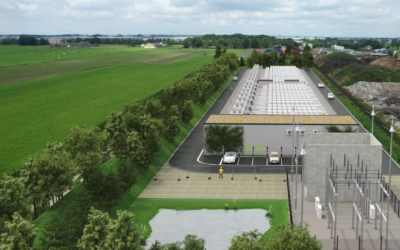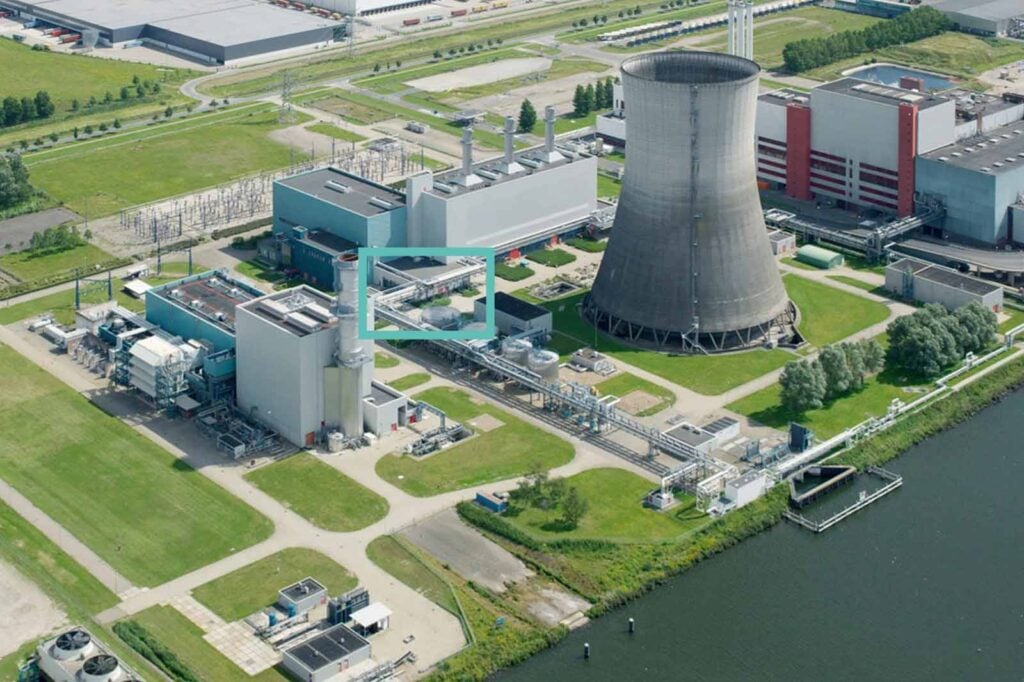
Germany-headquartered utility and independent power producer (IPP) RWE will build a 7.5MW/11MWh battery energy storage system (BESS) in the Netherlands with grid-forming inertia capabilities.
The project will be built at its power plant in in Moerdijk with commissioning expected before the end of 2024, which will mark the start of a two-year pilot phase. It will comprise three lithium iron phosphate (LFP) based BESS units and utilise the site’s existing grid connection.
It will feature highly reactive control technology and inverters with grid-forming functionality, enabling the provision of instantaneous reserve power, RWE said. Such services are usually provided by the rotating masses of conventional power plants, such as coal, but this can also be provided by BESS technology.
Transmission system operator (TSO) for the Netherlands, TenneT, will be a partner of the project during its pilot period to develop the technical requirements and grid compliance features.
Try Premium for just $1
- Full premium access for the first month at only $1
- Converts to an annual rate after 30 days unless cancelled
- Cancel anytime during the trial period
Premium Benefits
- Expert industry analysis and interviews
- Digital access to PV Tech Power journal
- Exclusive event discounts
Or get the full Premium subscription right away
Or continue reading this article for free
Marinus Tabak, COO of RWE Generation and RWE country chair for the Netherlands commented: “With the Moerdijk battery storage system, we are pioneering grid-forming technologies as alternatives to traditional solutions such as power stations. This offers a pathway to a more sustainable yet reliable energy future.”
Inverter manufacturer SMA’s senior business development manager Aaron Philipp Gerdemann wrote about grid-forming technology in a recent edition of Solar Media’s quarterly journal PV Tech Power. Such BESS projects are becoming more commonplace following smaller pilots around the world, with large-scale projects under construction in Australia, Scotland and Finland, to name a few.
The Dutch energy storage market has picked up in the past 12 months after years of being decried as a laggard compared to its neighbours Belgium and Germany. Projects with capacities of multiple hundreds of gigawatts have moved forward recently as reported by Energy-Storage.news, helped by reforms of the country’s grid fee system, often cited as a major barrier to the market.