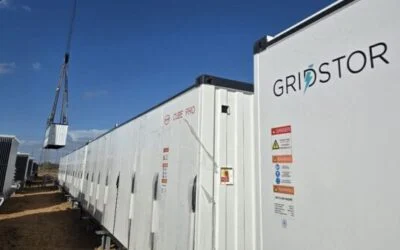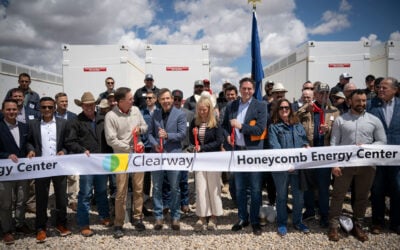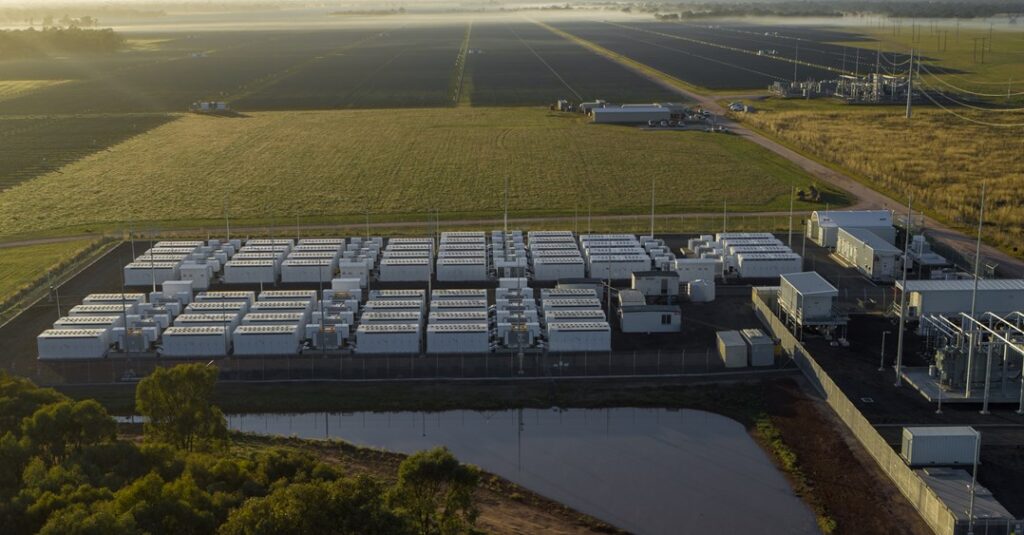
Rio Tinto, a British Australian multinational mining company, has penned an offtake agreement to secure 2.1GWh of battery energy storage system (BESS) capacity from an Edify Energy-owned asset in Queensland, Australia.
The company will also secure solar PV capacity from a 600MWac co-located PV power plant at the BESS site.
Under the terms of the two hybrid services agreements (HSA), Rio Tinto will procure 90% of the power and energy storage capacity generated from Smoky Creek and Guthrie’s Gap solar PV plant for 20 years.
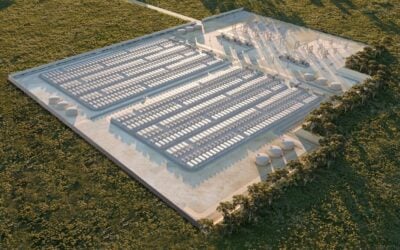
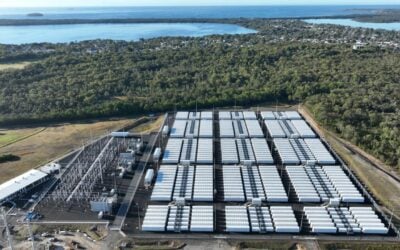
Located in Central Queensland, 75km south of Rockhampton and 40km north of Biloela, the adjacent Smoky Creek and Guthrie’s Gap Solar Power Stations will together feature 600MWac of solar PV and 600MW/2,400MWh of BESS.
Try Premium for just $1
- Full premium access for the first month at only $1
- Converts to an annual rate after 30 days unless cancelled
- Cancel anytime during the trial period
Premium Benefits
- Expert industry analysis and interviews
- Digital access to PV Tech Power journal
- Exclusive event discounts
Or get the full Premium subscription right away
Or continue reading this article for free
Edify Energy will build, own, and operate the projects, with construction due to begin in late 2025 and targeting completion in 2028.
Rio Tinto’s chief executive of Australia, Kellie Parker, said the deal marks the first time the company has integrated BESS technology to decarbonise its aluminium operations.
“For the first time, we have integrated crucial battery storage in our efforts to make the Boyne aluminium smelter globally cost-competitive as traditional energy sources become more expensive. We continue to investigate further renewable energy investments to repower our Gladstone aluminium operations,” Parker said.
Rio Tinto has three production assets in the Gladstone region: the Boyne aluminium smelter, the Yarwun alumina refinery, and the Queensland alumina refinery. Together, these account for around 3,000 jobs, 1,000 of which are at the Boyne smelter alone.
When combined with the 2.2GW of wind and solar power purchase agreements (PPAs) that Rio Tinto announced for its Gladstone operations in 2024, the Smoky Creek and Guthrie’s Gap agreements will help secure a total of 2.7GW of future wind and solar energy in Queensland.
Rio Tinto confirmed that the 2,160MWh of BESS capacity it has secured will provide about 30% of the firming required to repower the Boyne smelter with renewable energy.
It will store green energy for reliable use during peak demand periods or low solar output, improving the stability and resilience of Queensland’s power network.
To read the full article, please visit our sister site PV Tech.
Our publisher, Solar Media, will be hosting the Energy Storage Summit Australia 2025 in Sydney from 18-19 March. You can get 20% off your ticket by following the link here.