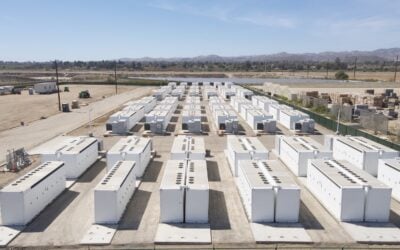
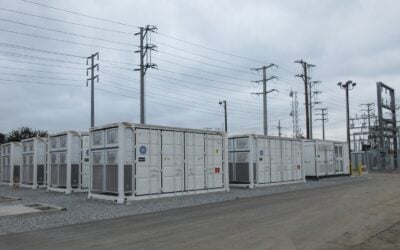
The US’ installed battery storage capacity reached 1,650MW by the end of 2020, but the country is on track to have nearly 10 times that amount by 2024, according to the national Energy Information Administration (EIA).
New York utility Con Edison has issued a request for proposals (RFP) for scheduling and dispatch rights to at least 200MW of energy storage, while its Greater New York subsidiary Orange & Rockland is seeking at least 10MW.
Financing has been secured for two projects that will add nearly a gigawatt-hour of battery storage at California solar power facilities this year, by renewable energy company Terra-Gen and private asset management firm Capital Dynamics.
California’s government has issued a roadmap for the US state to achieve its long-term goal of 100% clean energy, while an immediate State of Emergency has been declared over concerns the electric system will struggle under heat waves this summer.
A “once-in-a-generation” commitment to invest in the US’ national infrastructure includes financial support for energy storage supply chains and renewable energy deployment, but not the investment tax credit for standalone energy storage.
Battery storage could play the same role on the grid as a proposed 60MW natural gas and fuel oil peaker plant in Massachusetts and not only result in lower emissions but also in cost savings.
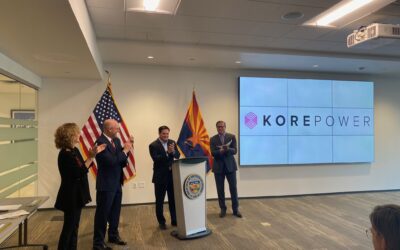
Governor Doug Ducey of Arizona expressed delight yesterday as lithium-ion battery and stationary storage system manufacturer KORE Power selected his state for the location of a new gigafactory.
An agreement has been reached between the developer of a large-scale pumped hydro energy storage project in Ontario, Canada, and the Department of National Defence that could see the project built on federal land.