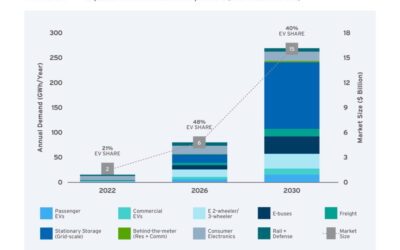
Lithium iron phosphate (LFP) will be the dominant battery chemistry over nickel manganese cobalt (NMC) by 2028, in a global market of demand exceeding 3,000GWh by 2030.
New guidelines for procurement and utilisation of battery energy storage systems (BESS) as assets for generation, transmission and distribution and ancillary services have been published by India’s Ministry of Power.
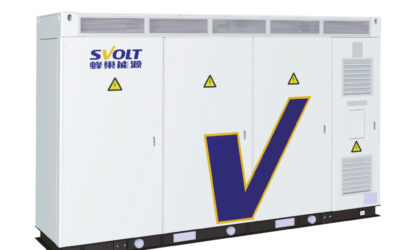
Lithium-ion battery producer SVOLT has announced an energy storage system (ESS) solution having until now predominantly focused on batteries for the electric vehicle (EV) market.
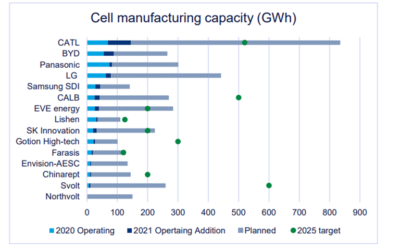
China’s share of the lithium-ion battery cell production capacity market is set to fall from 75% in 2020 to 66% in 2030, according to Clean Energy Associates in a new report.
China is targeting a non-hydro energy storage installed capacity of 30GW by 2025 and grew its battery production output for energy storage by 146% last year, state media has said.
Standalone storage, demand from commercial and industrial (C&I) customers and new types of grid services will increasingly help drive growth in energy storage in the coming years, but the future mix between battery-based and alternative storage types is still unclear.
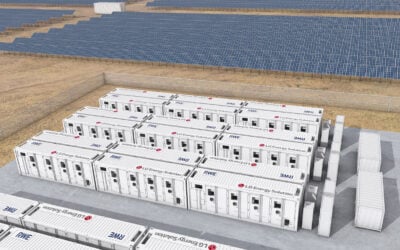
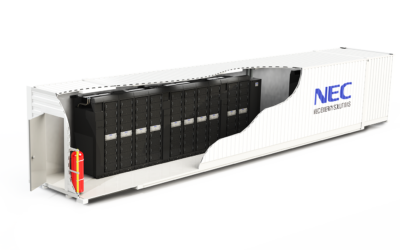
Industry-watchers will closely follow how the recently completed acquisition of energy storage system integrator NEC ES by LG Energy Solution pans out.
LG Energy Solution, the battery technology arm of South Korea’s LG Group, has completed its acquisition of 100% ownership in battery energy storage system (BESS) integrator NEC ES.
Demand for batteries in India will rise to between 106GWh and 260GWh by 2030 across sectors including transport, consumer electronics and stationary energy storage, with the country racing to build up a localised value chain.