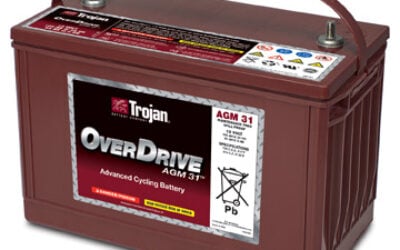
Johnson Controls has sold off its power business, including its design and production of automotive batteries, to focus on management solutions for buildings and HVAC systems for industrial customers.
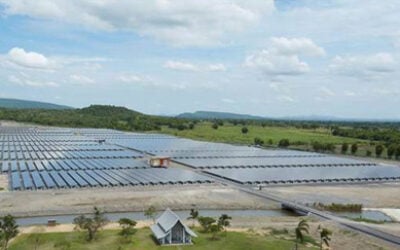
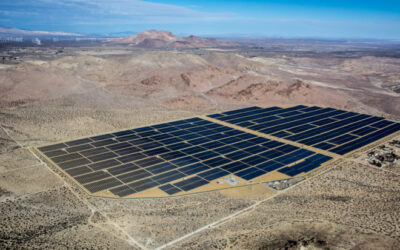
Two community energy suppliers in California followed up an agreement to buy power from a large-scale solar-plus-storage farm with another, project developer EDF Renewables has announced.
NantEnergy has acquired Sharp Electronics Corporation’s US-based energy systems and services business, which develops and delivers energy management systems across the country.
The global energy storage market will grow to a cumulative 942GW/2,857GWh capacity by 2040, attracting US$620 billion in investment, caused by sharply decreasing battery costs, according to a Bloomberg NEF (BNEF) report.
Transmission system operators in the US have begun making their moves to accommodate energy storage into their wholesale markets, with New England ISO and Southwest Power Pool both making filings in the past month.
Two community energy groups in California have partnered to buy the energy output of a 150MW solar farm with 180MWh of battery energy storage from Recurrent Energy, the US-based utility-scale solar project developer subsidiary of Canadian Solar.
Quoting an expected doubling in installed PV capacity over the next five years, a partnership between Chinese battery storage system maker BYD and European PV inverter company SMA is targeting the USA market, identifying it – along with Africa – as having “high growth potential” for the pair’s products.
As well as Elon Musk remarking that the company may have had its “best ever quarter” for solar since the SolarCity takeover, Tesla’s energy storage deployments have enjoyed a ramp up, while a fellow exec hinted the stationary battery business is constrained by cell supply.